
Hands-on with Christopher Ward’s retro skindiver riff
Does anyone remember the C65 Aquitaine? I ask because the handsome retro diver was one of my favourite pieces in Christopher Ward’s line-up, an accessible take on the more elegant end of the tool watch spectrum archetyped by the Fifty Fathoms. And like all good things in this world, it didn’t last. A lack of sales put the collection into an early retirement just four years after release.
That left a hole in the wider Christopher Ward collection however, one the British brand has filled with a shift along the European coastline from Aquitaine to Biscay – and with it a move to an even more classic dive watch look.
In the same way the Aquitaine echoed the Fifty Fathoms, the new Biscay collection does the same with classic 60s skindivers. These are watches designed for a dip in the ocean rather than tumbling off a boat in full scuba gear. That means 200m water resistance and slim profiles, at least compared to proper, professional tool watches. In the context of the Biscay, that means 11mm tall in the automatic versions and 12mm for the accompanying GMT models.
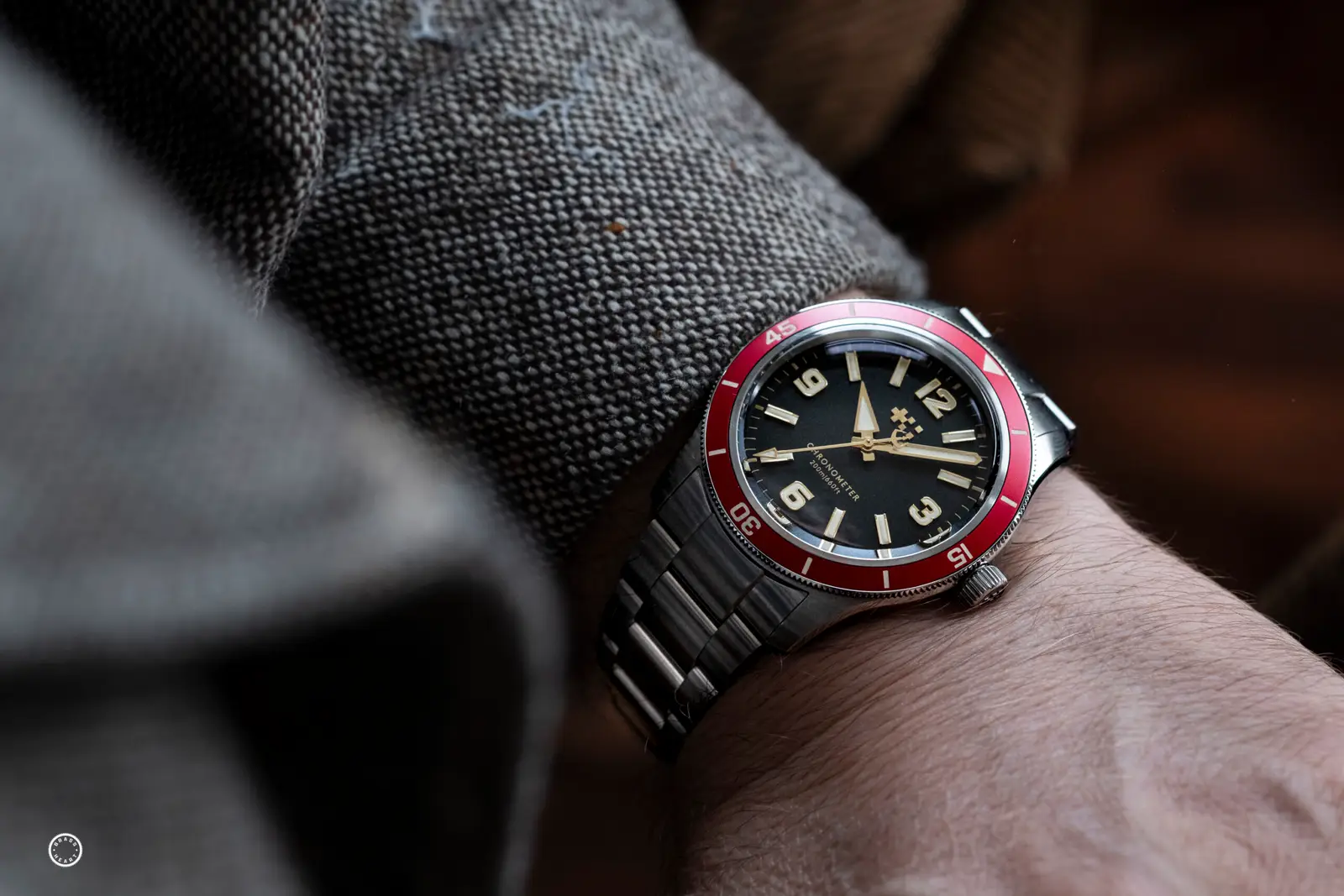
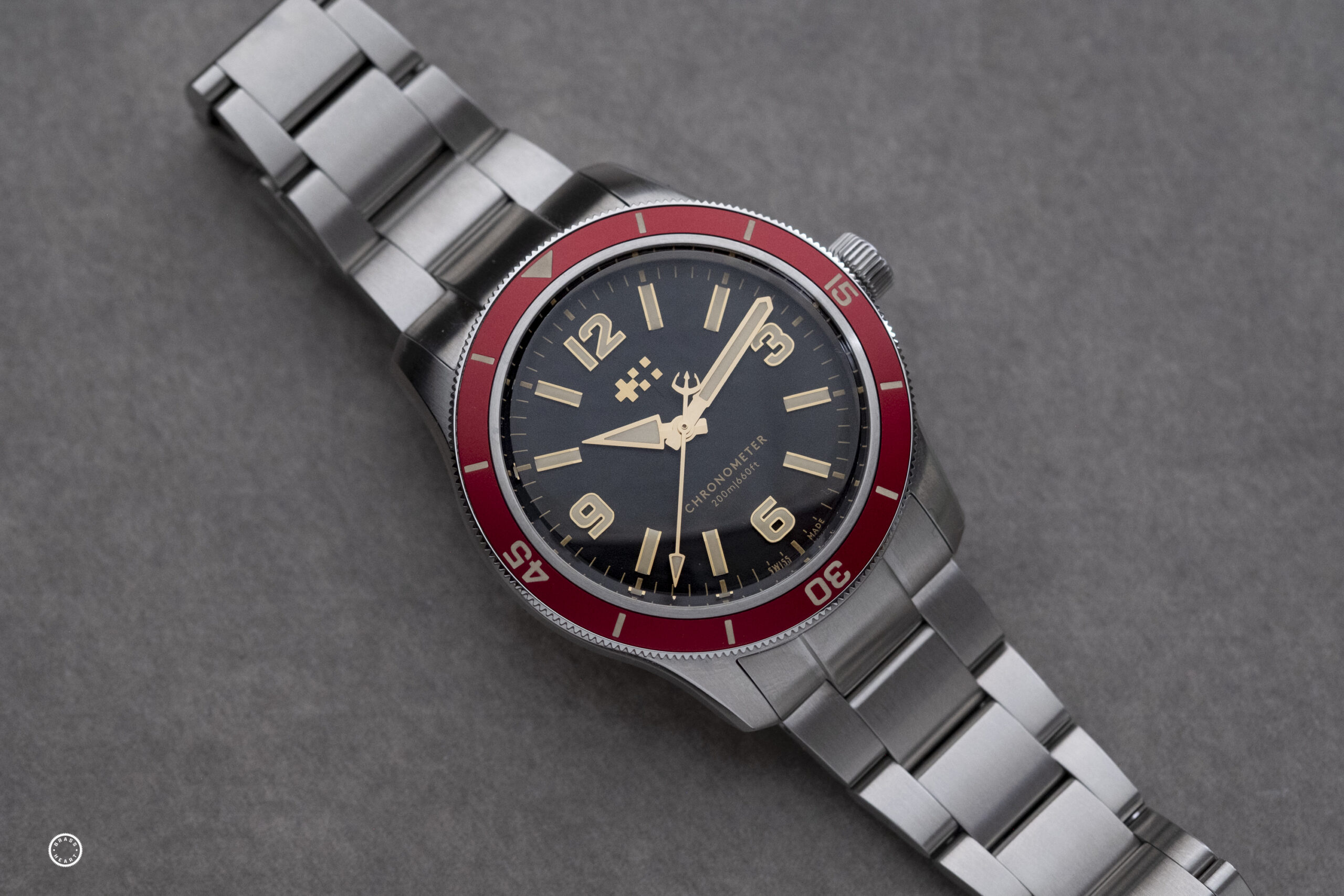
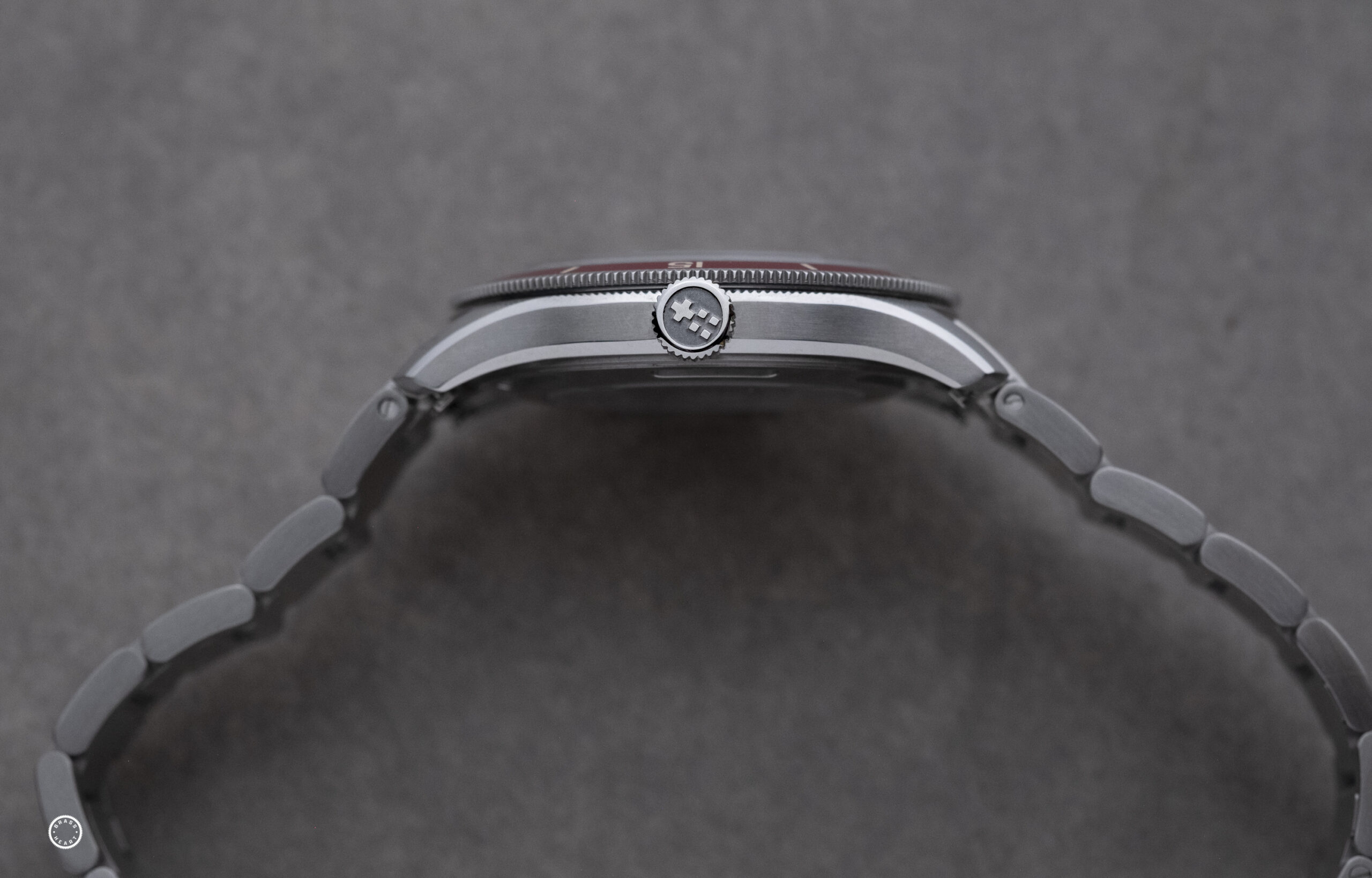
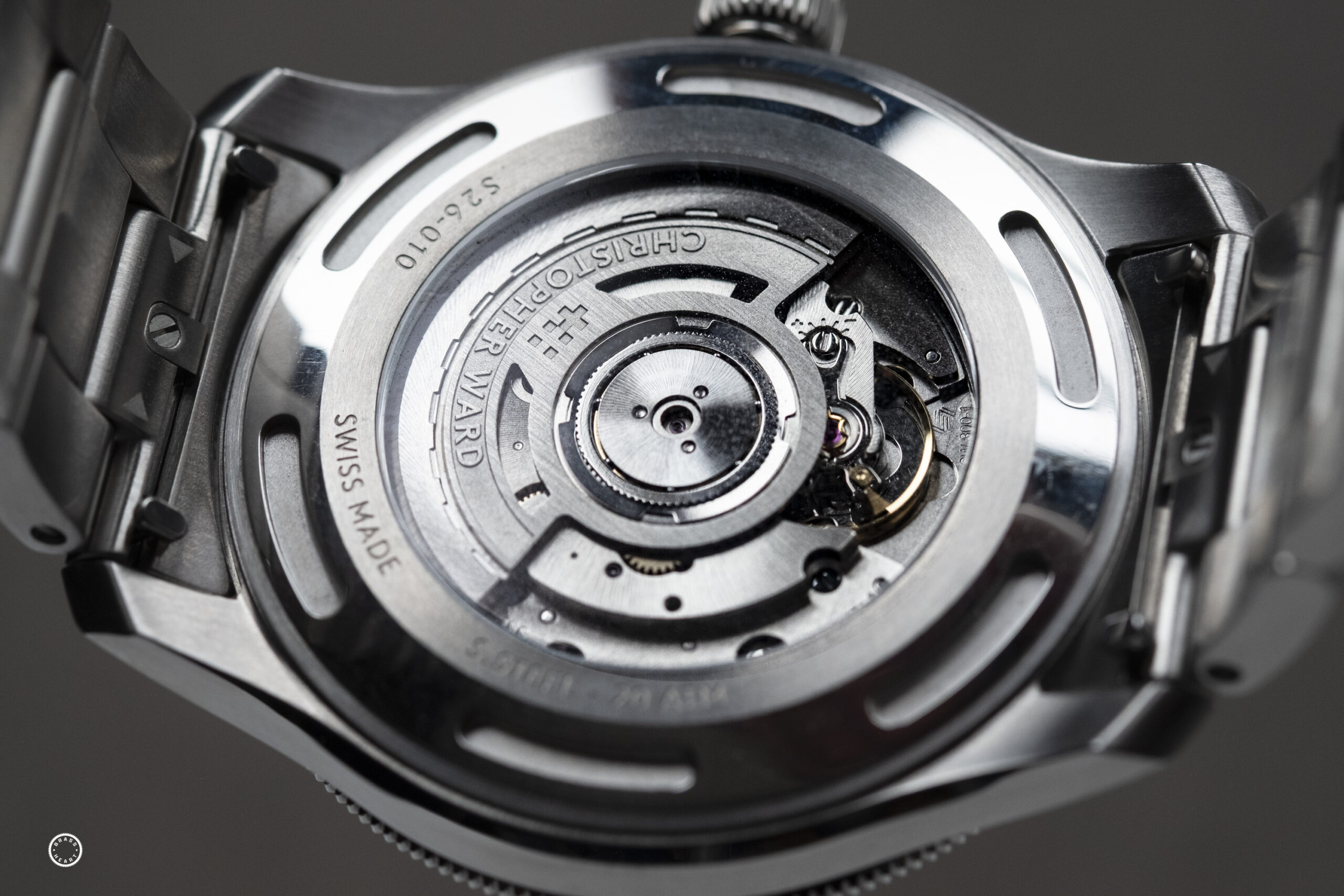
As for cases, we have two sizes that cover both kinds of wearer: 39mm for those after proper, 60s retro proportions and 42mm for larger wrists. It’s a sensible split but does bring up a slight issue in that not all variations are available in all sizes, an issue we’ll get to in a bit. As ever, the Biscay uses Christopher Ward’s Light-Catcher architecture, altered slightly for the slimmer proportions. It loses some of the impact – the point of the Light-Catcher case is to make watches look slimmer than they are – but still looks downright elegant on the wrist.
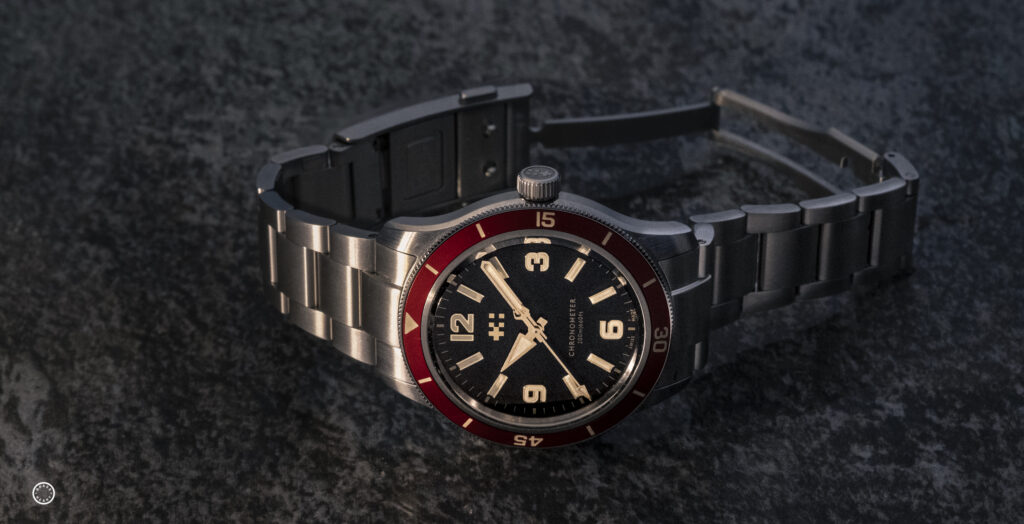
That elegance carries through to the dials, which use diving heritage-style oversized numerals at 12, 3, 6 and 9 o’clock interspersed with batons. On the all-black version they’re trimmed in silver; on the white they’re trimmed in black and in the hero black-and-red version they’re trimmed in gold for a classic gilt look.
Movement-wise, these are at the entry level for Christopher Ward divers, which makes sense for a skindiver. So, it’s not a surprise that they run on Sellita movements, specifically the SW300-1 for automatics and the SW300-2 for the GMTs. The movements have a smaller power reserve compared to the the SW200-2 Power+ in the new Sealander collection, 56-hours compared to 65-hours. But they’re also much slimmer, 3.6mm compared to the 4.6mm. So, if you wanted to balance power and slimness, it’s a solid, reliable choice.
Now, the aesthetics. Christopher Ward’s specs are unimpeachable but there’s been a little bit of outcry about the Biscay’s looks and it’s not hard to see why. Yes, there’s a solid pantheon of legendary divers to draw from, but CW seem to be drinking from one well and one well alone: Tudor.
Let’s not kid ourselves, Christopher Ward knows what they’re doing here. The red-bezelled, black-dialled, 42mm version and the red-and-black GMT are especially egregious. Put them side-by-side and you might have a hard time separating the colours, streamlined mid-century dials and overall style. All I’m going to do here is point out the obvious similarities however; Jorge Moss has delved into the debate behind homage watches here. But while I honestly don’t mind one or two watches lining up with Tudor’s, I have a bigger problem with the entire conversation: it turns the spotlight away from the best watch in the collection, the Biscay Bronze.
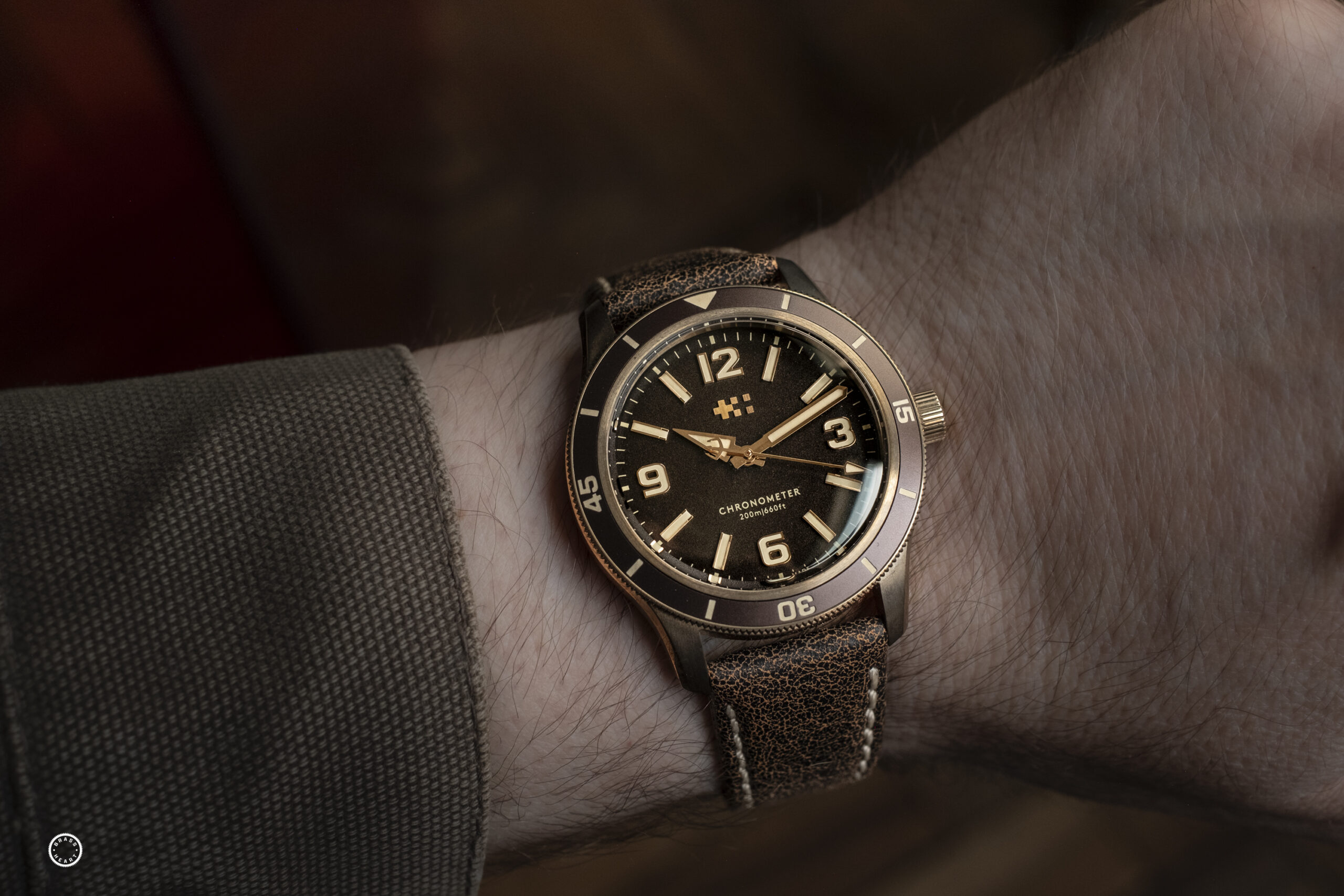
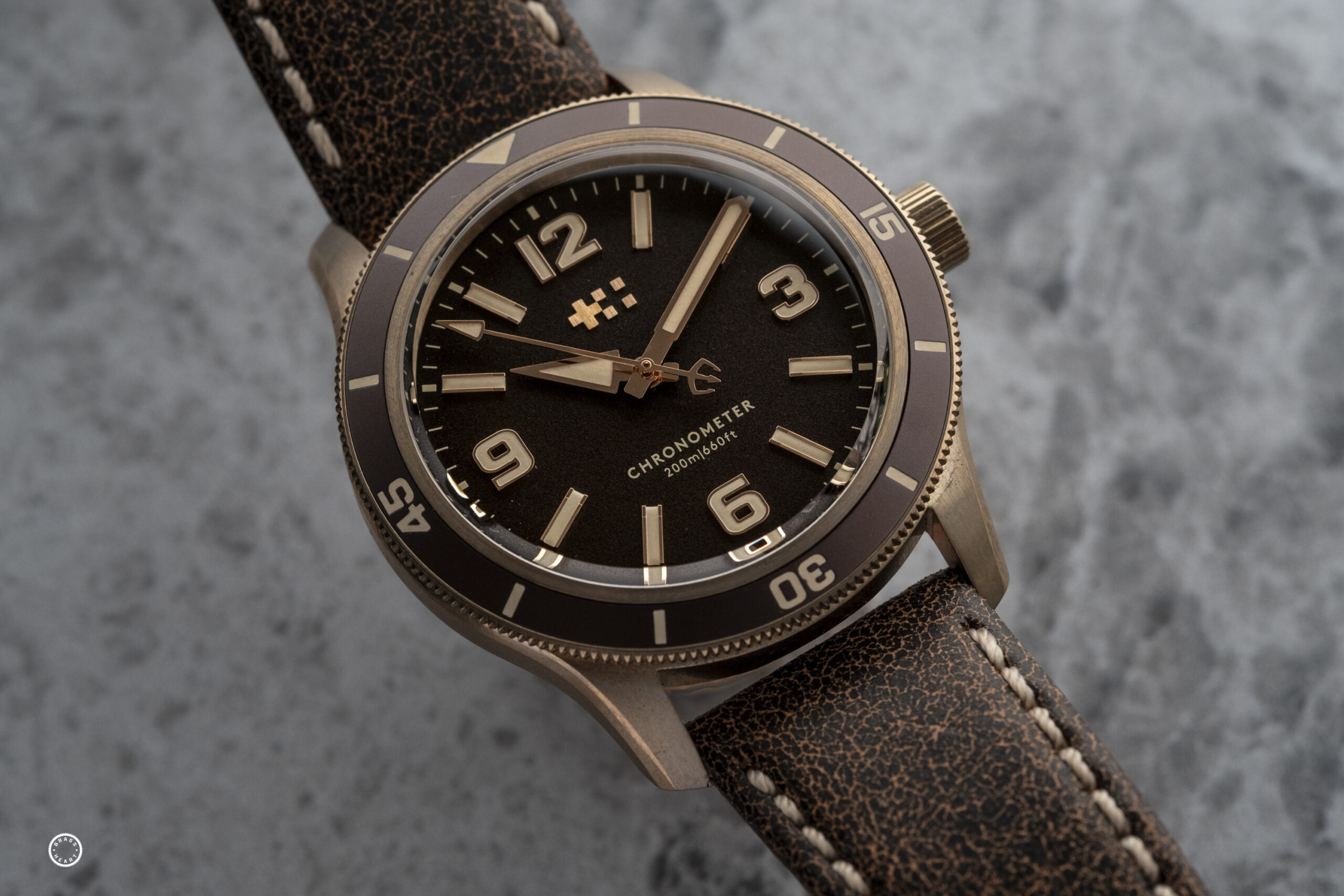
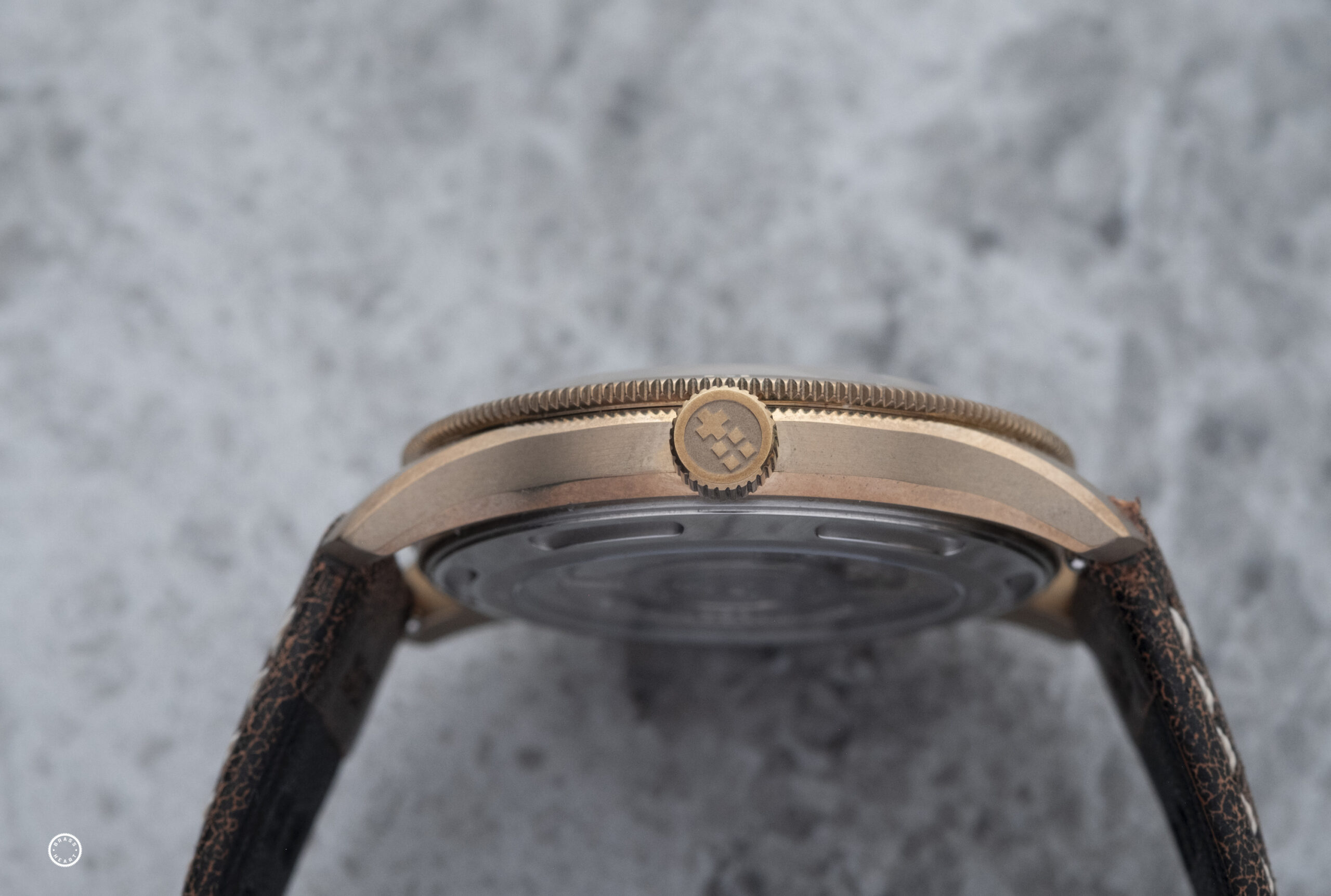
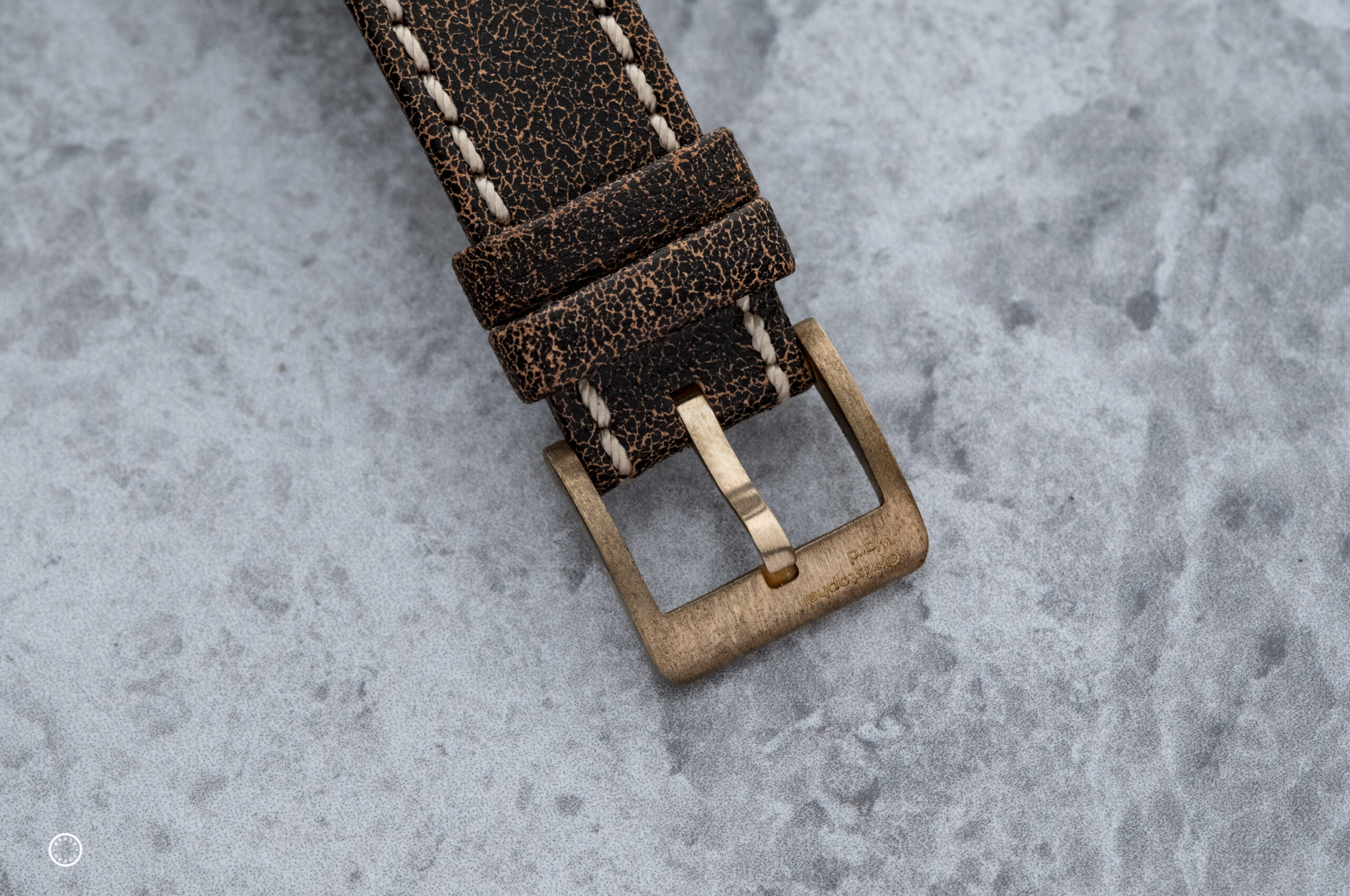
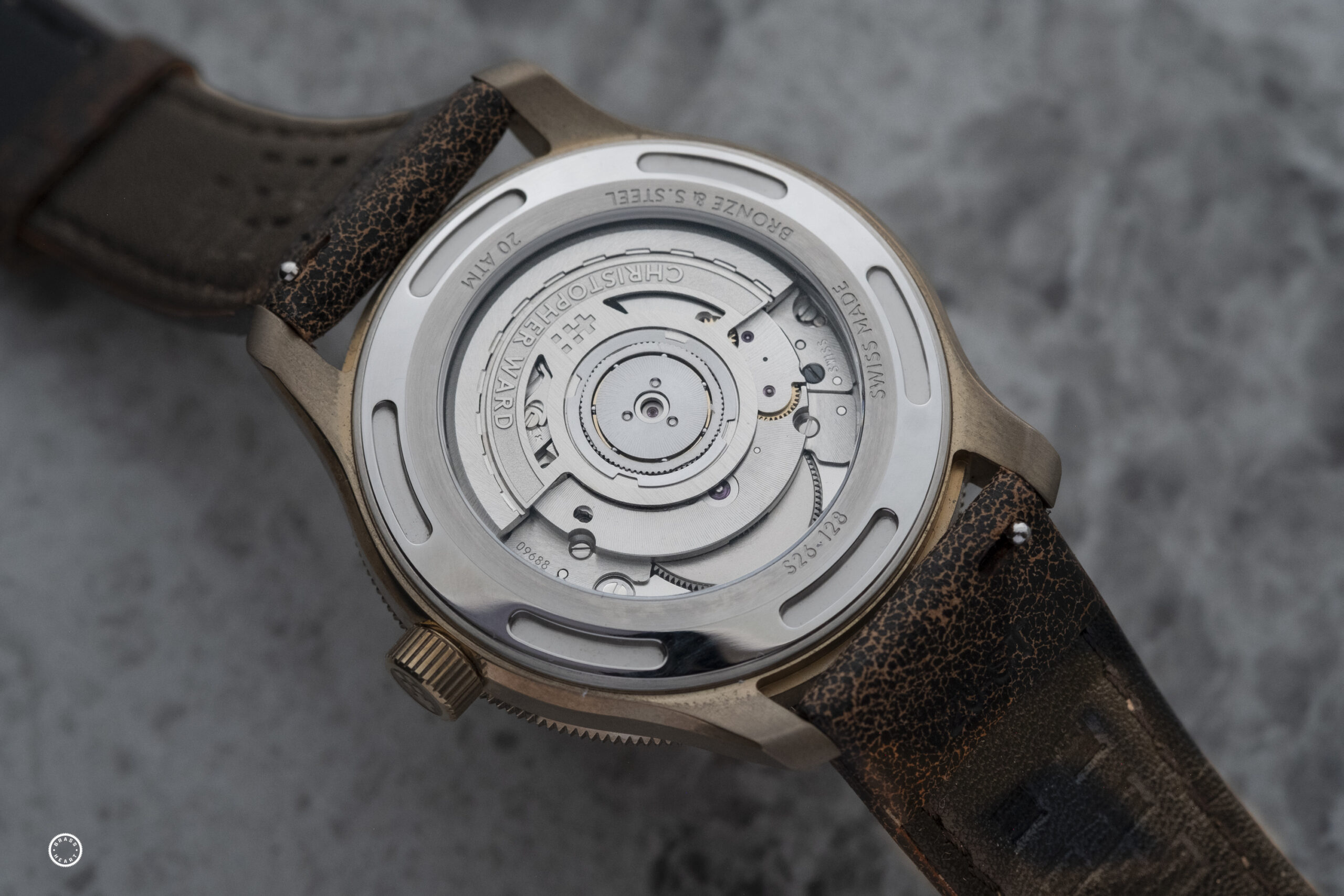
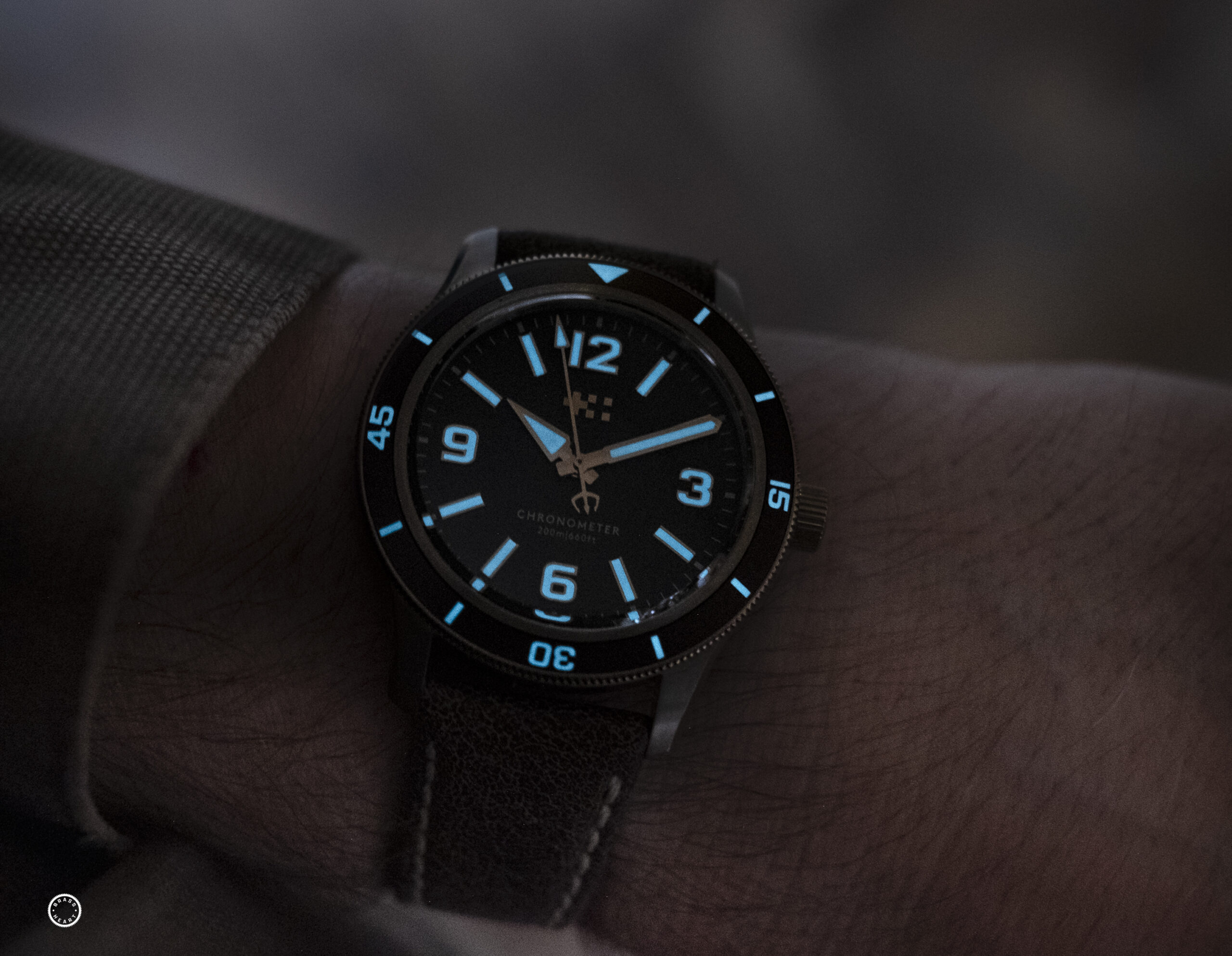
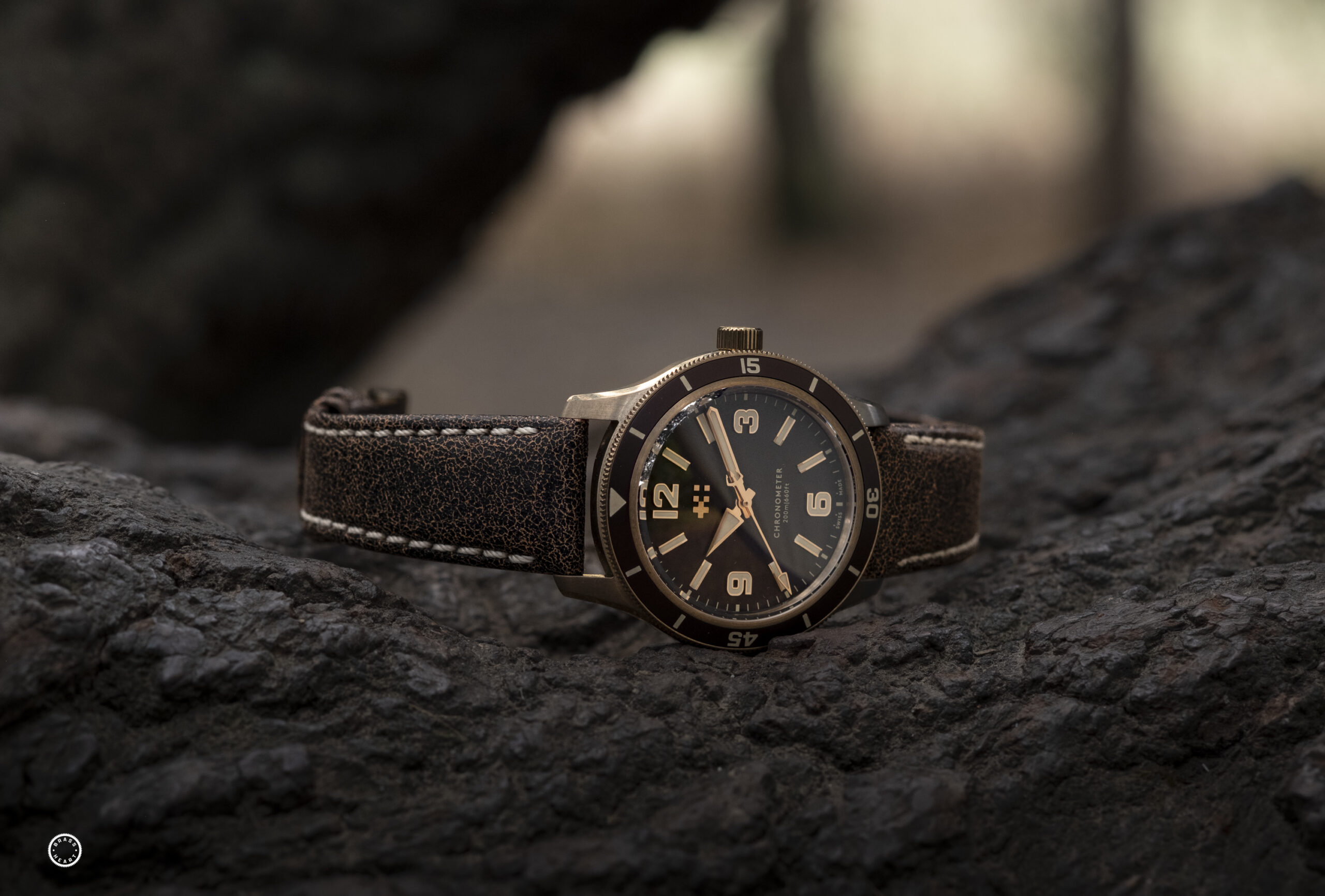
Now that we’re no longer weighed down by shiploads of copper-tin alloys and all the ‘unique patinas’ that come with them, it’s almost refreshing to see a new bronze model. And the Biscay’s combination of black and bronze extends that 60s gilt look across the entire case. The bronze works as a stand-in for gold, largely because the metal itself is brighter than usual. That’s because it’s proper marine-grade stuff and therefore patinates much more slowly than most watchmaking bronze. You won’t get patina quite as quickly but, counterpoint, it won’t look filthy after a month of wear. And there’s still a sapphire crystal / steel caseback so it won’t stain your wrist, either. All in all, a big improvement.
To amp up the innate antique feel of the metal, the watch is set on a vintage oak leather strap. I’d swap it onto something a bit cleaner and more versatile, but it’s still a cool, pre-aged look matched to your inevitable patina ahead of time.
The Biscay Bronze is also available in a sea-green version that’s handsome in the same classic way as gold and green. It’s much more colourful but loses some of the refinement and wearability of the black version. It’s just a bit extra and loses some of its faux-archival identity.
The only problem with the bronze isn’t one that applies to me: it’s only available in 39mm. For my 17cm wrists, that’s the perfect size, present without being domineering and goldilocks-level comfortable. But I’m also well aware that plenty of collectors like a bigger diver and the lack of a larger bronze model, the best-looking model in the Biscay collection, is just a bit mean.
That my only issue with the Biscay Bronze is what isn’t available rather than what is illustrates that yes, I’m a fan of this watch. And honestly, the collection as a whole is a solid addition to Christopher Ward’s line-up. They had a hole the size and shape of a retro diver and they filled it with a typically handsome range with specs that outstrips its price.
To put that in numbers, every Biscay automatic model regardless of metal, size or bracelet, is £1,495. That’s tempting whether you’re in the market for an entry-level Tudor alternative or a specs-driven Skindiver. Though I will still miss the Aquitaine.
But you know what makes it even more tempting? Being free.
We have a Biscay Automatic of your choice to give away to one of our Brass Heart early adopters. Just sign up to our newsletter to enter and we’ll announce the winner in one month. It doesn’t matter whether you want 39mm or 42mm, steel or bronze, you win the watch you want.