From market positioning to new bodywork, the parallels between Ferrari and Tudor’s accessible answers to their bigger guns are striking
It’s become a truism that cars and watches have lots in common, from their similarities as mechanical objects to the histories behind them, the events they are associated with and, of course, the types who are passionate about them.
Sometimes, though, cars and watches share similarities so subtle that they might appear nebulous – but look more closely and it’s often possible to see (or perhaps imagine) parallels that almost make them seem as though they belong together.
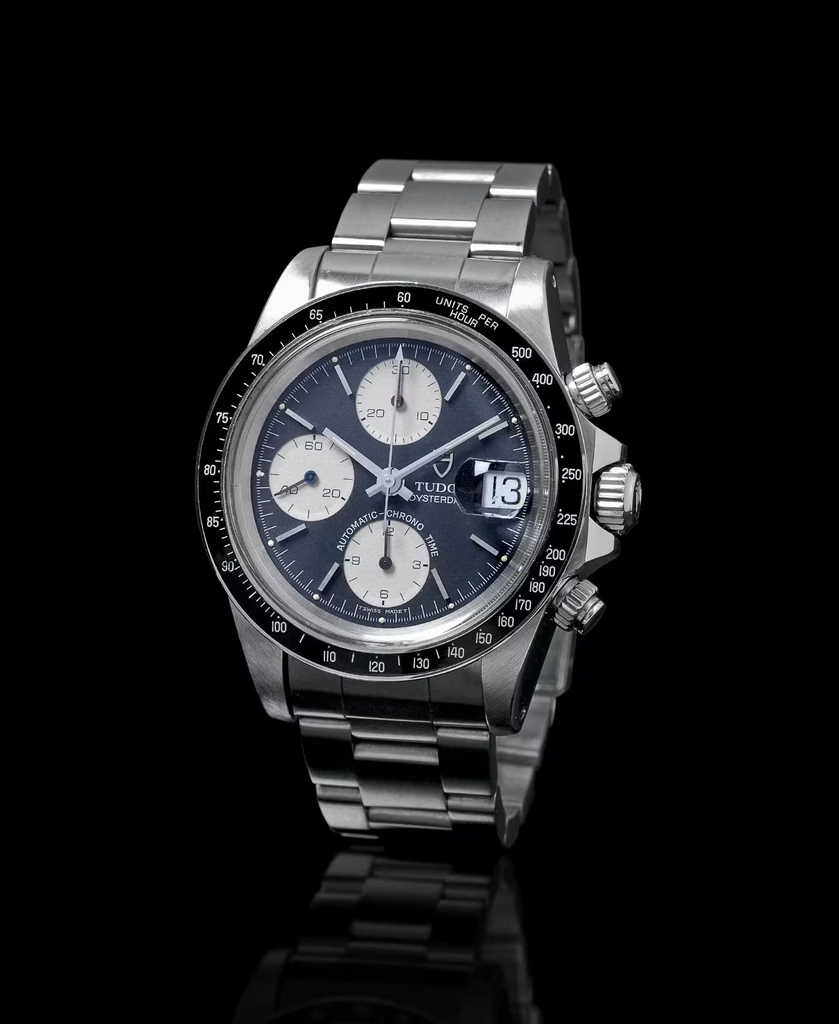
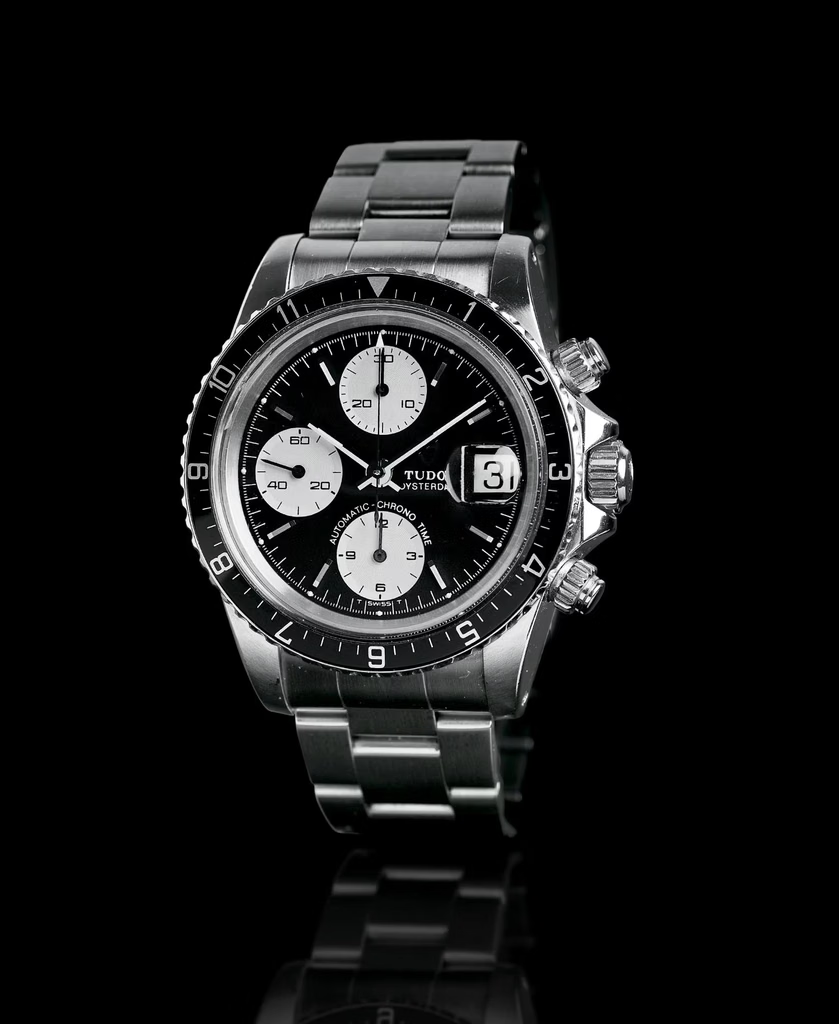
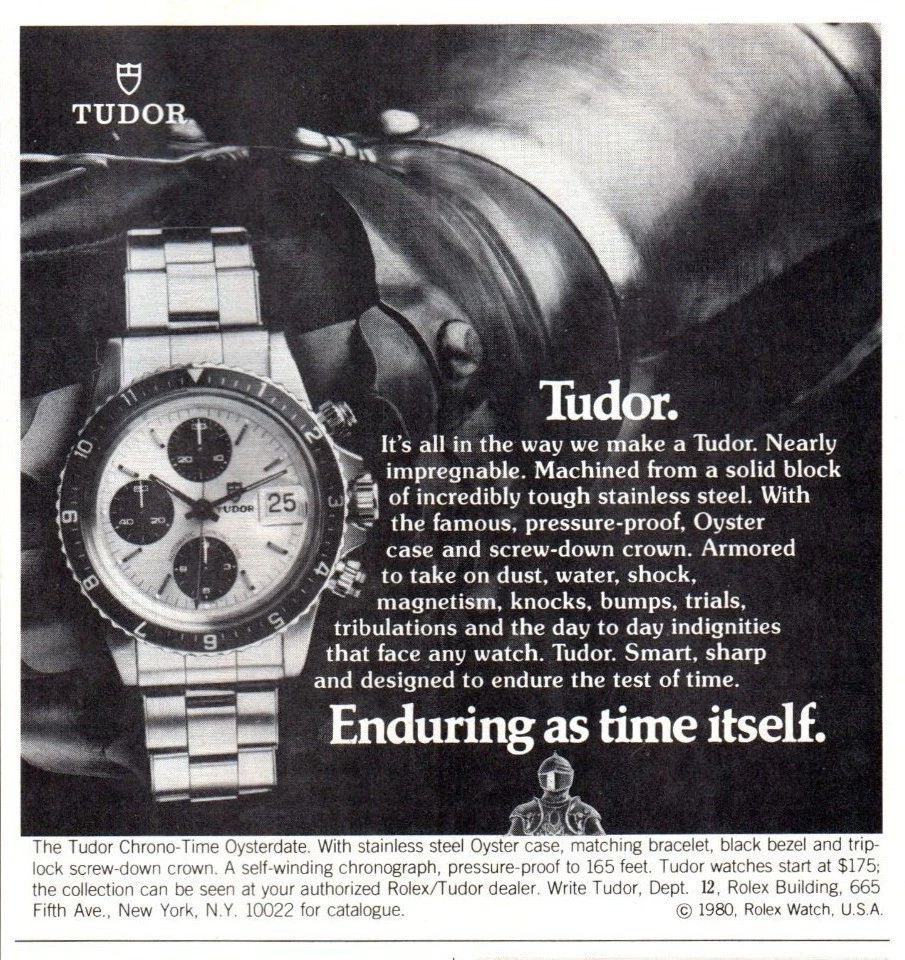
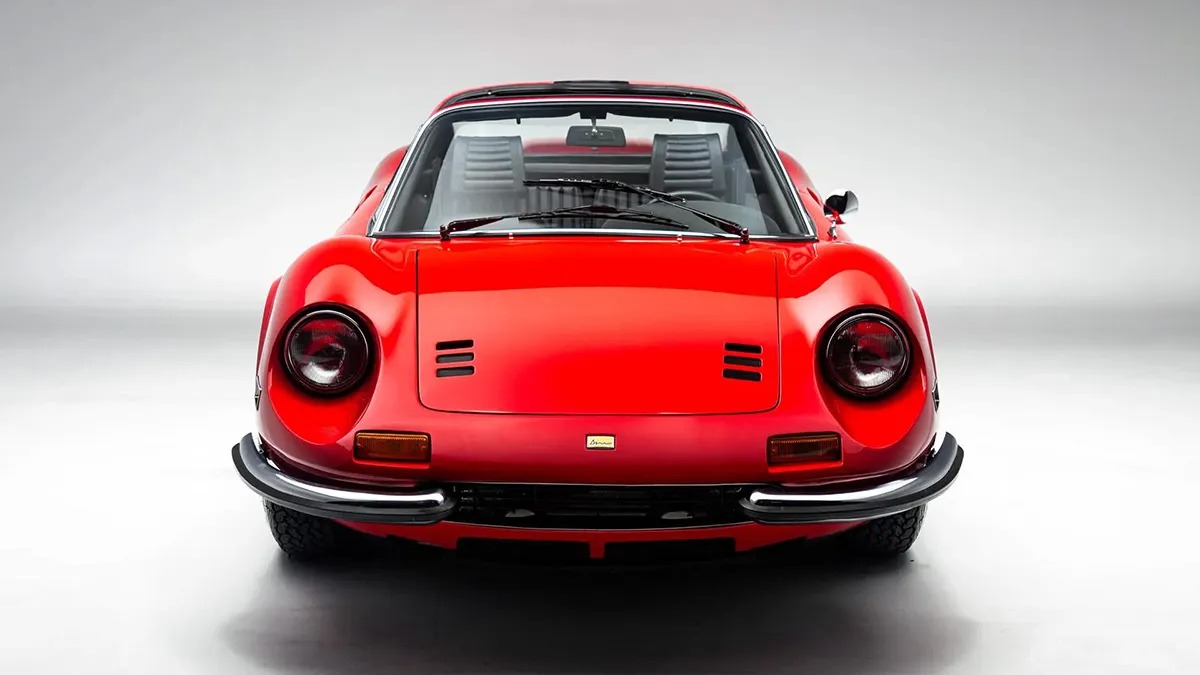
Take, for example, Ferrari’s ‘Dino’ and Tudor’s Oysterday Chronograph, aka the ‘Big Block’. On the face of it, absolutely nothing in common whatsoever. But…
Let’s start with the Dino, the now-celebrated Ferrari that wasn’t.
Marque founder Enzo Ferrari has long been portrayed as a difficult, cold and curmudgeonly individual – but read Luca Del Monte’s superb biography of ‘Il Commandatore’ and you’ll discover a passionate man whose love for his health-stricken son, Alfredo, was so great that he once contemplated ending the latter’s anguish by jumping with him to their deaths.
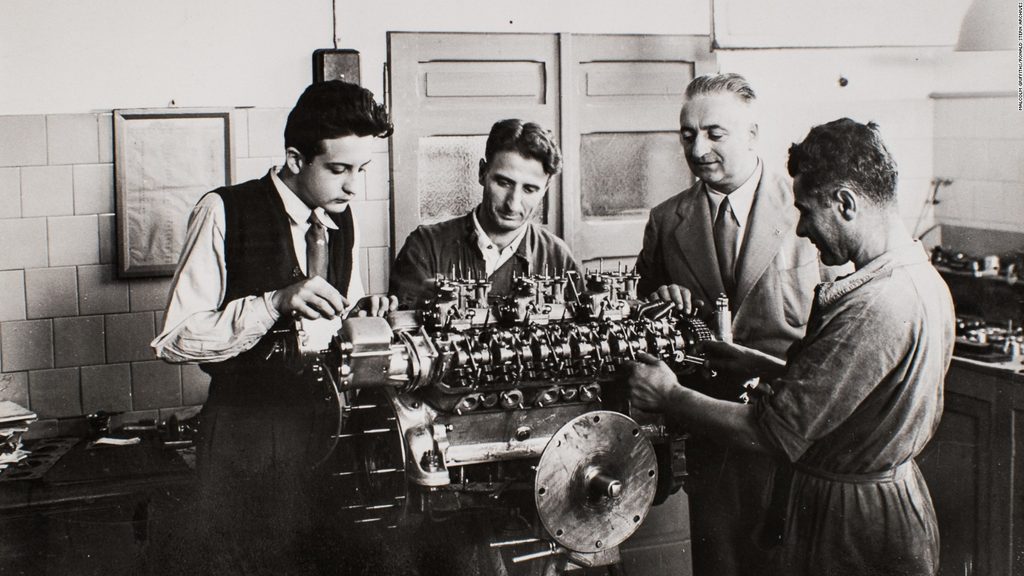
Alfredo (affectionately known as Alfredino, hence ‘Dino’) suffered from Duchenne muscular dystrophy, an especially virulent form of the disease that affects only young boys and inevitably leads to their premature deaths.
Dino died from it at the age of 24 but had already displayed a precocious talent for engineering through his extensive input into the design of the 750 Monza racing car and, to a lesser extent, the development of the 1.5 litre V6 engine subsequently used in Ferrari’s F2 cars. These V6s became known as the ‘Dino’ motors, and versions of them were used in the 246 SP racer that caused a sensation when it was unveiled in 1961 as the first-ever mid-engined Ferrari.
Ferrari struggled to accept that a car carrying the prancing horse emblem could be powered by anything other than a V12, but the diminutive V6 proved without doubt that bigger isn’t always better. The problem was, at least 500 engines needed to be built in order for the design to be homologated for racing.
With his cash-strapped marque not able to produce so many units, Ferrari reluctantly licenced the design to Italian automotive giant Fiat, allowing it to use Dino V6s in its run-of-the-mill road cars – something that Il Commandatore struggled to stomach.
By the time the 246 SP hit the track, Alfredo had been dead for five years having succumbed to his illness at the young age of 24 – and it was as a tribute to him that the Dino was conceived.
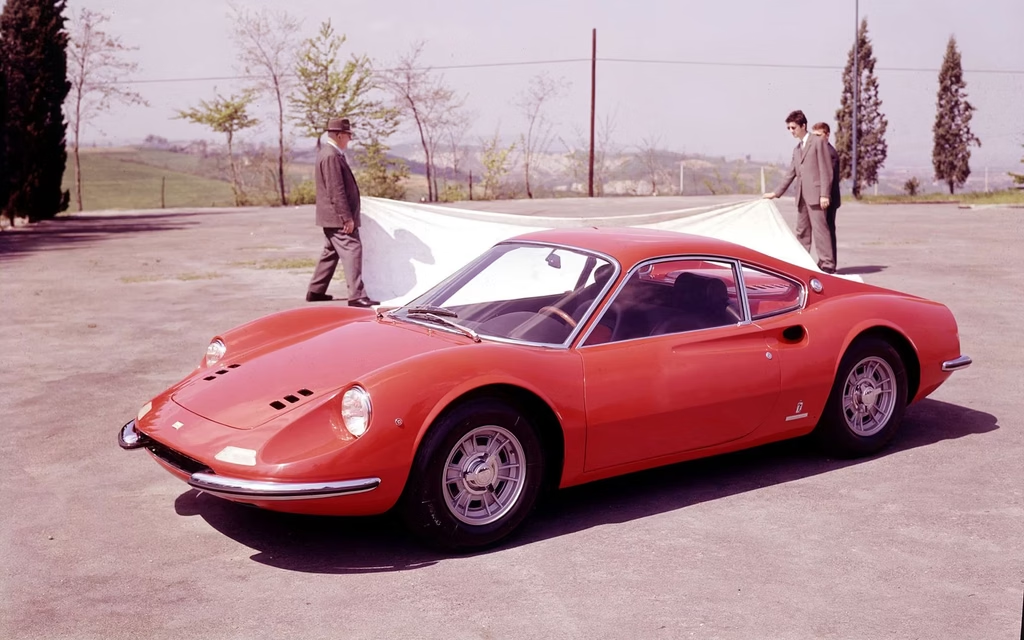
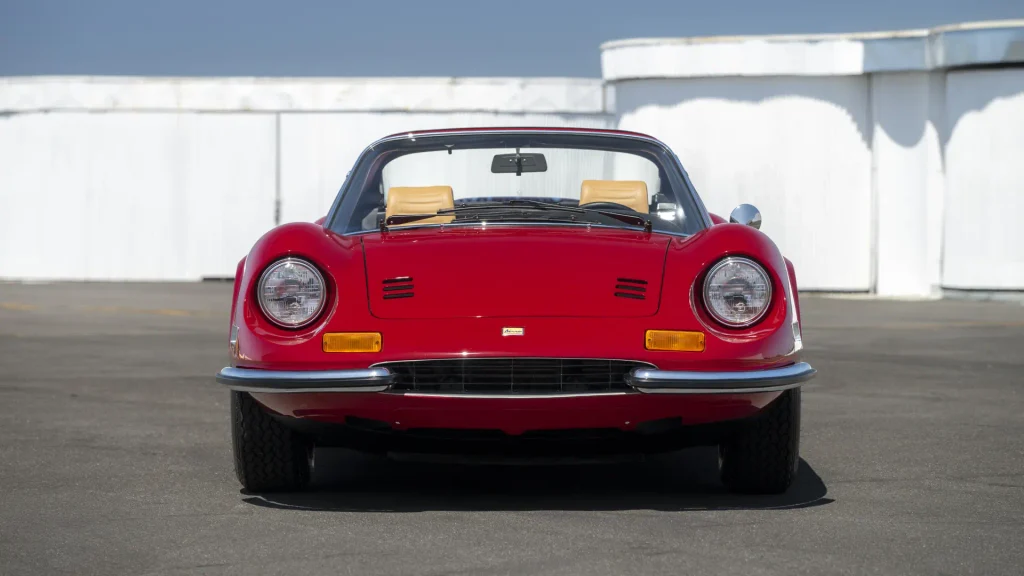
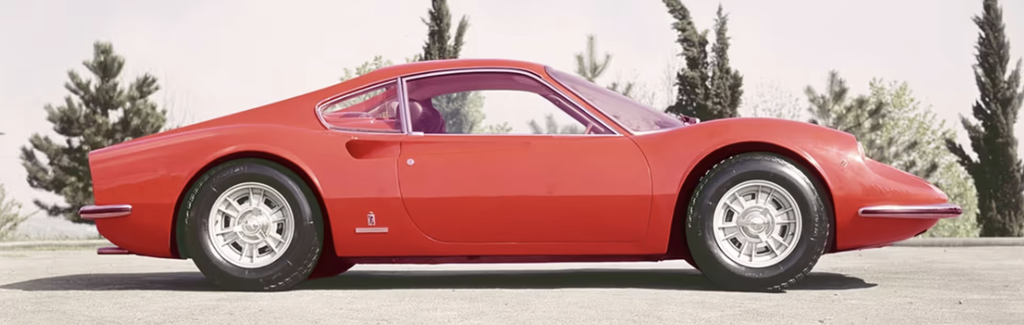
It was developed after a half-hour briefing by legendary coachbuilder Sergio Pininfarina, during which his engineers were presented with the bold design and mechanical layout of what would be the first mid-engined production car to be built under Ferrari’s roof – one that would, of course, be powered by a Dino V6.
But with that same engine already propelling Fiat-badged family saloons and taxis around the roads of Italy, Ferrari simply couldn’t contemplate seeing his name and the prancing horse badge on what was to be a high volume, relatively affordable car.
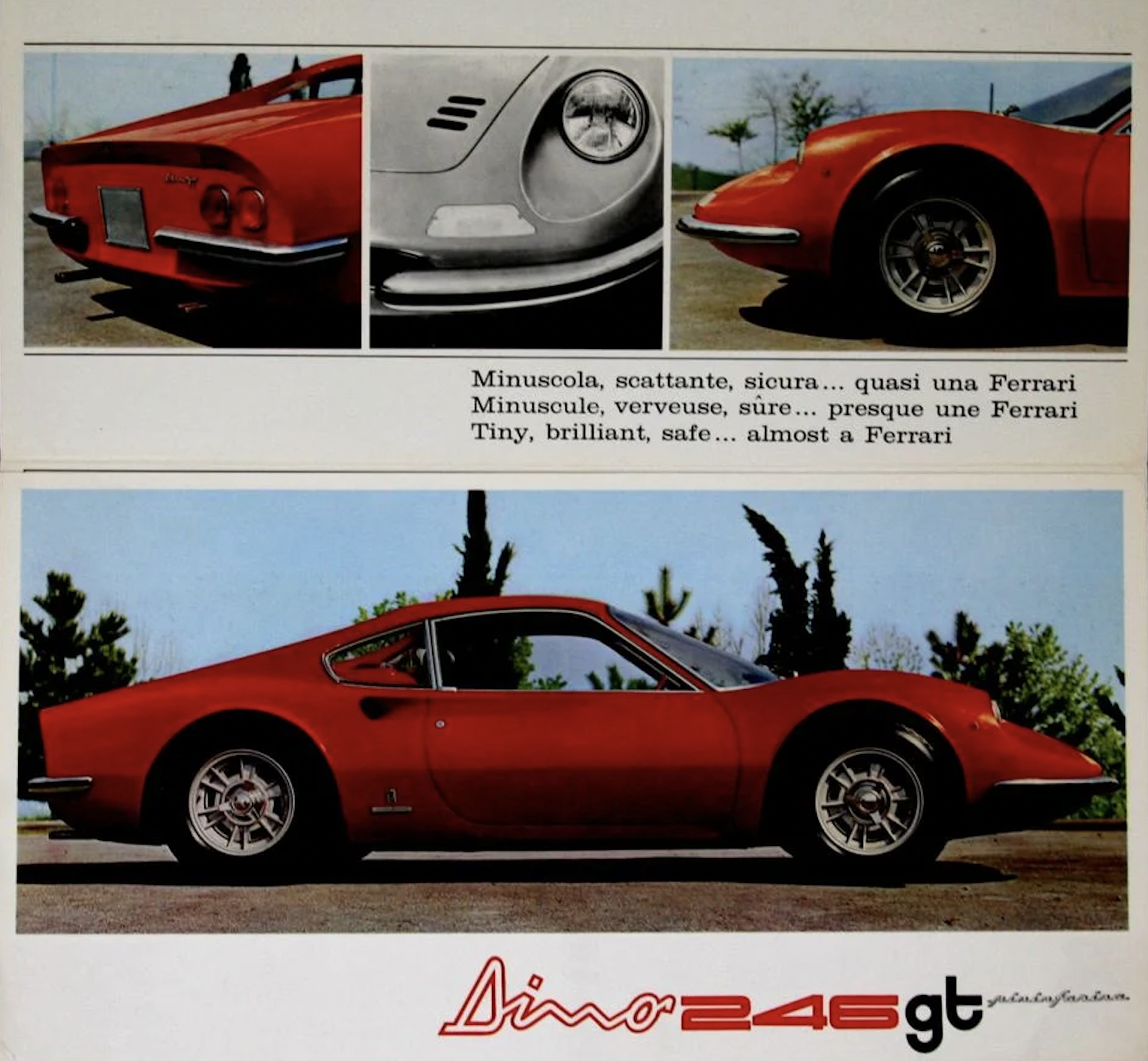
As a result, the 206 GT not only carried the single nameplate ‘Dino’ on its nose and tail, it was even advertised in the early days of production as ‘Almost a Ferrari….”
Although just 152 of the original 1986cc-engined 206GTs were built between 1967 – 1969, 3,569 examples of its 2.4 litre successors (the 246 GT coupe and 246 GTS spider) rolled off the production line before the model’s demise in 1974.
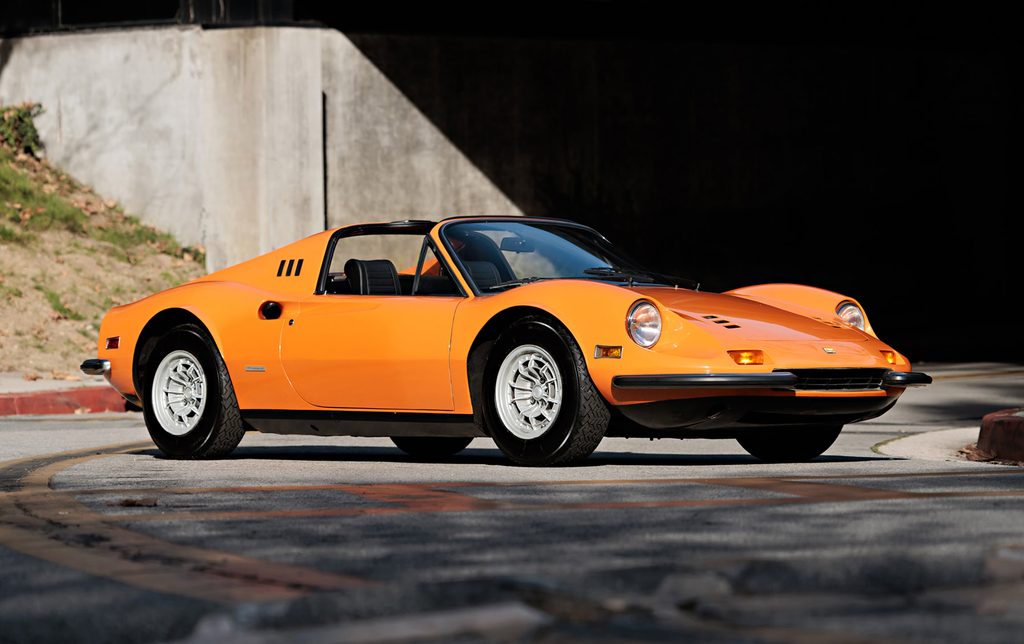
That made the 246 Dino the most mass-produced ‘non-Ferrari’ Ferrari ever, attracting younger, less wealthy buyers with its relatively affordable price tag of around £5,500, its fabulous ‘driveability’ and a choice of factory-finish paint colours that screamed ‘1970s’.
These days, £5,500 won’t even get you a pair of Dino seats (especially not the GTB/4 Daytona type that were used in the so-called and highly desirable ‘Chairs and Flairs’ wide wheel arch Dino GTS cars).
Earlier this year, Gooding Christie’s set a world record for a Dino when it sold a 1974 246GTS uniquely finished from new in Porsche Signal orange for $1.3m. It was an exceptional price, but any well preserved or correctly restored Dino will routinely fetch around $500,000, much more if it’s a ‘chairs and flares’ model which left the works in a funky paint job.
So how is a Tudor Big Block chronograph the horological equivalent of a Dino?
For a start, look at Tudor’s positioning as the Rolex sub-brand created by founder Hans Wilsdorf to ‘compare with Rolex in dependability and accuracy yet sell at a more modest price’.
On all counts, this resonates with the philosophy behind the Dino – no Ferrari badge but, still made by the firm; far less expensive than a front-engined V12, but with all the thrills, much of the performance and a lot more accessibility
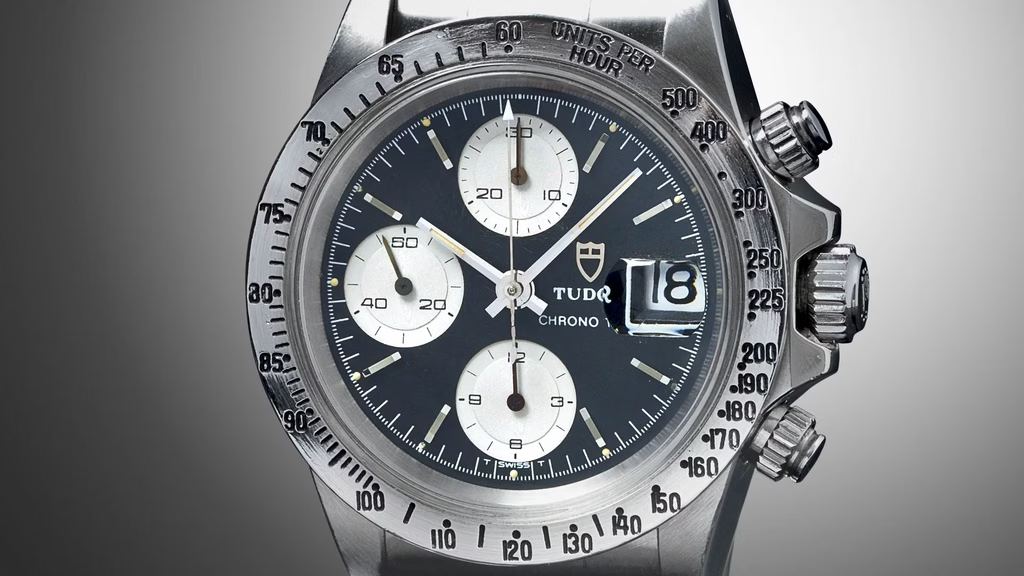
And what about the design? Despite being founded during the 1940s, it wasn’t until 1970 that Tudor introduced its first chronograph wristwatches in the form of the Reference 7032 and 7031, the two being identical save for the former having a steel bezel and the latter a plastic one.
The robust, 40mm steel case dwarfed the 36mm effort of its Rolex stablemate, the Cosmograph, while other interesting features included a horizontal, acrylic date magnifier at the six o’clock position and unique graphics.
The majority of dials were finished in grey (with only a dozen or so black examples known) and bore a design that led to the watches being nicknamed ‘Home Plate’ (due to the pentagon hour markers resembling the home plate of a baseball pitch).
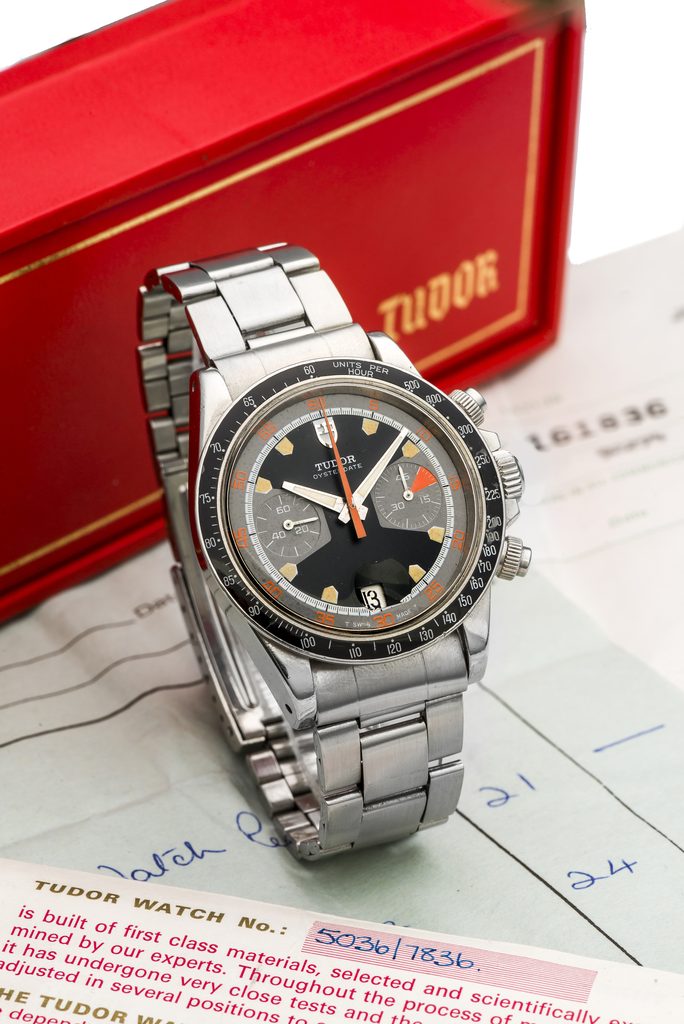
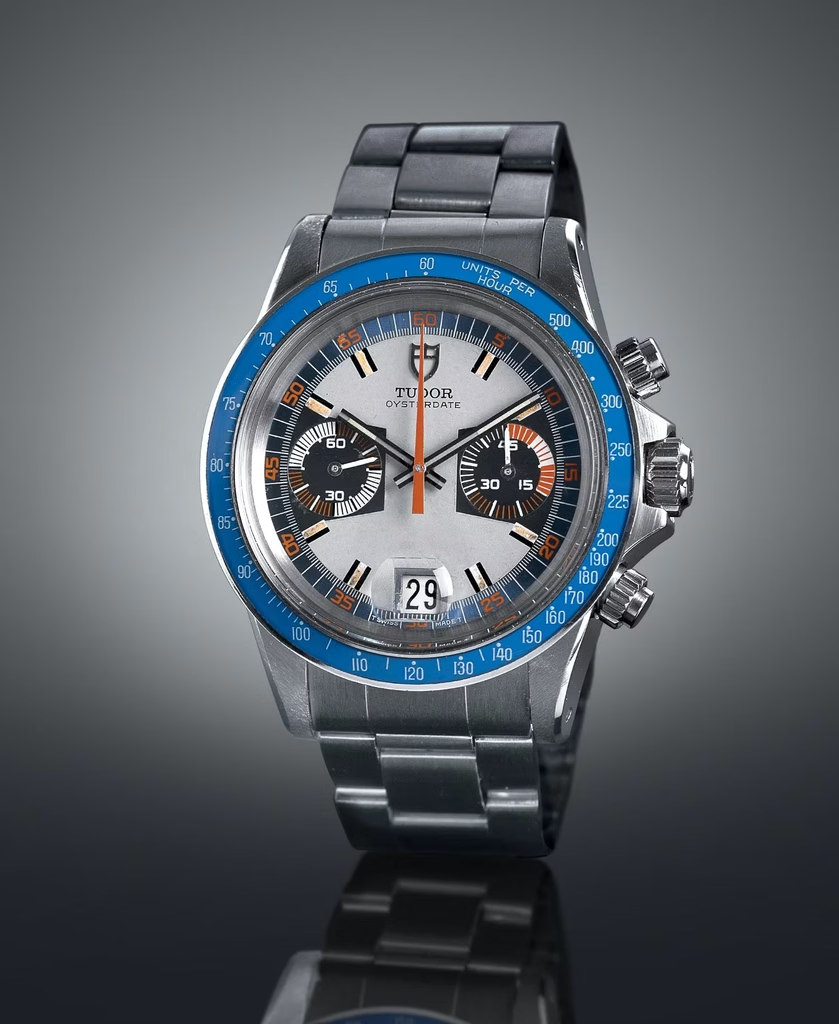
The Reference 7032/7031 remained in production for little more than two years, being phased out after the launch of the Reference 7100 series which used the same case but contained a different movement (Valjoux 234 instead of Valjoux 7734) and had a new, blue and grey dial earning it the name ‘Monte Carlo’ due to the design being similar to the look of a roulette wheel.
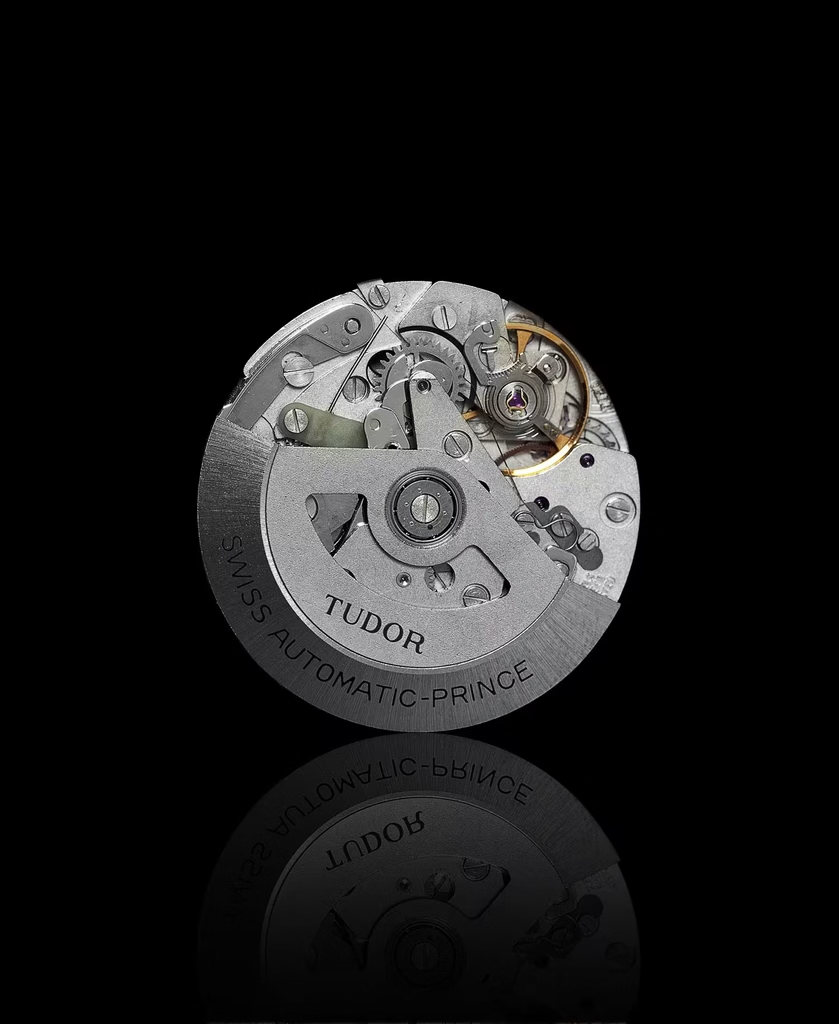
The watches were as different to anything from Rolex as the Dino was as different to anything from Ferrari – but it was the Big Block that, just like the Dino, really made Tudor stand out because it was the very first chronograph created beneath the Rolex umbrella to feature an automatic movement.
That was the famed Valjoux 7750 and, since it’s common for watch movements to be described as the ‘engines’ of timepieces, perhaps it’s fair to compare its use by Tudor to the difference between Ferrari’s signature, Colombo V12s and the Dino’s V6.
And it was the use of the automatic movement that earned the ‘Big Block’ its name, signifying the special ‘bodywork’ it required (just as unlike a previous Rolex or Tudor as the Dino was to a front-engined Ferrari) in order to contain the self-winding mechanism’s additional bulk.
Admittedly the Big Block didn’t appear until 1976, two years after production of the original Dino 246 had finished – but its successor, the (Ferrari-badged) Dino 308GT4 launched in 1973 and its smaller-engined 208 counterpart (from 1975) remained in production until 1980.
The Big Block stuck around for a decade or so after that, meaning it lasted a good deal longer than the Dino nameplate.
But both were of an era when design and creativity was still more about creating something new than imitating something from the past. And, while sticklers for ‘period correctness’ might disagree, we can’t think of many watches that would look as good beside the steering wheel of a Dino as a Tudor Big Block…