
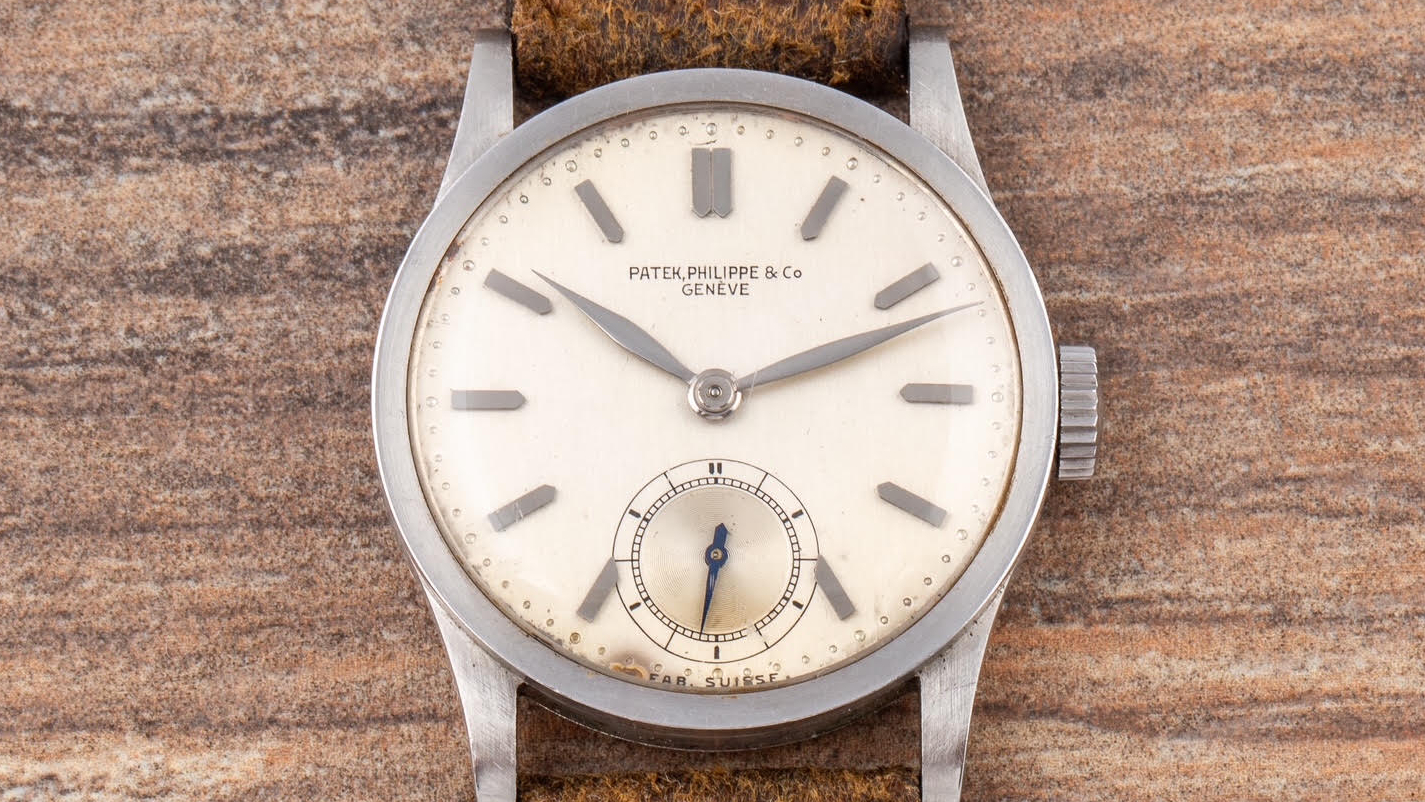
The grail-worthy classical good looks of the Calatrava without the prestige price tag
It’s often said that ‘less is more’ and I have on the whole considered this to be a rather foolish mindset. Less money is not more, less cake is not more and less champagne is definitely not more. But there is one area beyond the obvious (Lime Bikes on the pavement and Prime Ministers) where this holds true: design. Where the simplest route and understated approach is best, the clean form of Helvetica or the pure lines of a Jean Prouvé Standard Chair speak volumes more than anything cluttered.
How does this translate to the world of horology? If one were to ask a child to draw a watch they would draw a round case, round dial and three hands. They would draw simplicity, because that is the very essence of what a watch is and the finest distillation of that is the Patek Philippe Ref. 96, the Calatrava, the wrist watch. This distillation of timekeeping had a 40 year production run (1932 – 1973) and whilst its round 31mm case stayed basically the same and all were manually wound (first with a JLC movement and from 1935 in-house manual movements). But there were many variations with dials and handsets over the decades the Ref. 96 was in production. Eggshell white, black or salmon dials; applied stick markers, Breguet numerals or sector dials; 6 o’clock sub-dial seconds, sub-dial at 9 o’clock or no running seconds at all. There are so many options for collectors to get their teeth into that one could build a entire collection of Ref. 96 watches and be very happy.
Like most Patek Philippe watches the Ref. 96 was offered in precious metals, which included yellow gold, rose gold and platinum. But for that pure ‘less is more’ idea, the highest value is with the stainless steel models. Not because the price of the material, but because of the rarity. They made very few in that metal and they have more of an ‘everyday’ feel. Unfortunately, for this specific everyday watch one would expect to pay a ‘more is more’ minimum of £18,000. For something rare and special you will find yourself looking down the back of your sofa for £55,000, out of reach for most of us by a long way.
But there are some very interesting alternatives in the vintage market, ones that have the feel and great history of the Ref. 96 but will not give your credit card a heart attach. Here then are five wonderful vintage watches that will scratch that Calatrava itch.
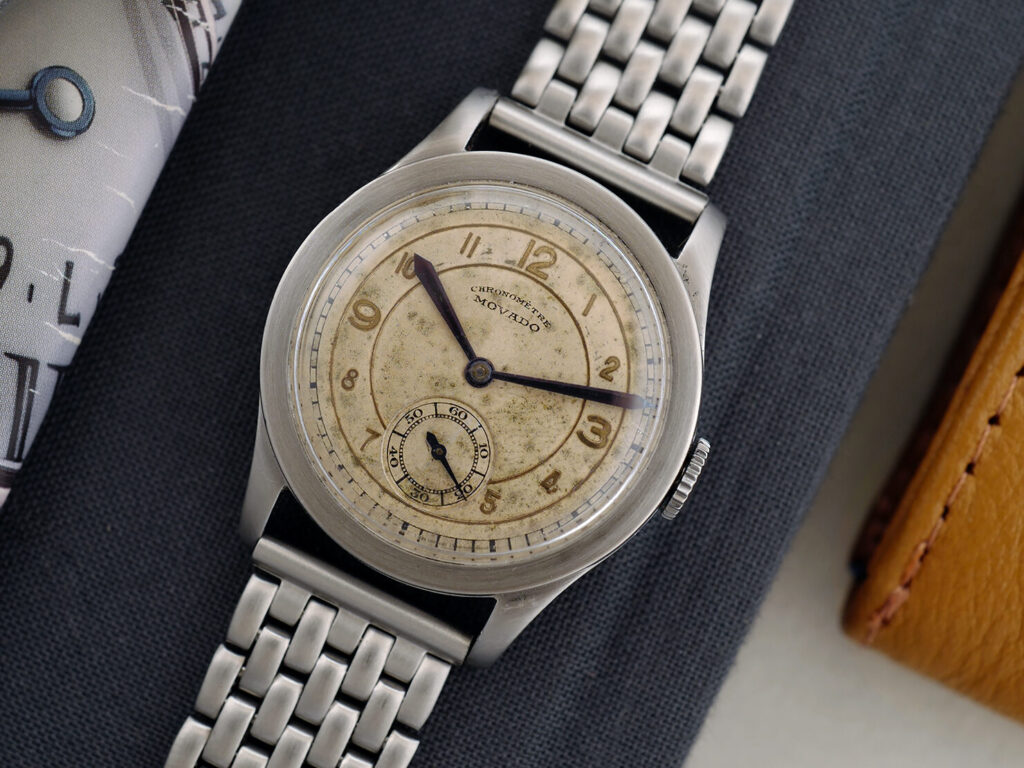
Movado Cal. 75
The once great brand Movado has slipped down the hierarchy and now is a shadow of its former self. But one need only look back to the first half of the 20th century to find some real gems. One of those gems that fits the bill here are the Cal. 75 models (some references include 12726, 12706 and 12709. But you can search for a Movado Cal. 75 on your favourite auction site). Like the Ref. 96, the Cal. 75 Movado watches are on the small side (31.5mm) but like their holy trinity cousin, it wears very well. Most cases come with a flat bezel, but there are stepped versions out there, and slight variations can be seen with the lugs. As is found with the Patek, there are centre seconds and 6 o’clock sub-dial running seconds. I have yet to see a model that has no running seconds.
There are many different dials to be found with the Cal. 75 watches. Including black gilt, white and some two-tone, with Arabic numerals and even some with Roman numerals. The manual wound calibre had a very long life (1926 – 1960) and was very reliable and you can even come across chronometer versions (marked Chronomètre on the dial) which are rarer and more desirable. The handsets come in gold (to match the gilt dials), blued and some that are lumed. With so many variations this Movado is definitely one you should be looking at and prices are approachable: a nice, clean watch will come in around £2,000 and a Chronomètre stretching into the £3,000 region. You can even find models with Tiffany & Co. and Cartier signed dials which are very collectable. If double-signed watches are your thing, the Tiffany & Co. models don’t actually have a massive premium, unlike the very rare Cartier signed.
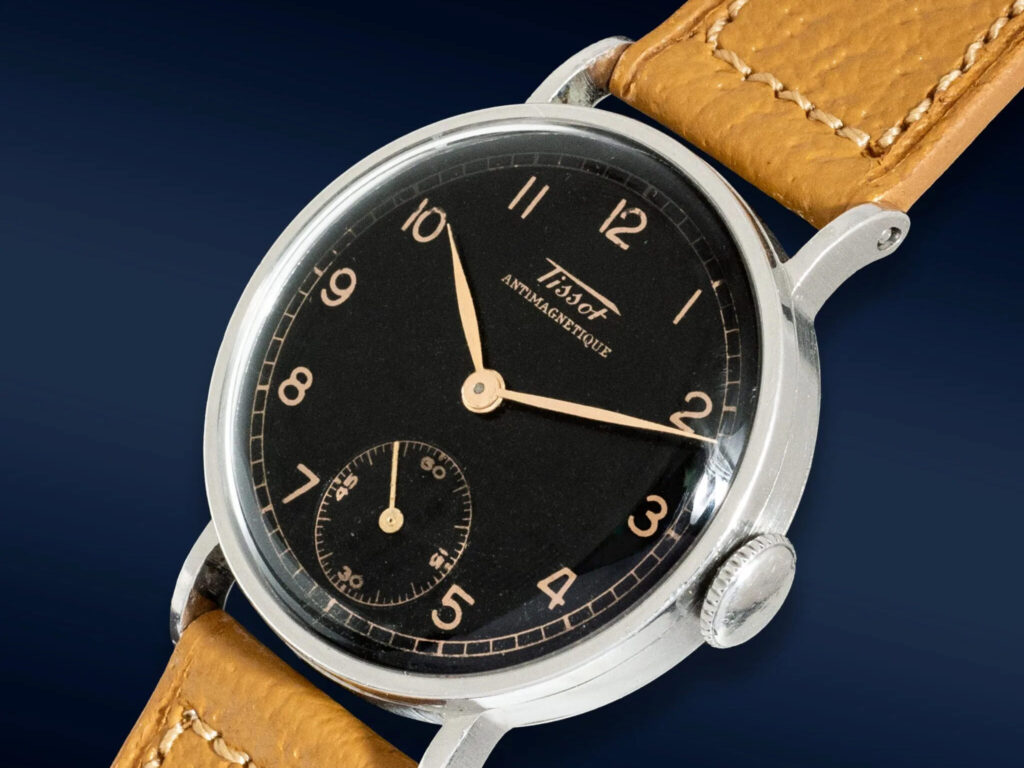
Tissot Antimagnetique
Tissot is considered a more budget friendly brand and, thanks to the PRX, a very popular one. The kindness to your credit card extends to the vintage models and one you should be looking at if you have an eye for the Ref. 96 is the Antimagnetique. With its 1930 release, the Tissot Antimagnetique was the first antimagnetic watch on the market and this was a very important development as the increasing magnetism found in the home and workplace in the 20th century was playing havoc with the timekeeping abilities of the wrist watch. Tissot solved this problem by using non-magnetic alloys in their caliber 27 hand-wound movement that gave the Antimagnetique an impressive-at-the-time 60 gauss of magnetic resistance.
Like the Ref. 96, the Tissot came with a variety of dials: centre seconds and sub-dial running seconds in black, white, salmon and even black-and-white Tuxedo dials, with many having lumed hands and lots with Arabic numerals. Where the Antimagnetique differs is the cases, which come in 31mm, 35mm and even 40mm in chrome plated base metal, stainless steel and gold. But if you want the Ref.96 look you need to be seeking an Antimagnetique in stainless steel with a 31mm case. Fortunately, you’re in luck; amazing examples can be found for around £1,200. They are not bargain bucket, but they are a lot of watch for not a massive amount of money.
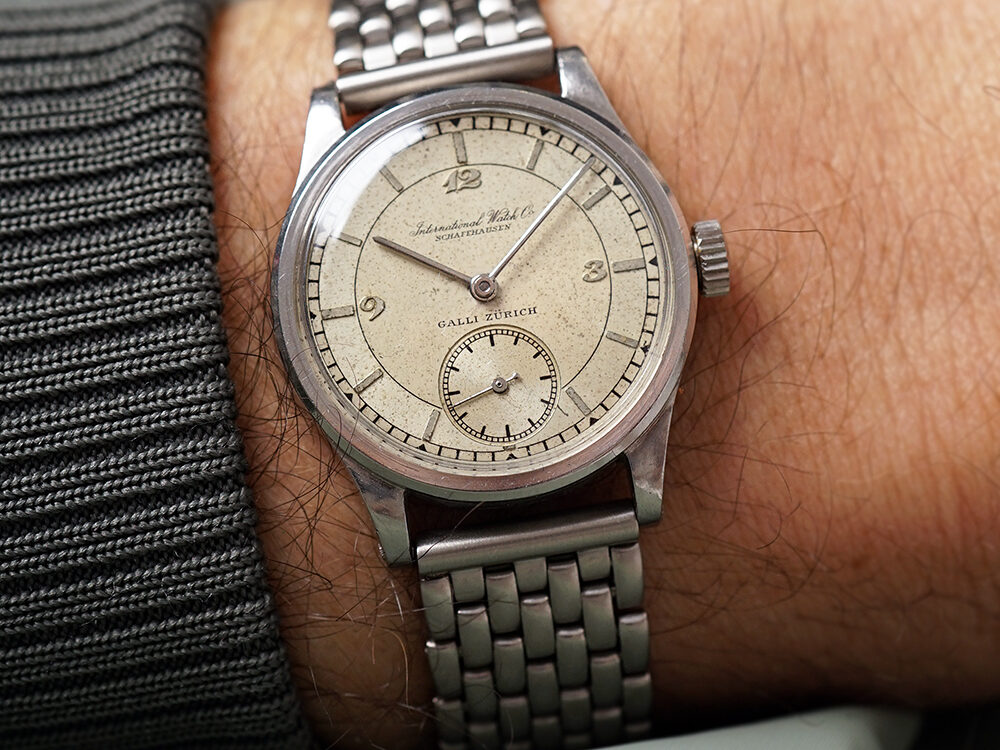
IWC Cal. 83
When one thinks of an IWC Calatrava the Cal. 89 comes to mind. But there is another model that is often overlooked: the Cal. 83 and in particular the 30.5mm stainless steel models. Like the Tissot, the IWC can be found in a variety of materials and case sizes. It is the smaller steel model that will give you that stainless steel Patek Phillipe Ref.96 vibe and coming in at around £5,000 you will have a beautifully made with a wonderful hand-wound movement.
Introduced in 1935 and replaced by the Cal. 89 in 1947 the Cal. 83 IWCs and 83s had much less variation with dials and hands with almost all having leaf hands and a 6 o’clock sub-dial running seconds and sector dials with Breguet numerals at the cardinal points, thus being a little less interesting to build a collection around. Nevertheless the Cal. 83 is a great alternative Calatrava for those wanting something special for a fraction of the cost of that Patek premium.
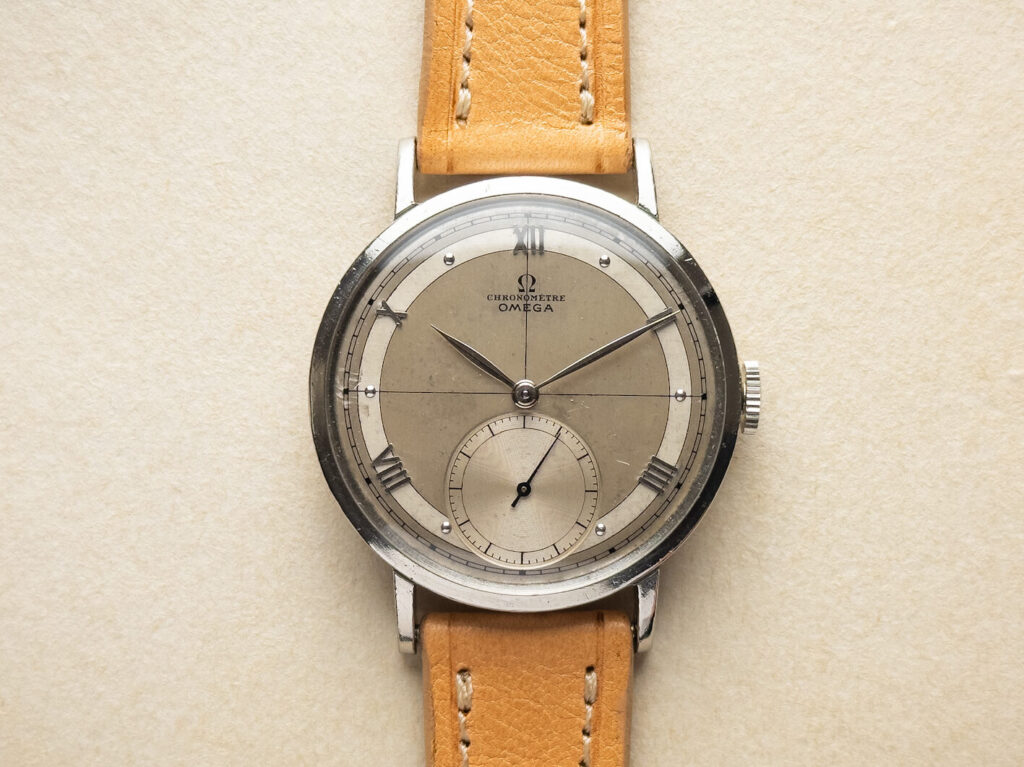
Omega 30t2 Chronomètre
There are classic movements that always spring to mind: Jaeger-LeCoultre 920, Zenith El Primero and ETA 2824 are perfect examples. However, there is one more that is loved by watchmakers for its quality and those collectors that know. The Omega 30t2 found itself in many time-only models, including the CK 2292 watches supplied to the Royal Air Force and Royal Navy. One that fits perfectly here was the 30t2 RG Chronomètre used in elegant Calatravas produced from 1941 to 1952, many in yellow gold. But our focus is the stainless steel models (look for Ref CK2366 and CK2367), which for some reason remain among the most underrated time-only vintage models out there.
Chronomètres come with both centre seconds and the rarer 6 o’clock sub seconds and all with sword hands (running seconds hand is often blued stainless steel) applied or printed Arabic or Roman Numerals on eggshell or silvered dials and elaborate minute tracks. Where they differ from the others in this list is the case size, which has a more modern 35mm across, all the more wearable if the you find the smaller size difficult to pull-off. Cases vary in style with both thin, straight lugs and elegant curved. versions. 30t2 Chronomètre can be found for as low as £2,500 and around £6,000 – £10,000 for very rare and good condition examples found at high-end dealers.
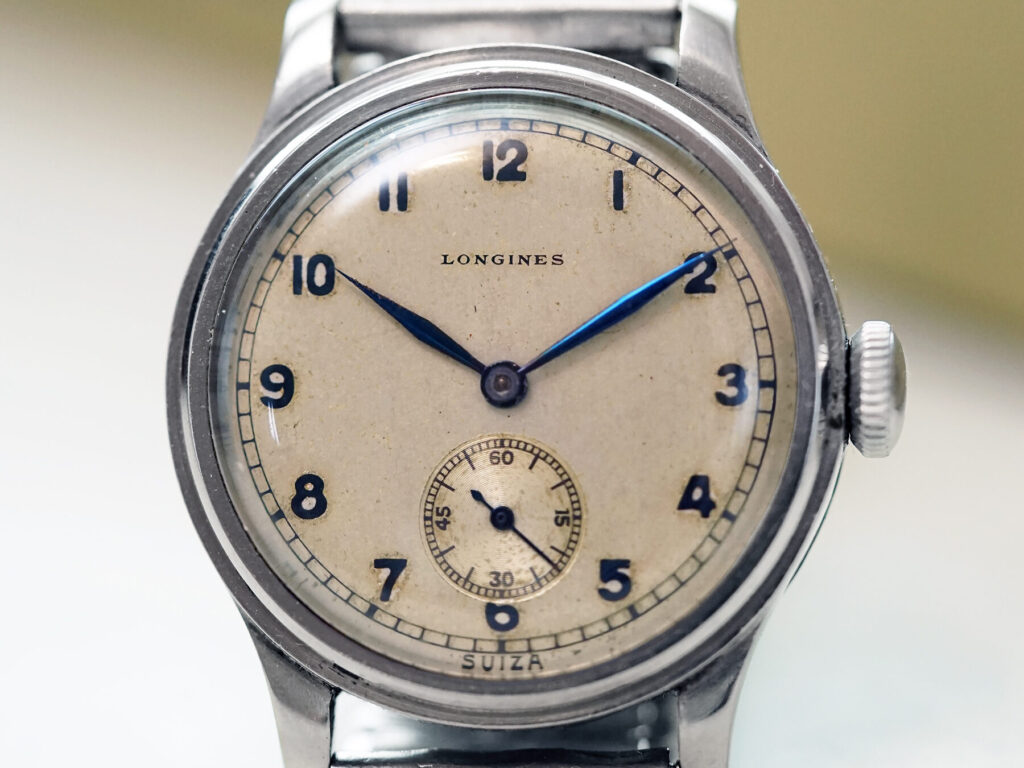
Longines Tre-Tacche
Like Tissot, Longines is now a more budget friendly brand and, also like Tissot, they produce some great watches. At the same time though, Longines have some serious vintage heft, at least among collectors looking outside of the usual prestige fare. Just look at the Tre-Tacches, named by Italian collectors for the three notches used by a tool to remove the screw-down case back. This model was produced in the 1930s and 40s (possibly into the early 50s). They are often housed in 30mm cases, with the more collectable models being 32mm – the model you should be looking at. The 32mm watches use the wonderful hand-wound calibre 23m movement and have the kind of charm that doesn’t feel like a consolation prize for not having the Ref. 96.
Tre-Tacche watches share many features with the others on this list. Namely both centre second and sub-dial running seconds, and most have Arabic numerals of various types and styles, generally with an off-white dial, the occasional militaristic black and some sector dials (which carry a premium). Some have flat bezels, some stepped, but cases have the same profile and lug design. The Tre-Tacche Calatrava style watches have a price range of £1,500 to £6,000 with plenty of options out there to choose from.