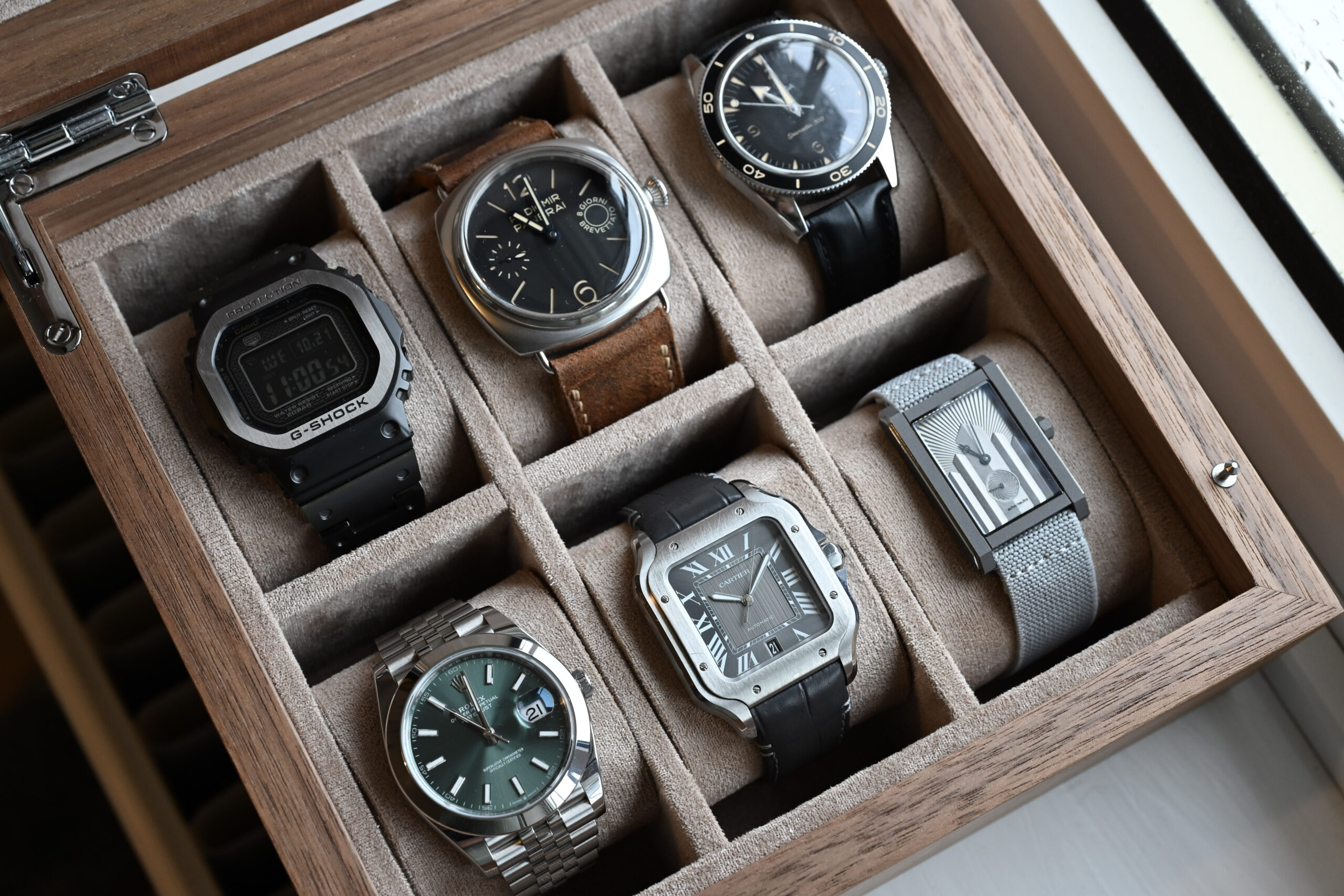
TL;DR: I bought a genuine Cartier bezel on eBay and attacked it with a red Scotch-Brite pad like an absolute maniac.
When I picked up my Cartier Santos from Berry’s in Windsor early last year, the sales guy handed over the watch with all the reverence you’d hope for. There was not a scratch on it. Little did he know I would soon be embarking on a DIY project to change that in epic fashion.
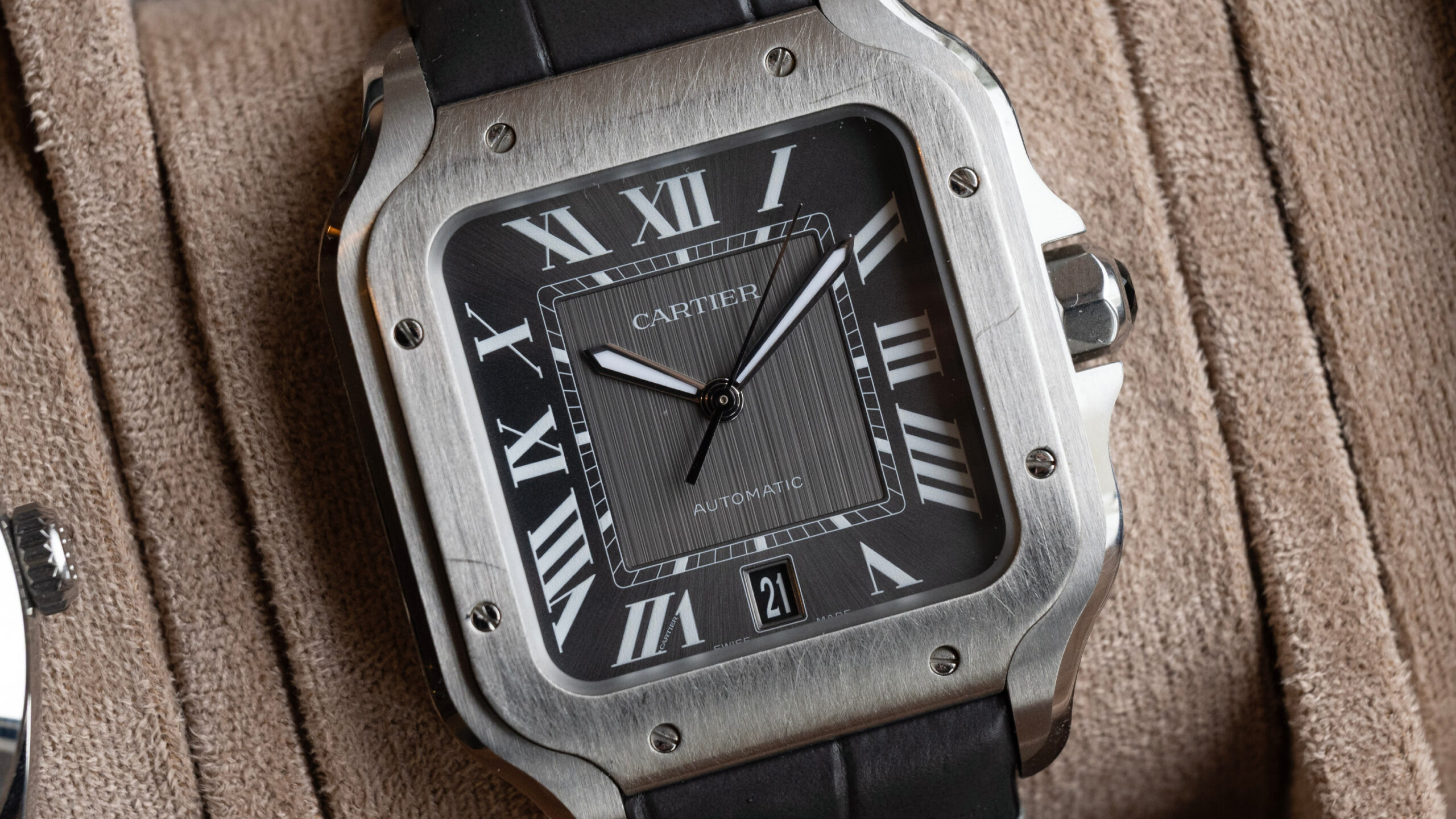
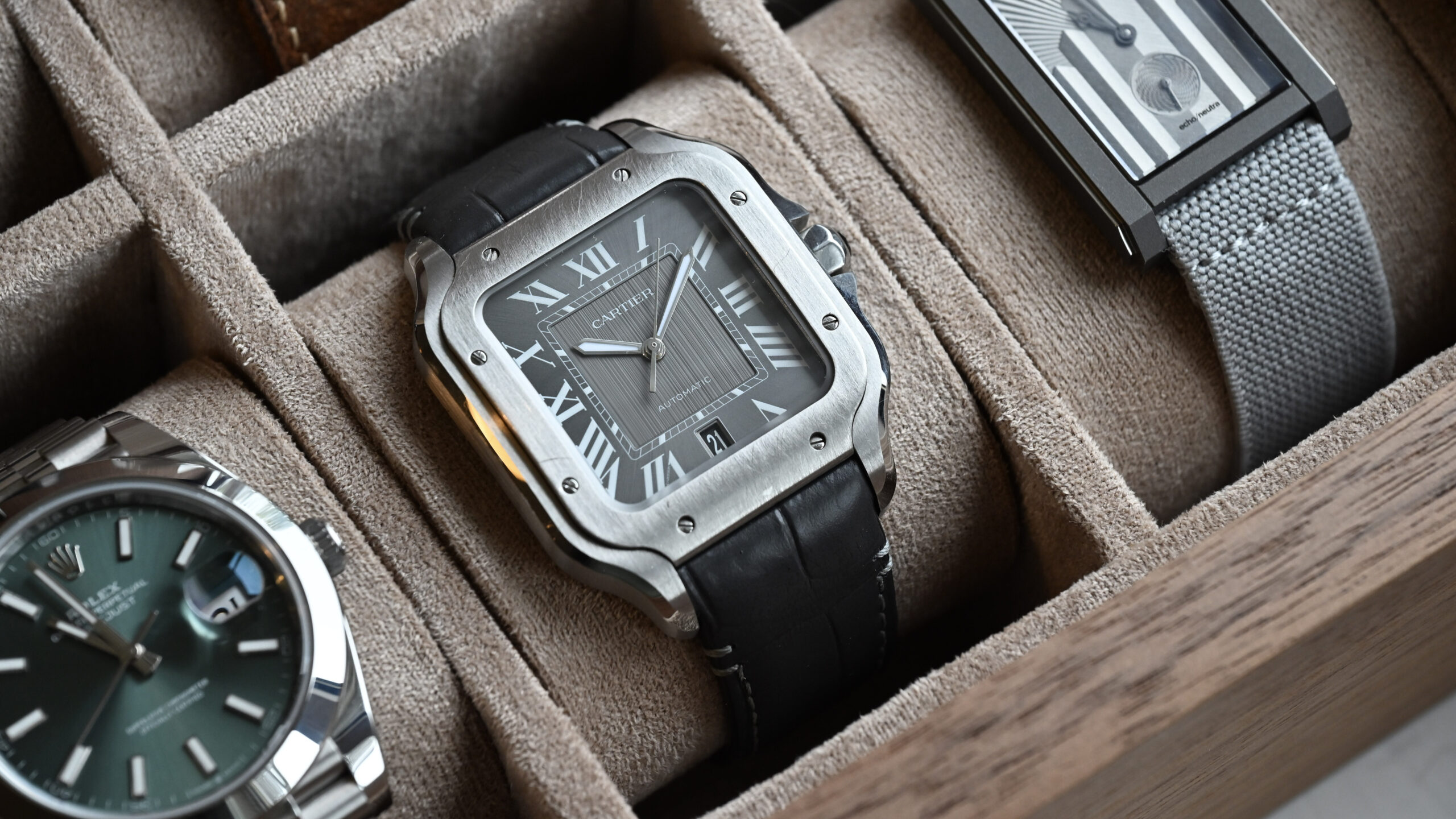
I had chosen the model carefully, with a plan in mind. My Santos is the WSSA0037, a lesser-spotted model that boasts a linear brushed grey dial, lumed hands and numerals, and a black ADLC bezel on a plain steel case. I wanted the dial and the lume (hardly any Santos versions have it), but wasn’t a huge fan of the ADLC, nor the polished bezels that come on most other Santos editions.
No, I wanted a brushed steel bezel instead… and I made it happen. I like to think of it as a piece unique, but without the price tag.
Pre-ripped jeans: a matter of taste?
My motivation for modding my Santos was simple: taste. I like the way a brushed bezel looks better than the ADLC one. Brushing also solves a common complaint with the Santos: the broad polished bezel on most models gathers scratches with alacrity. But isn’t it ironic that I addressed the risk of scratching by… covering the bezel in scratches? There’s a whiff of pre-distressed jeans, pursuing the visual effects of age without putting in the work to earn it. But I don’t think this is a totally fair criticism. We’re not talking about a manufactured ‘fauxtina’ tropical dial; the freshly brushed surface doesn’t look like years of random wear, fading or discolouration. It’s a mechanical finish in its own right, and would pass without comment if Cartier had supplied it.
Ironically, not long after I bought my Santos, that’s exactly what happened. Cartier launched a titanium version with a fully matte case and bezel. Doubly ironic, that edition loses the SmartLink bracelet system for adding and removing links without tools, which I have made good use of. So if I was making my purchase today, I would still opt for the steel and do the swap.
Transformation in minutes
That’s the ‘why’ dealt with. The ‘how’ is surprisingly straightforward, and I hope it encourages a few of you to follow in my footsteps.
I first tracked down a new genuine shiny steel bezel on eBay. Take a look: there are a few on there right now, and the prices are reasonable. Just be careful to pick the right size.
The brushing part is easy and really needs no special tools. Grab a red Scotch-Brite pad, and gently rub the bezel up and down (or whatever movement you need to get your desired effect — I wanted a broadly vertical but irregular brushing to hide wear). You’ll be done in seconds without breaking a sweat. There’s no need for a Dremel or polishing wheel.
The bezel swap itself takes just a few minutes, and that’s if you’re being careful. Undo eight tiny screws, hold the crystal down, lift off the bezel and fit the replacement. I broke out the proper Bergeon screwdrivers for this heist, because, well, if I was going to attack my Cartier I wanted to do it respectfully.
Despite the Bergeons, I still found myself holding my breath, for fear of damaging or losing one of the eight tiny screws. As far as I know, Cartier doesn’t sell replacement parts to plebs like me, and I didn’t fancy begging for help at the boutique or risking buying the wrong size on eBay.
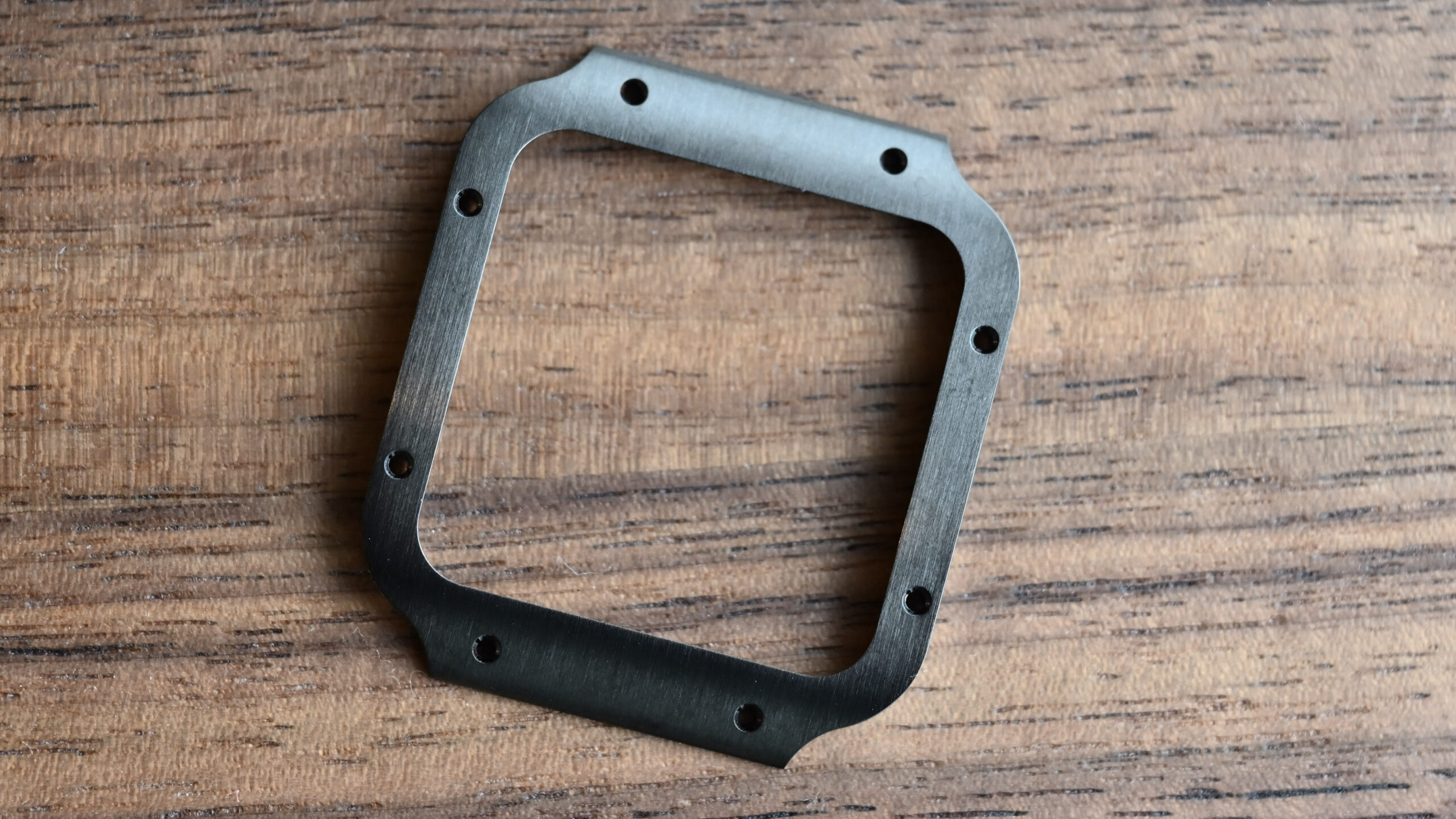
A few screws… what’s the difference?
In terms of the work involved, swapping a Santos bezel turned out to be no harder than changing the strap on my Panerai Radiomir. It’s not like I had to do open-heart surgery on the movement. But it still feels a little transgressive.
Cartier’s warranty excludes damage caused by unauthorised modifications and sets conditions around water-resistance testing after opening the case. Removing the bezel risks disturbing a vital gasket, or letting dust under the glass. I doubt Cartier would be happy honouring a warranty claim after a DIY bezel swap, and they’d be well within their rights
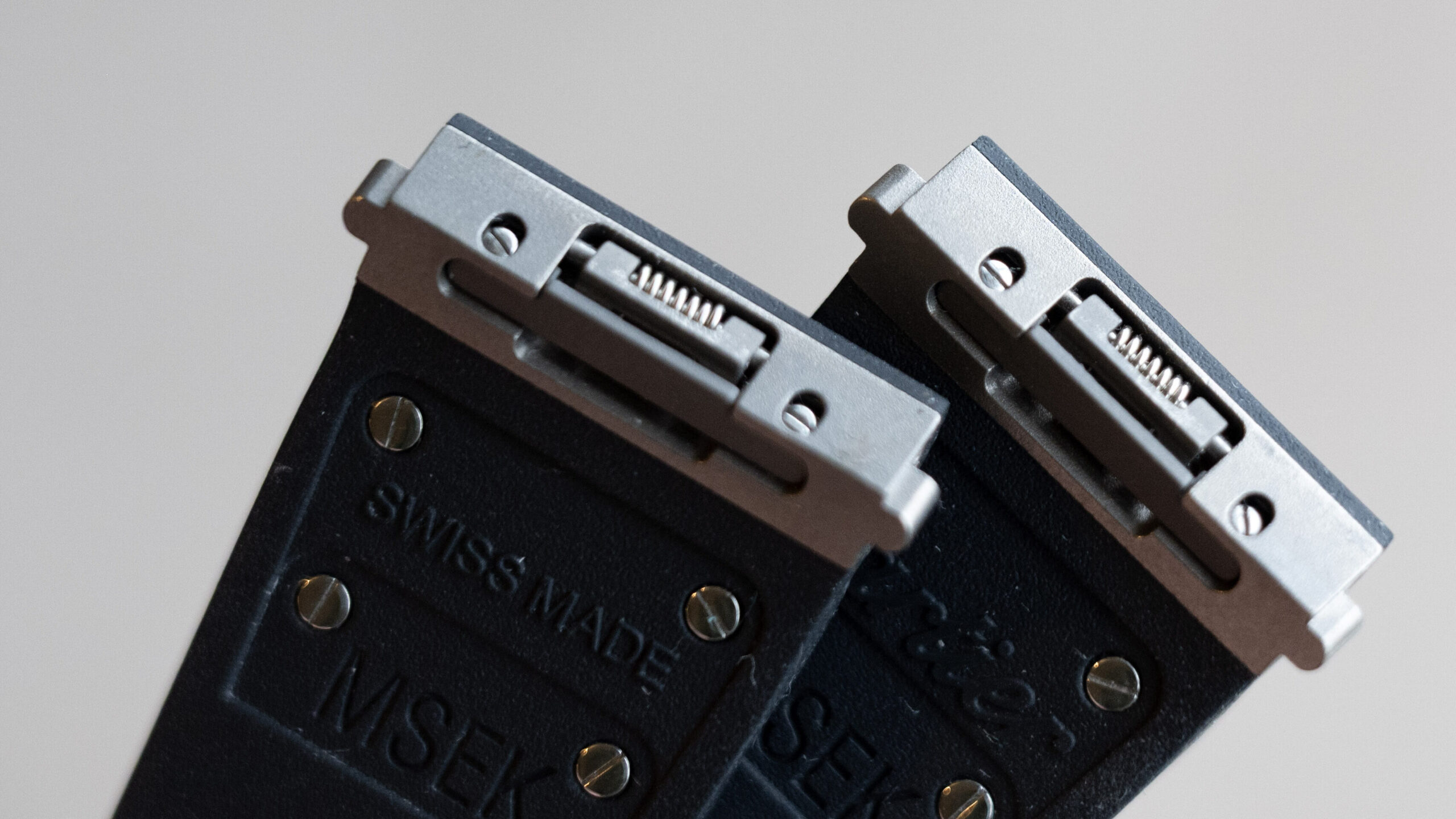
All of which is a bit of a shame, because in other areas Cartier itself positively encourages owners to personalise their watches, most notably through changing straps. The Santos led the market in tool-free strap swaps, meaning you can change the entire character of the watch to suit your mood. There’s even a strap in the box to get you started, and the boutique will happily sell you more.
By contrast, you won’t find a catalogue of bezels to choose from in the boutique. I had to get the part from eBay, like buying a bootleg DVD from some guy in a pub. This hurdle was only a minor inconvenience for me doing a one-off customisation like this, but it reveals a broader issue in the industry: independent watchmakers, and their customers, are at the mercy of the big maisons when it comes to access to spare parts to keep their watches running. The tension has even broken out into litigation in the past (see Swatch vs Cousins a decade ago).
No regrets
By swapping a part outside of warranty, I’m not engaging in some kind of protest or art project: I’m just exerting a modest aesthetic preference, and it shouldn’t be a big deal even on a ‘luxury’ watch like this.
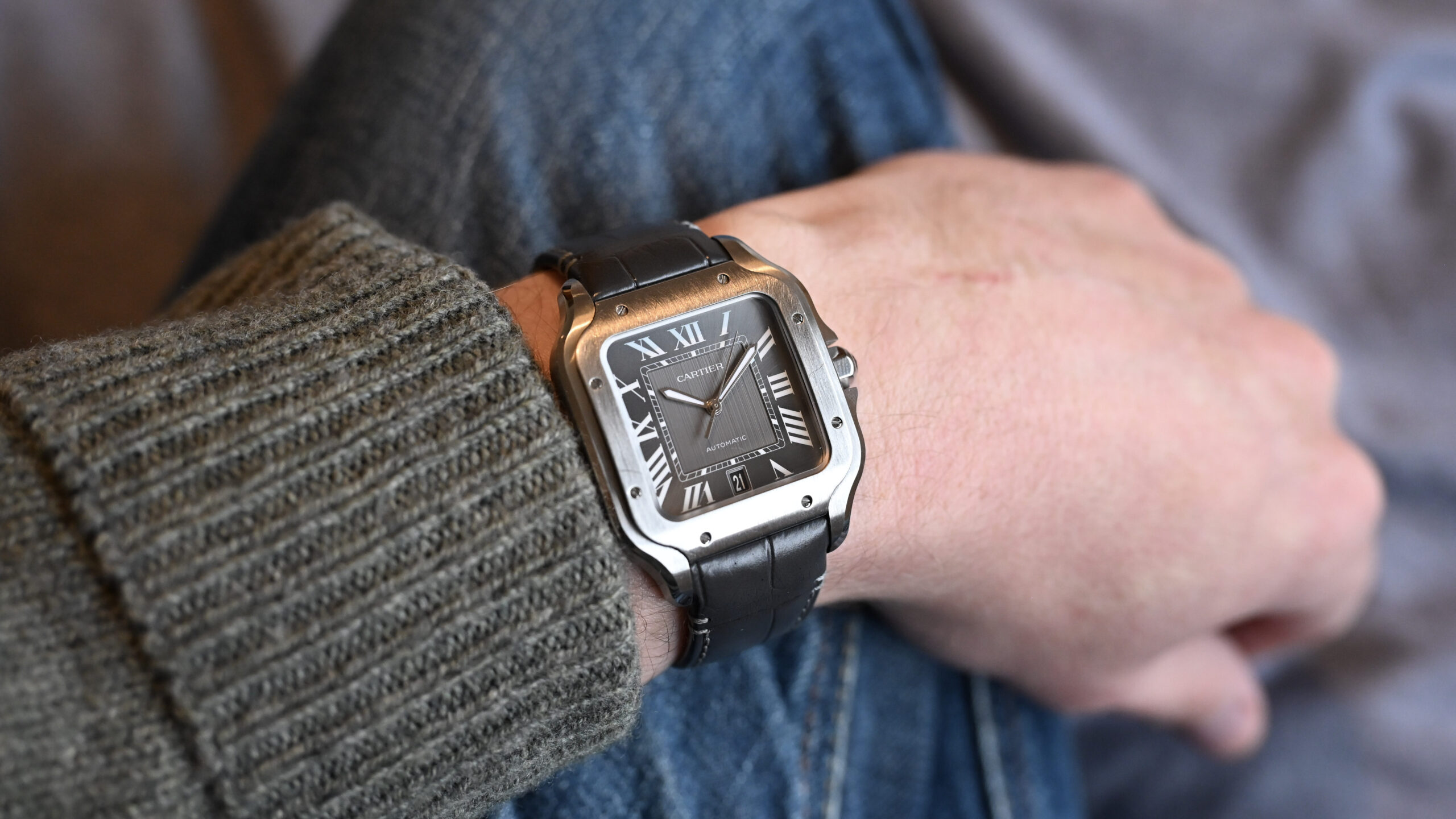
Tarnished warranty or not, I am totally happy that I overcame my nerves and went through with the mod. When I look down at my wrist, I see an aesthetic that fits my lifestyle — and I didn’t have to compromise on the features I wanted in order to get it.
Eighteen months on, the Santos has become one of my most-worn and most-complimented watches, and on top of that, I get the joy of knowing that it’s probably the only one of its kind.