
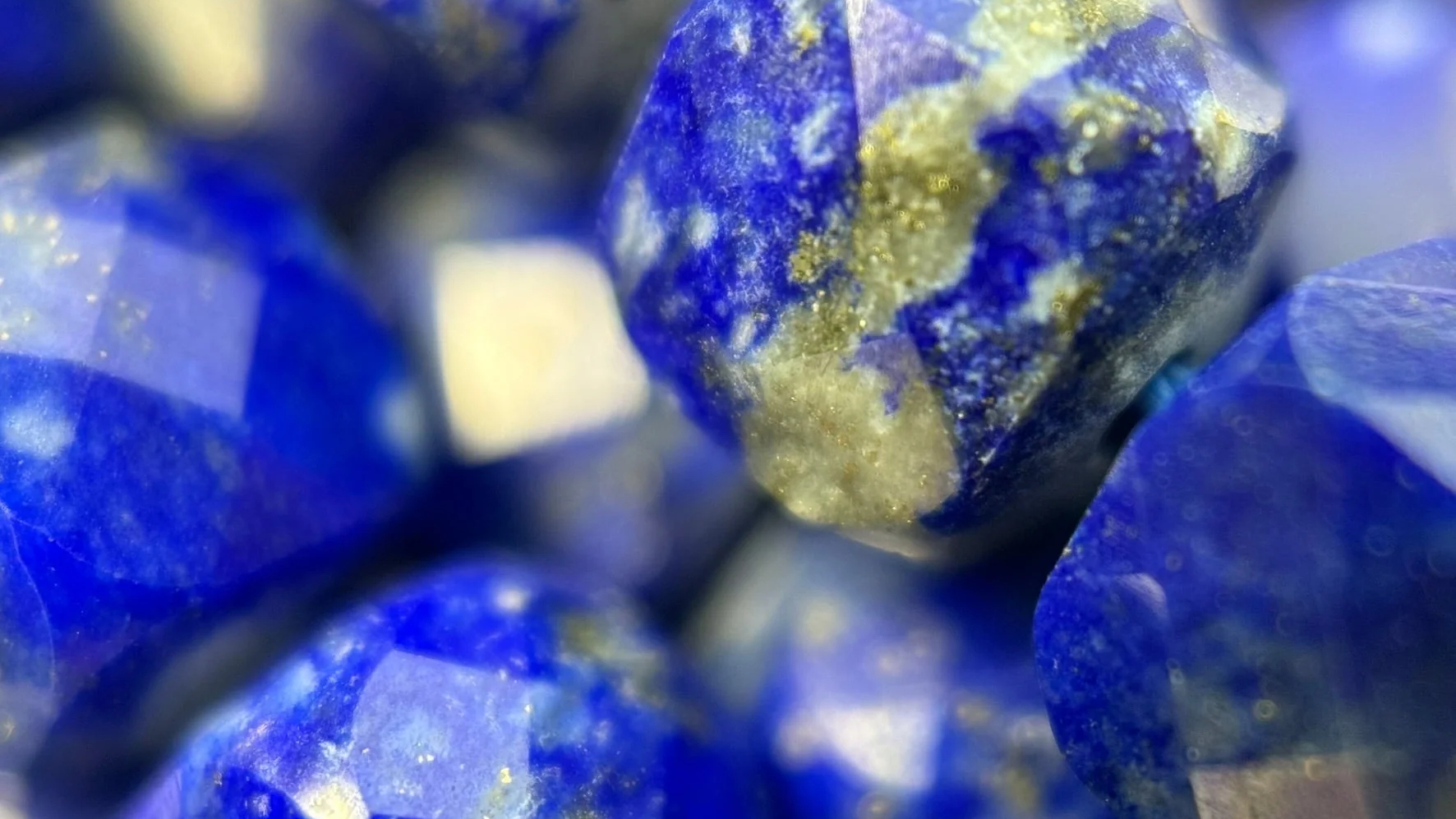
Beautiful as it may be, the perennially popular blue hardstone has a complicated backstory
High in the remote mountains of Badakhshan in the far east of Afghanistan, lapis lazuli has been mined for about 7,000 years and traded along the Silk Road. Pharaohs in ancient Egypt departed for the afterlife draped in sacred lapis and turquoise jewels; Renaissance artists ground lapis into powder to make ultramarine-blue pigment that was so valuable that it was reserved exclusively for the robes of the Virgin Mary. Its appearance in watches however is considerably more recent when in the 1960s the deep blue ornamental stone with its natural markings and glints of gold (pyrite) was one of the ones chosen to be cut, sliced and polished into gleaming watch dials by Piaget.
Piaget had set the stage by daringly introducing these vibrant watch dials in 1963 featuring lapis lazuli, turquoise, malachite or tiger’s eye. The invention of the 9P ultra-thin movement liberated designers to create larger dials with these exuberant pops of colour making Piaget’s watches desirable fashion items. The Modernist shapes of the cases such as the Andy Warhol watch added to their appeal. It was a pioneering move as watches were gradually moving towards sportier looks in steel, and over the decades these vibrant dials – especially lapis lazuli – have become a cornerstone of the brand.
It has since become one of the most popular hardstones in the watch world used by brands including Zenith, Van Cleef & Arpels, Biver, Frederique Constant, Nivada Grenchen, Dennison and, of course, Piaget. Needless to say, it’s a very popular stone – but where exactly does lapis lazuli come from?
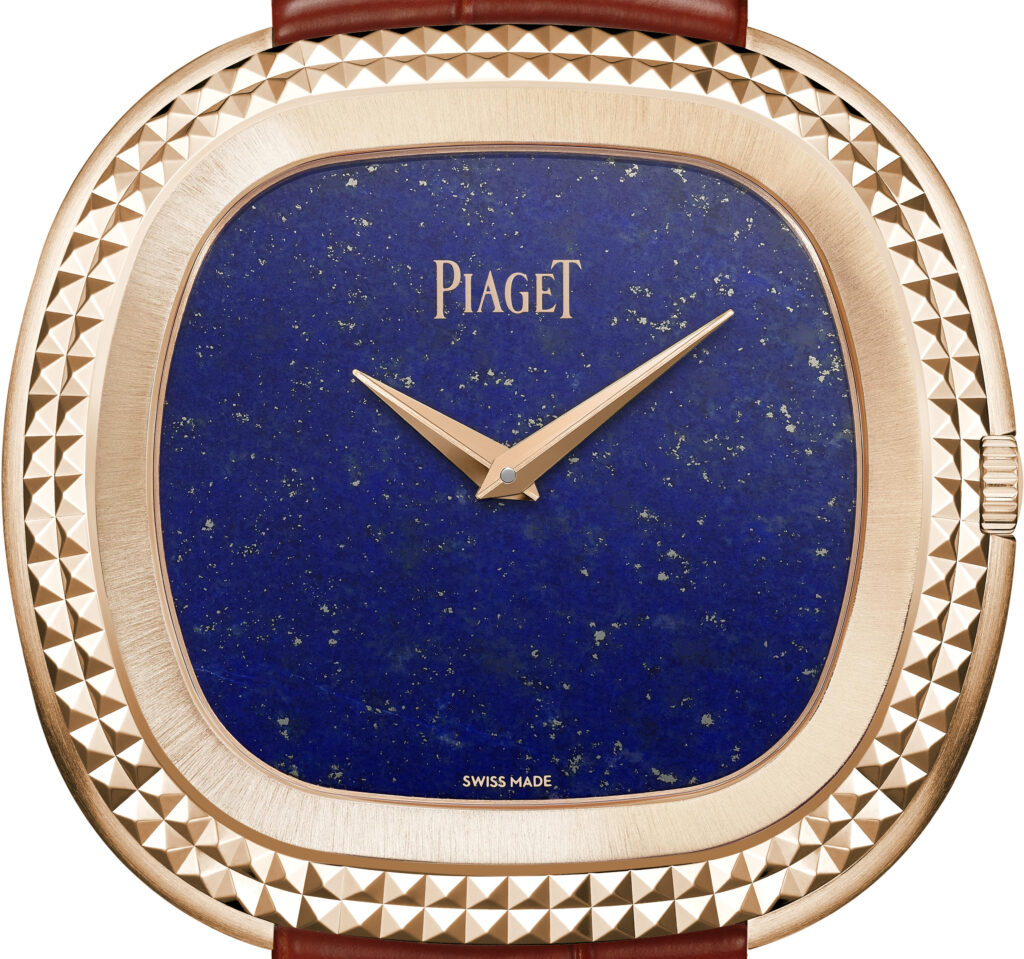
Lapis is the Latin word for ‘stone’ and lazuli is derived from the Persian word lazaward meaning ‘blue’ or ‘heaven’ because the flecks of white and gold in the blue stone were reminiscent to the ancients of a starry sky. This belief meant the stone acquired a talismanic quality that underpins its popularity in the jewellery trade today. Lapis lazuli can be found in Chile (where it’s the national stone) and the Urals, but its most prized source is Afghanistan. As one LVMH executive in an informal conversation at this year’s Geneva Watch Days commented, “lapis from Afghanistan is like champagne; lapis from anywhere else is just sparkling wine.”
There have long been rumours of disruption to supplies made problematic by the war between allied forces and the Taliban. A report published in 2016 stated that Afghanistan’s mineral wealth (it also supplies emeralds, sapphires and spinels) was helping fuel the war that ravaged the country at the time. According to London-based corruption watchdog, Global Witness, armed anti-government groups, including the Taliban, were earning up to $20 million a year from illegal mining of lapis lazuli. The watchdog appealed for the blue stone from Afghanistan to be classified as a “conflict mineral.” At the time Badakhshan was “deeply destabilised” by the violent competition for control of the mines between local strongmen, law makers and the Taliban, Global Witness said.
That “conflict mineral” classification however never happened. Whilst the Afghan government banned lapis lazuli mining in early 2015, the mines could not be secured, meaning mining continued illegally with the stone exported through porous borders into China where it is highly prized as jewellery. Ironically, according to the gem trade, it was also supplied legally by the Afghan government of the time who sold off seized goods to the international market, thus bypassing the Taliban.
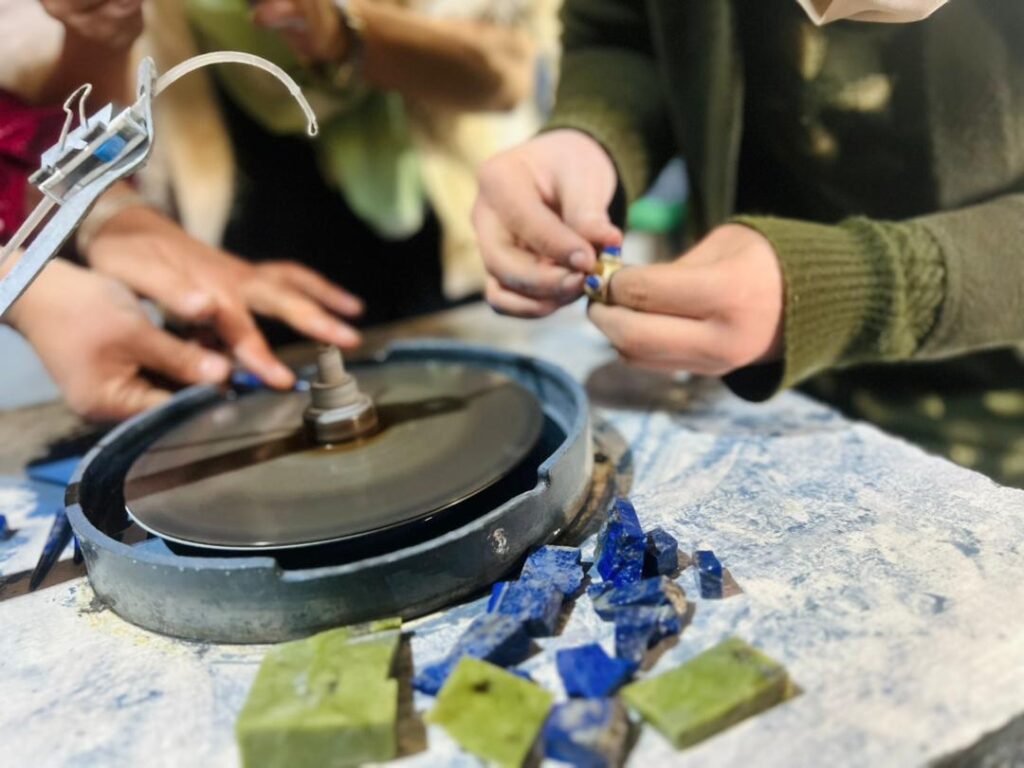
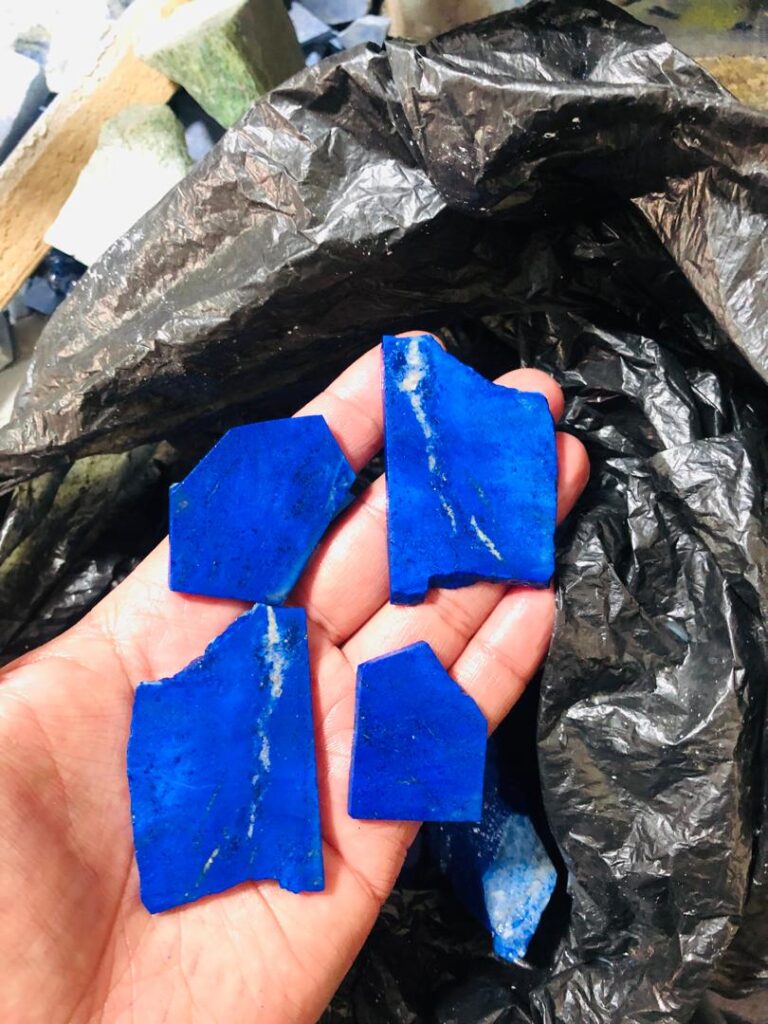
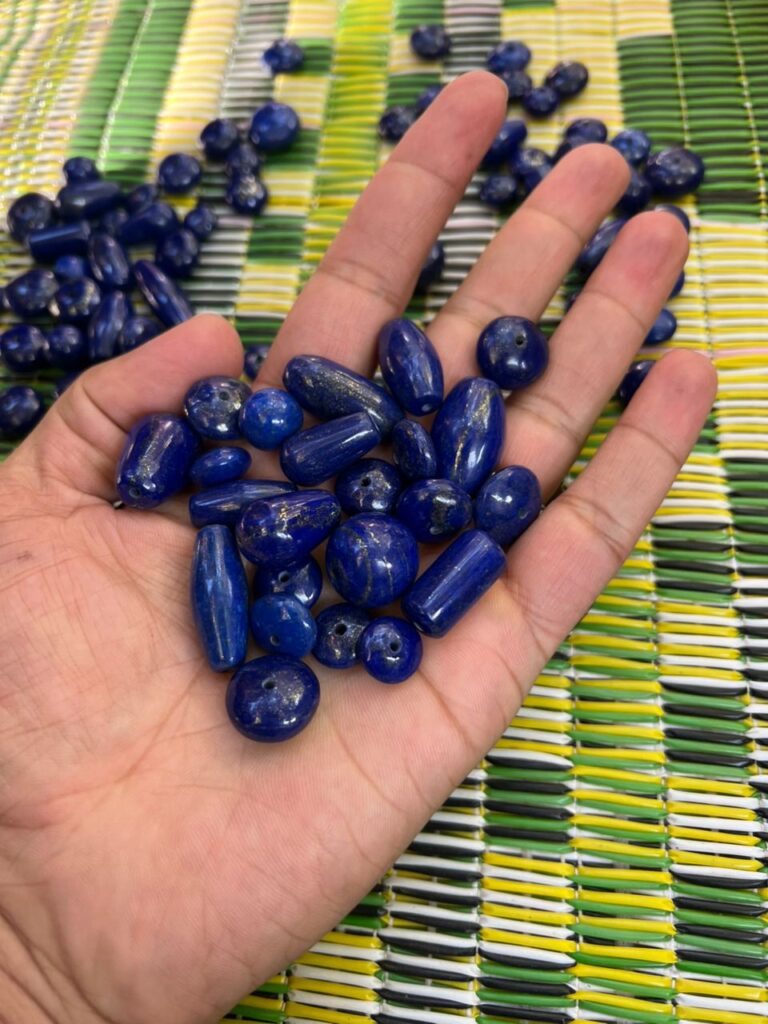
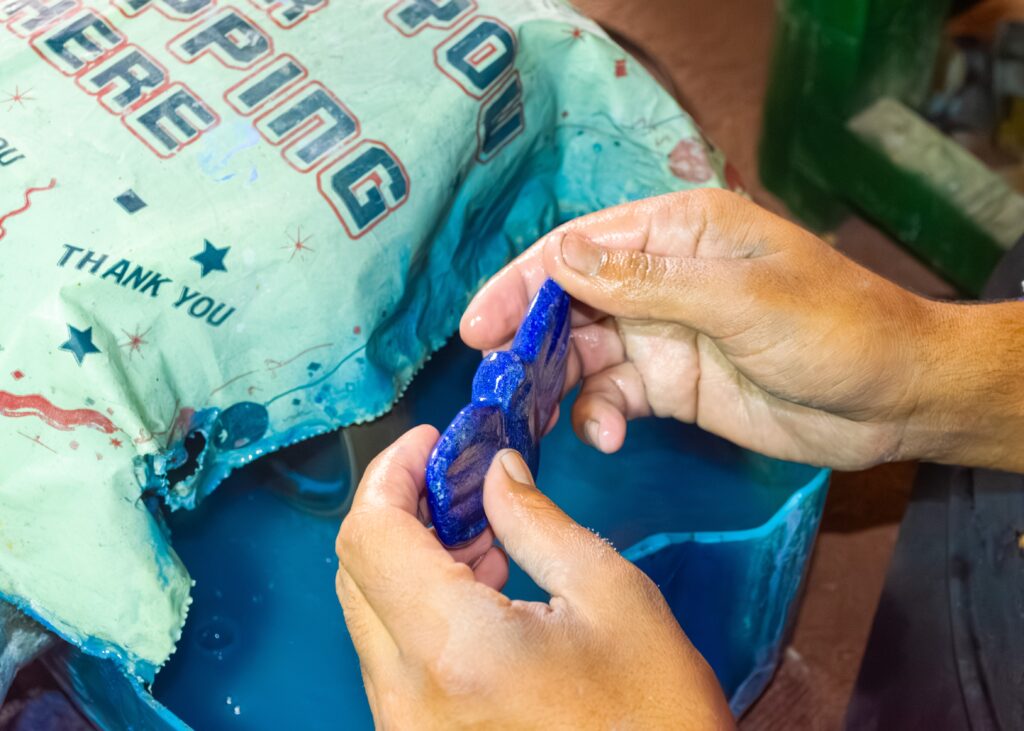
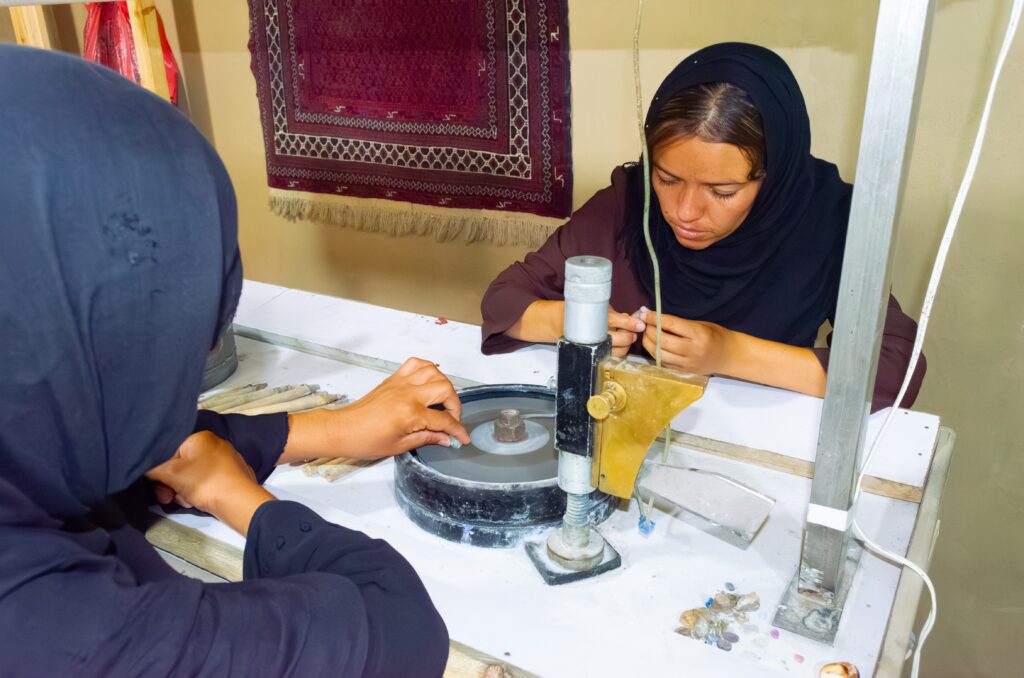
“Now the Taliban are the government whether we like it or not and so you can’t really call it a “conflict stone” anymore,” says London-based jeweller Pippa Small, who has worked with impoverished artisans making jewellery in Afghanistan for the past 18 years. Ten years of that has been in partnership with the Turquoise Mountain Foundation (founded by King Charles III in 2006), which supplies humanitarian support to the country. “As much as I hate the gender apartheid and most countries don’t recognise the Taliban as a government, the truth is the war is over,” she acknowledges pragmatically.
Even so, when the Taliban took over in 2021, there was a disruption to lapis supplies in the resulting chaos: “we couldn’t export anything as there were no customs and no cargo flights, everything stopped,” says Small. She recalls hearing of local lapis traders walking over the Hindu Kush into Pakistan and then to Jaipur in India, which is a big trading centre for the hardstone. “Since then, I haven’t had a problem,” although she admits it is getting more expensive.
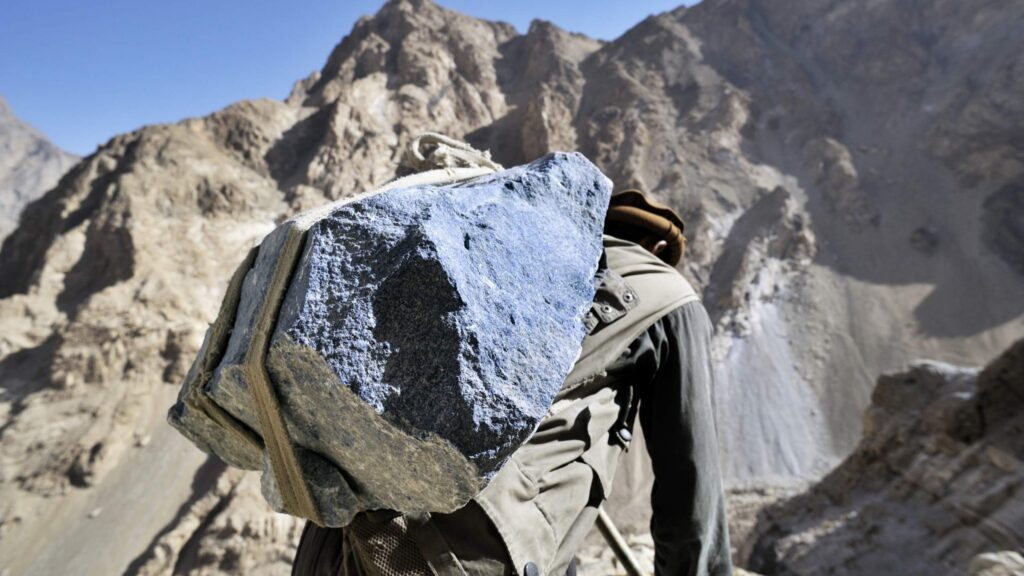
Outside of political unrest, there are issues with the mining, though. The lapis lazuli is mined in mountains from 3,000 to 5,000 metres high where temperatures get too prohibitively cold in winter to mine, explains Pippa Small, and climate change is turning fertile valleys into deserts. In an attempt to ensure best practices, the miners must apply for a license, “but probably on the ground there is very little control of that,” she admits. “For me, you have to pick your battles and in the country at the moment there is a massive number of communities around the mountains who are reliant on lapis lazuli for income.”
For many consumers, it’s a tough moral conundrum. On the one hand, the miners themselves in the mountains of Badakhshan are highly reliant on the lapis lazuli trade for their livelihoods. And while conditions have undoubtedly improved in recent years, it’s debatable whether the purported mining best practices are actually in place – especially as the locals themselves don’t like interference in their way of life. At the same time, the legally exported minerals are directly funding a regime that may be distasteful to many jewellery and watch lovers around the world.
Whilst Pippa Small openly works with the Afghani communities, there is a reluctance around the watch trade to discuss the sourcing of this beautiful ornamental stone perhaps because of sensitivity about the political regime. But there are other reasons, too. Watchmakers are often many steps removed from the source of their stones. For some, like Van Cleef & Arpels who has long used it in their Alhambra watches and more recently their Fascinating Egypt high jewellery collection, it is a policy to not discuss gem sourcing. In truth, the stone is probably traded through many third parties to prepare it for watches, from Jaipur or through China to Hong Kong and beyond, following the proper guidelines. Dennison for example has the dials for its Dual Time and ALD Mini cut in Hong Kong and Shenzhen. Still others source from suppliers in Idar Oberstein in Germany where there are lapidaries specialising in the cutting and polishing of most ornamental stones.
In short, there currently just isn’t the necessary level of traceability needed for some kind of formalised sustainability label; the idea of something similar to Fairtrade in Afghanistan remains a distant dream. But it’s not all doom and gloom. Organisations like Turquoise Mountain, which is quite small, offers hope for some. Operating in Kabul, Bamiyan and the north of the country, it provides humanitarian support, family health services and training to help generate livelihood opportunities through craft like woodwork, ceramics and jewellery-making production and preserving Afghanistan’s built heritage. Partners include Asprey, Monsoon, Kate Spade and Nomad Rugs.
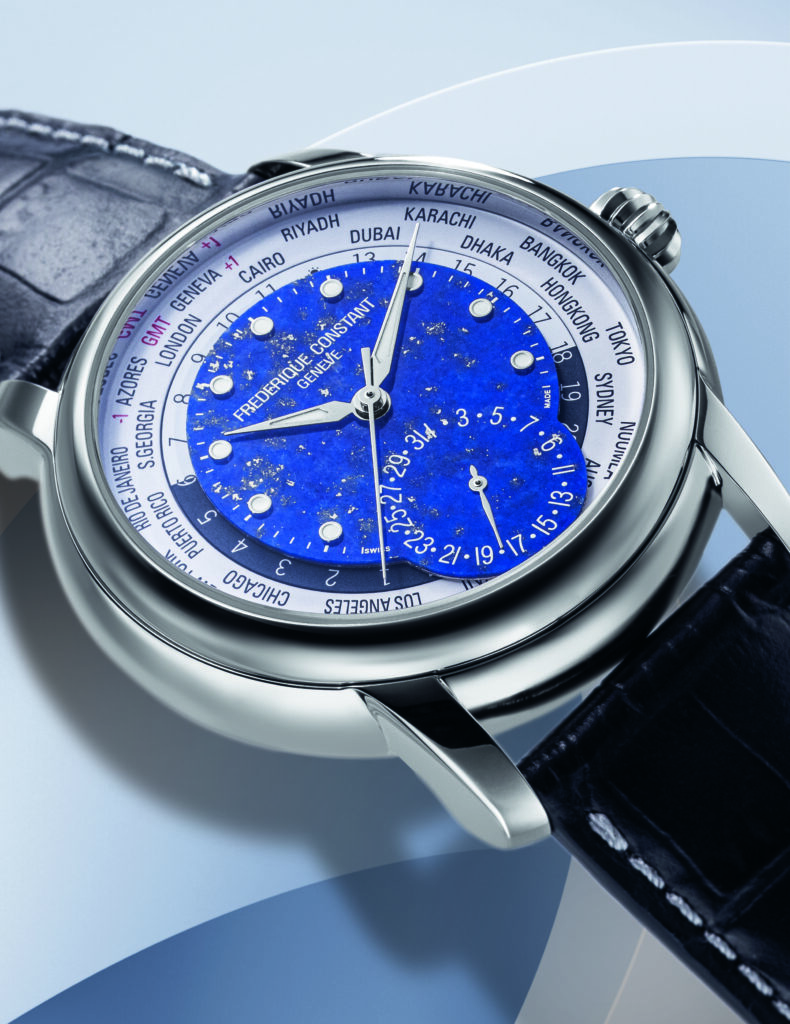
Hopefully some of those ways of working filter through into watch dials as, these days, it’s not just Piaget embracing lapis Lazuli; with many other watchmakers following suit. Biver created a very limited production of lapis dial watches last year set in gold cases, while Frederique Constant unveiled its 42mm Classic Worldtimer with a beautiful blue mineral dial and date counter sub dial in a stainless-steel case at Watches & Wonders this year.
The deep blue hue is the signature colour of Zenith, since it was founded by Georges Favre-Jacot when he named his brand after the highest point a star can reach in the celestial canopy. Therefore, the stone was a natural choice for its captivating Chronomaster Original Triple Calendar Lapis Lazuli II at Geneva Watch Days this summer.
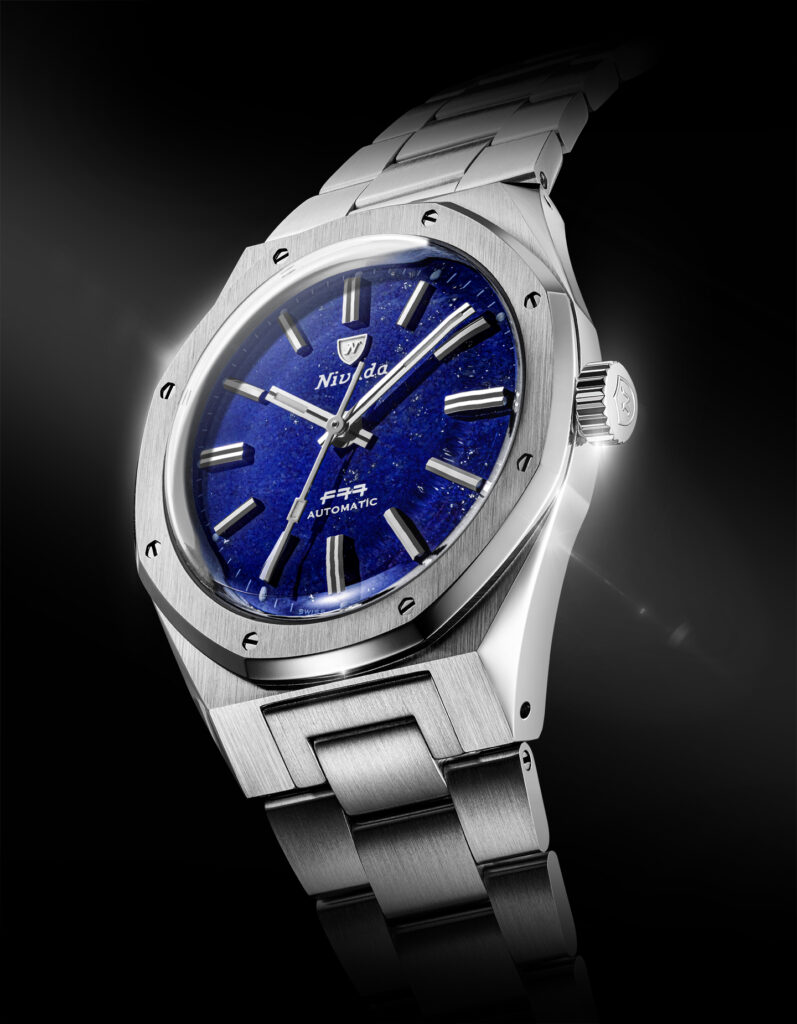
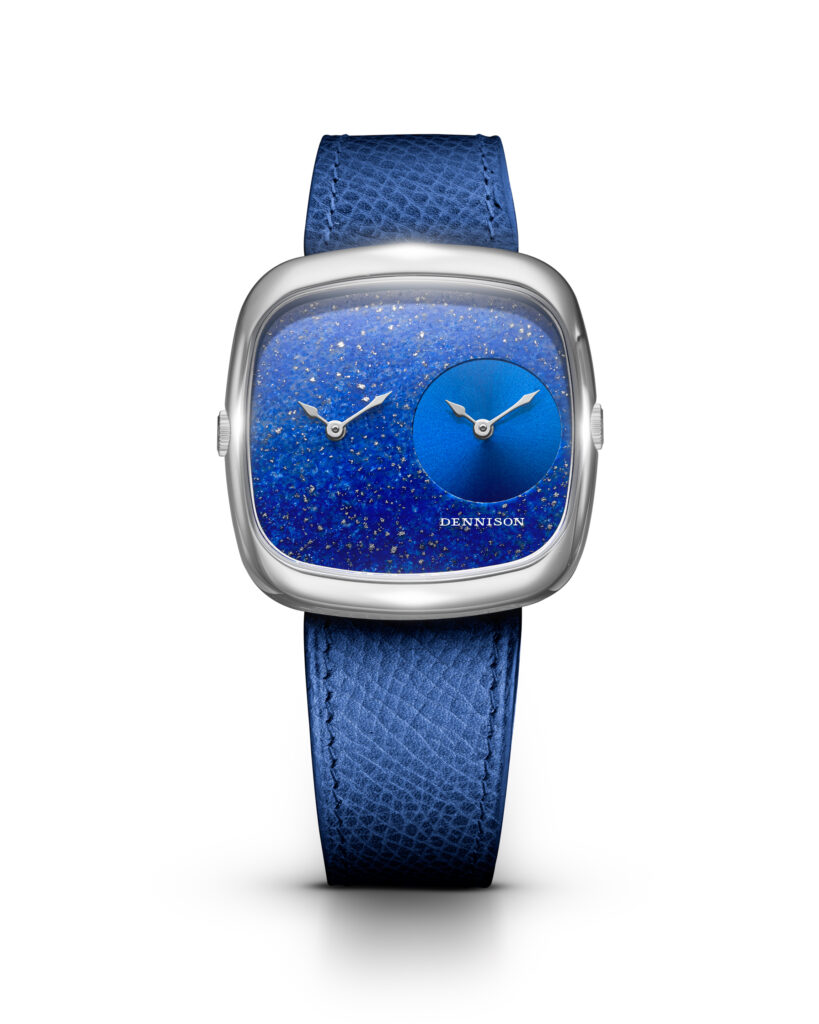
Of course, the natural markings of lapis lazuli with its glints of white and gold make every dial unique. For example, Nivada Grenchen’s vibrant ornamental stone dials in its F77 MKII permanent collection include a stunning blue lapis version and no two are the same. For the F77 it’s a particularly apt stone, as the inspiration behind the model a vintage 1970s timepiece, right when ornamental hardstones became all the rage in watches and jewellery.
While watchmakers seem distant from the lapis trade however, Pippa Small’s approach is more pragmatic: the benefits on the ground outweigh the problems. Midst the geo-political tensions, she has trained women to be gem cutters and men and women to be goldsmiths to make what have now been 30 jewellery collections for her brand. There is a whole chain of people who benefit from the lapis.
By teaching them these skills, giving Afghani women something in their life, offering them workshop space and helping them get business licenses is Small’s mission, “For me, it is all about keeping the value in the country as long as possible, employing people and supporting them in as many ways as possible,” says Small.
Could a dial workshop be next?