
Sponsored content
How the “Where” and “Why” of watch design affect the “What”
There are easier places to test a watch than the Arctic. Places where your fingers still work normally, your coffee doesn’t freeze in your thermos, and the wind doesn’t threaten to blow you back from whence you came if you even look at it funny.
But at Straum, the environment isn’t simply a source of inspiration. It’s where we take our watches to find out whether the decisions we’ve made at the drawing board hold up in practice. As time passes, and these feedback loops develop, we feel we’re making real progress in the delicate balance of allowing function to lead without morphing the form so far out of shape it looks like something from either another brand or downright ugly (or both).
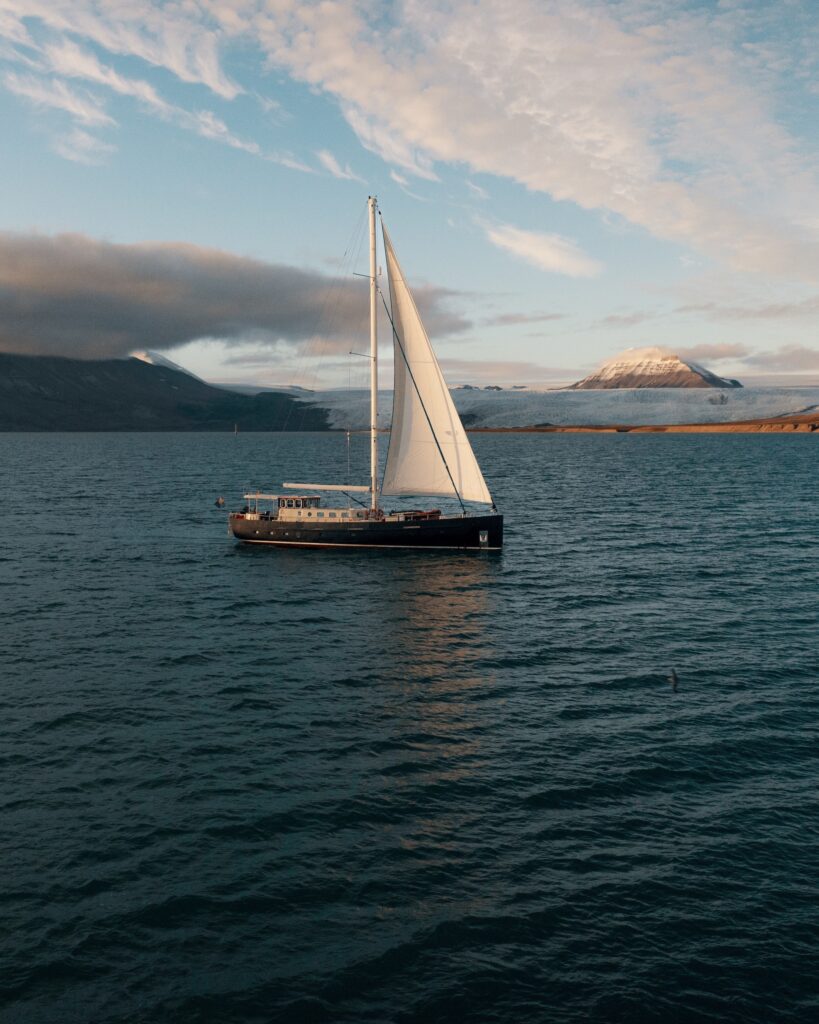
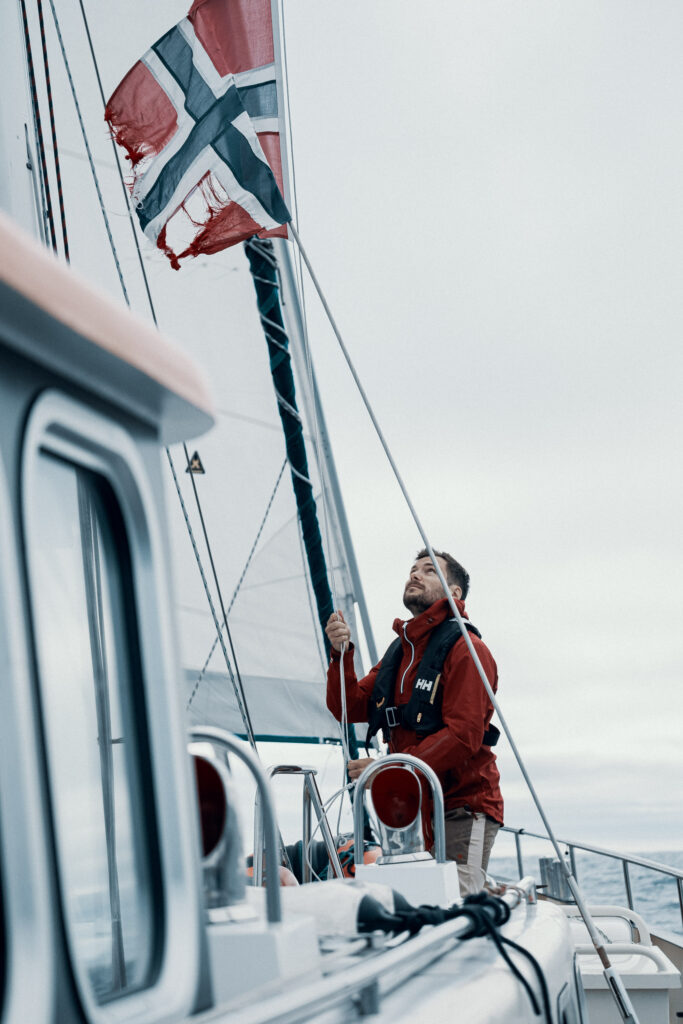
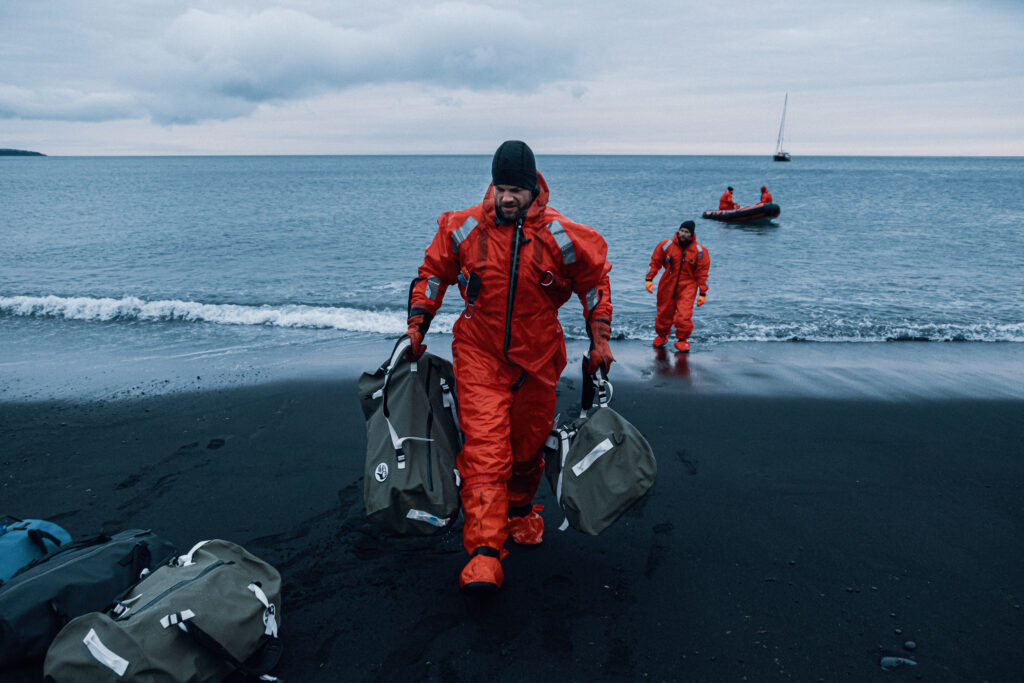
Our 2022 expedition to Jan Mayen provided a particularly memorable example. A violent storm damaged our boat, tore the mainsail, and left us contemplating the very real possibility of abandoning ship.
Experiences like that change how you think about equipment. Suddenly, the small details matter a lot. The “where” and the “why” behind the “what” becomes a fixation. Post hoc explanations don’t fly anymore. We design tools for tasks, and those tools better be more than up for the tasks when they come to call.
Viewing product design through such an essential prism can seem restrictive, but just as the beauty of watch design is the wild, box-breaking creativity the already-overwhelming list of restrictions insists upon wielding, so too can the beauty intensify when the demands are increased.
I know plenty of free-spirited creatives working in the mediums of fine art, graphic design, fashion, print media, and the like, and they often like to take the gloves off with their approach to creation. This “anything goes” mentality does, of course, in truly expressive art forms, have its place. But I believe now, after five years of working with Straum, that even greater satisfaction can be derived from and appreciation found in using a well-thought-out tool, perfectly conceived for purpose.
To put some of these rather grandiose postulations into language that is more pertinent to the topic and will hopefully give you some practical insight into the thought process behind the decisions made, I’m going to discuss each major element of the design of the Straum × TRTS Stormy Seas Jan Mayen Titanium and explain exactly why we made the decisions we made.
A Movement Chosen for the Real World
The La Joux-Perret G101 automatic calibre was selected for three reasons: its 68-hour power reserve, its 28,800 vibrations-per-hour operating frequency, and its unidirectional winding architecture.
A frequency of 28,800 vph, or 4 Hz, provides eight beats per second. This gives the regulating system frequent opportunities to maintain consistent timekeeping through the irregular movements of an active day. It doesn’t make the movement shockproof, but it’s a sensible frequency for a watch expected to accompany its owner into demanding environments without demanding too much of the watch’s power source (the more ticks per second, the more power required).
The uni-directional winding system is perhaps the most interesting reason for choosing the La Joux-Perret G101, because it sounds initially counterintuitive. Surely winding in both directions is better than one, right? Well, maybe not…
The G101 winds in one direction while allowing its rotor to spin freely in the other. That free movement helps the rotor build momentum, which can then overcome winding resistance when it returns to the engaged direction. Something that happens hundreds, maybe thousands of times a day during normal wear.
Bidirectional systems generally require additional reversing mechanisms, introducing friction, lubrication requirements, and components that can wear over time.
Unidirectional winding avoids some of that complexity. Depending on the movement’s gearing and the wearer’s activity, it can match or even outperform bidirectional winding in practical use.
Fewer components also mean fewer potential mechanical failure points, another thing we think of — the last thing we want is for our watches to stop on us when so far from home.
Colour with a purpose
The Stormy Seas Jan Mayen Titanium takes its colours from a moment I remember rather vividly.
During the storm, our fluorescent orange immersion suits stood ready against the grey-blue backdrop of the Greenland Sea.
That contrast became the foundation of the watch’s appearance.
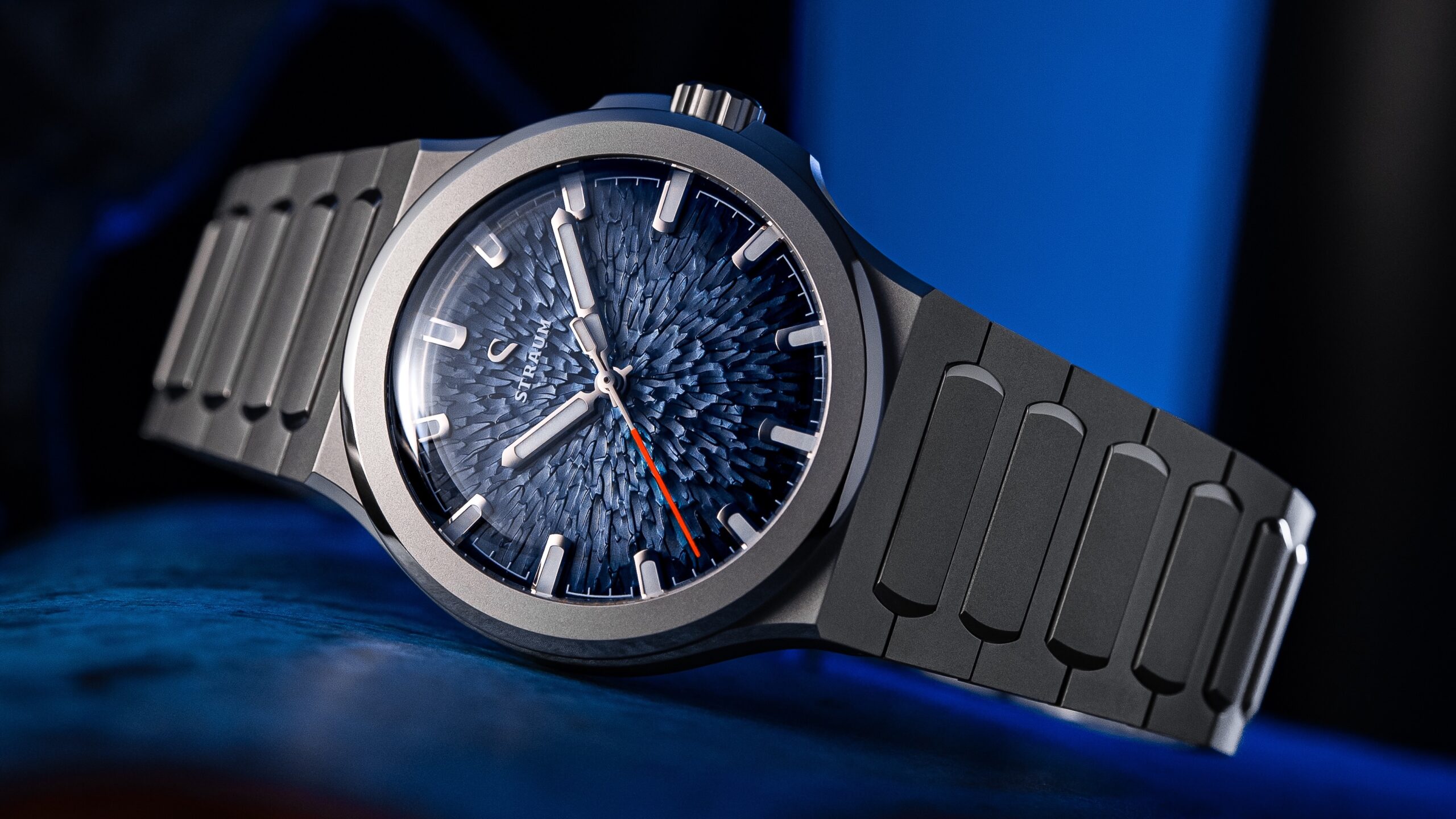
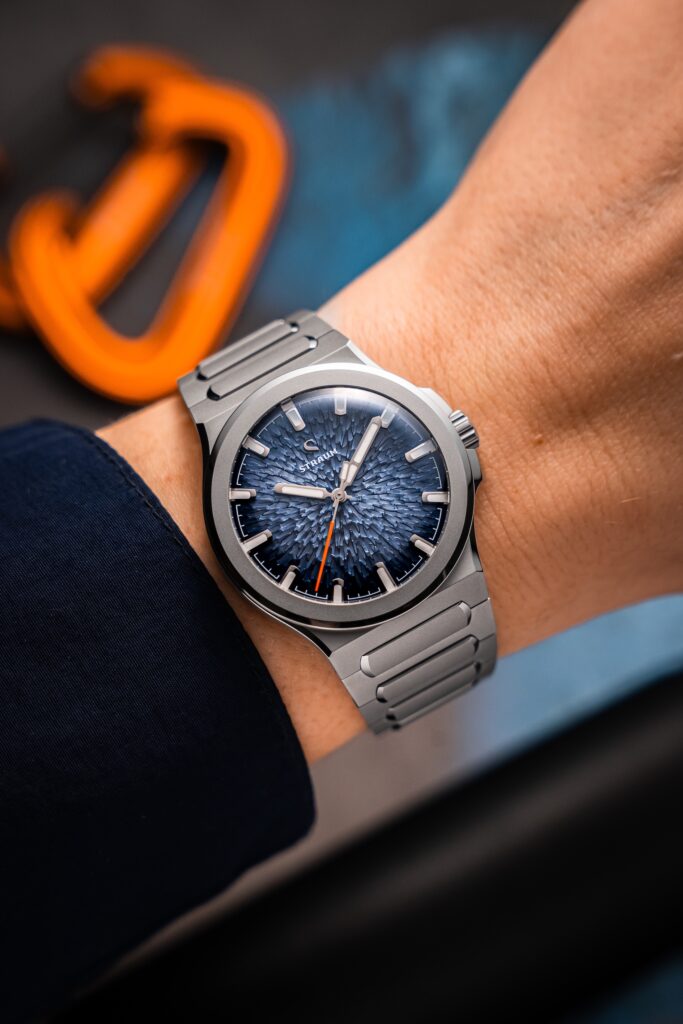
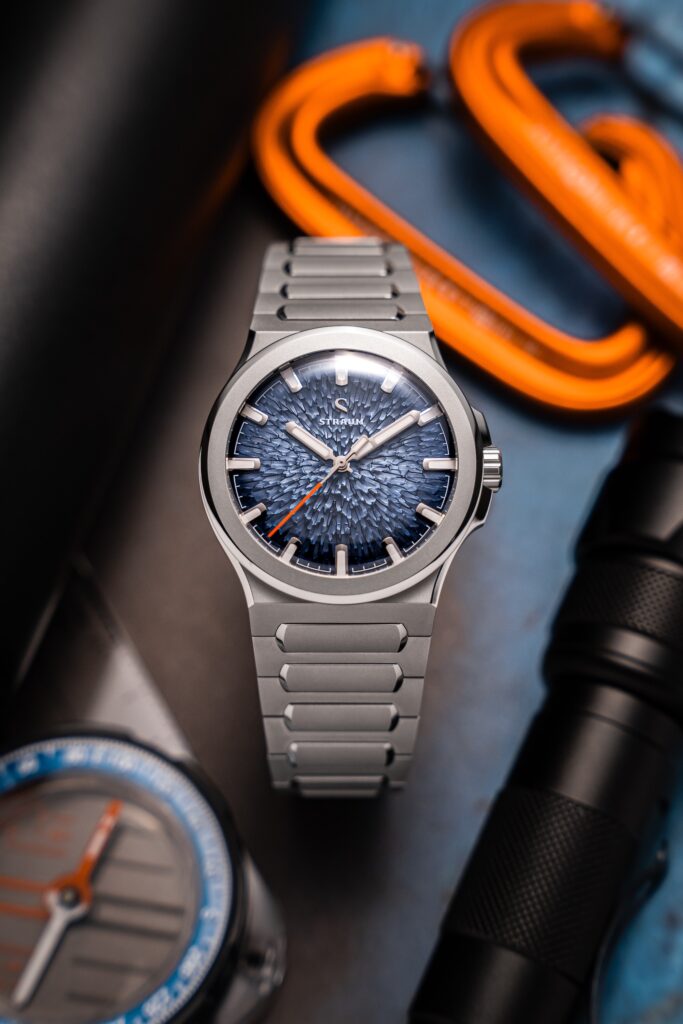
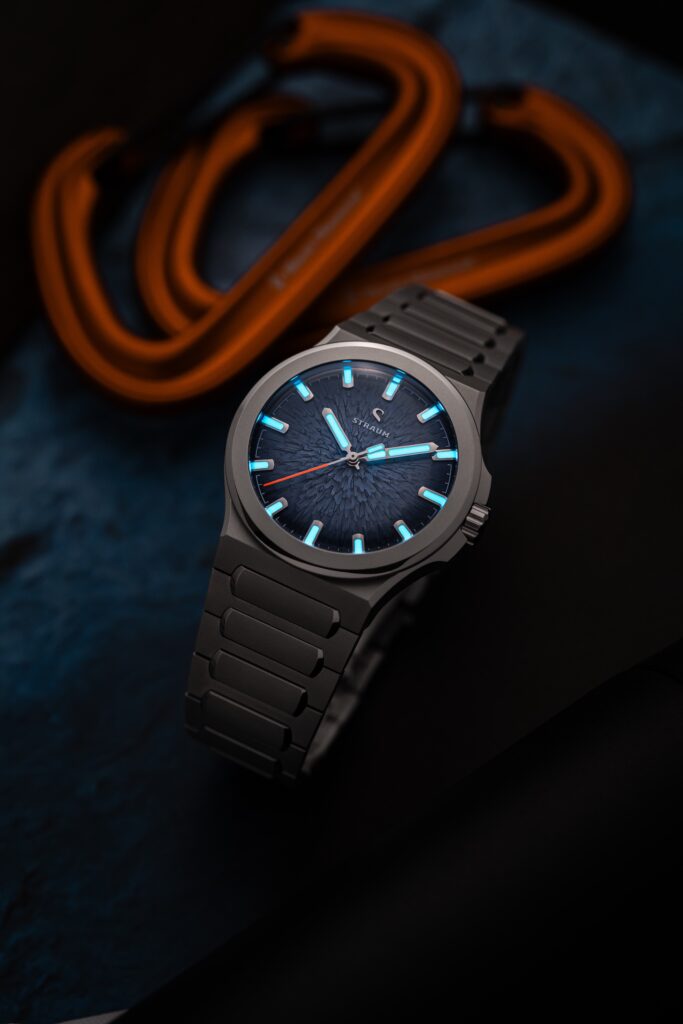
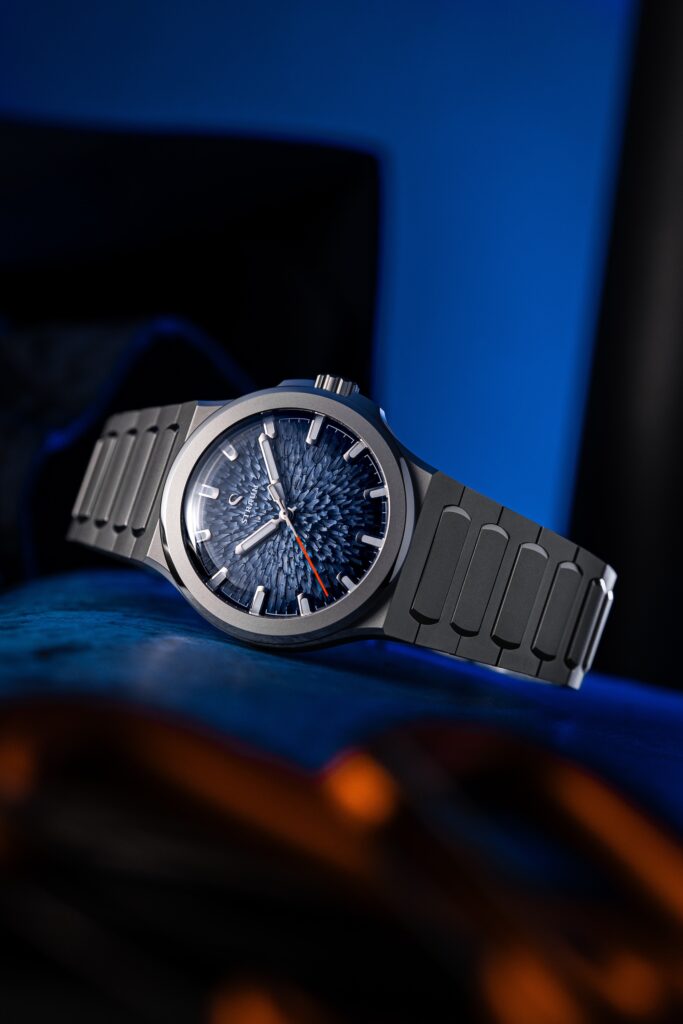
The desaturated, textured grey-blue dial recalls the ocean under heavy cloud, while the Berlac Fluor Orange seconds hand cuts across it with extraordinary intensity. Perhaps that is unsurprising given orange’s long history of low-light legibility, but seeing it with my own eyes really hammered home how effective a choice it was.
Orange is often associated with maritime safety equipment because of its visibility against many cold, muted backgrounds.
So much so, in 1978, American vexillologist Whitney Smith even proposed an Antarctic flag featuring international orange, recognising its practical visibility in polar conditions (the same colour in which the Golden Gate Bridge is painted, perhaps explaining why it stands out so crisply against the dense local fog).
Titanium, Seals, and Smart Decisions
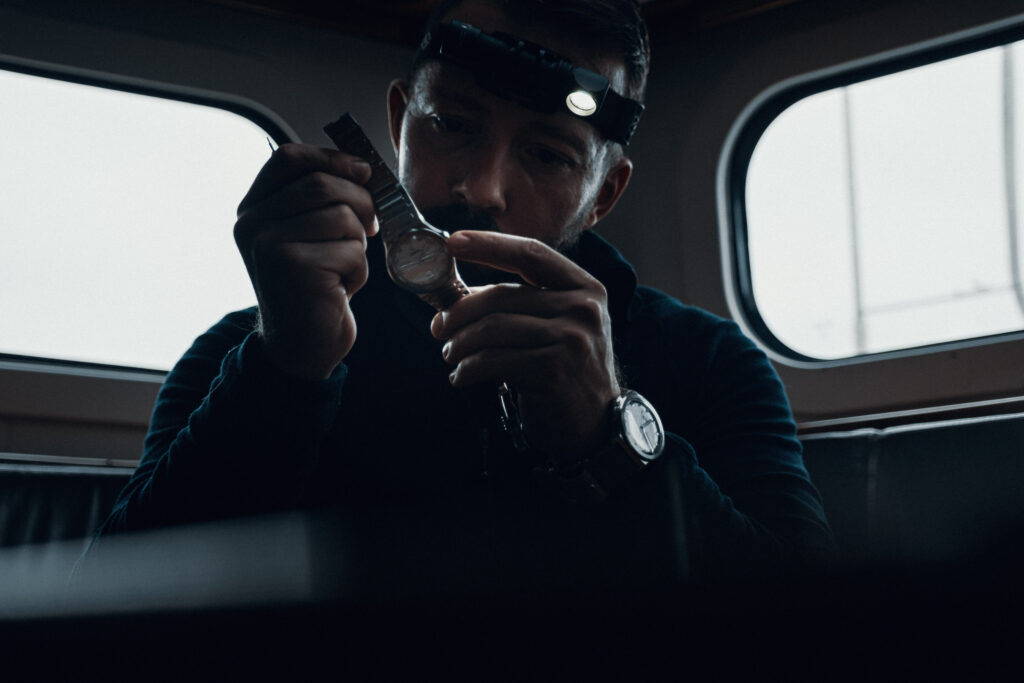
Hardened grade 5 titanium (with a mostly media-basted surface finish) was chosen for the case and bracelet because it offers an excellent strength-to-weight ratio, outstanding corrosion resistance, and extremely low thermal conductivity.
It also looks unquestionably badass.
Thanks to its inertness, Titanium transfers heat away from the skin more slowly than steel, making it comparatively comfortable when temperatures fall, and its relatively low thermal expansion is another reassuring attribute it brings to the table.
A screw-down crown and 100-metre water-resistance rating provide protection against the wet conditions encountered during an expedition.
The threaded caseback also avoids the separate retaining screws used in some constructions, reducing the number of fastening components while allowing the caseback gasket to be compressed securely.
Of course, the quality of the seals and their installation remains crucial.
For those preferring a strap, FKM fluoroelastomer rubber offers excellent resistance to water, salt, oils, and environmental degradation. Suitable low-temperature FKM formulations also retain useful flexibility in cold conditions.





Tested Where It Matters
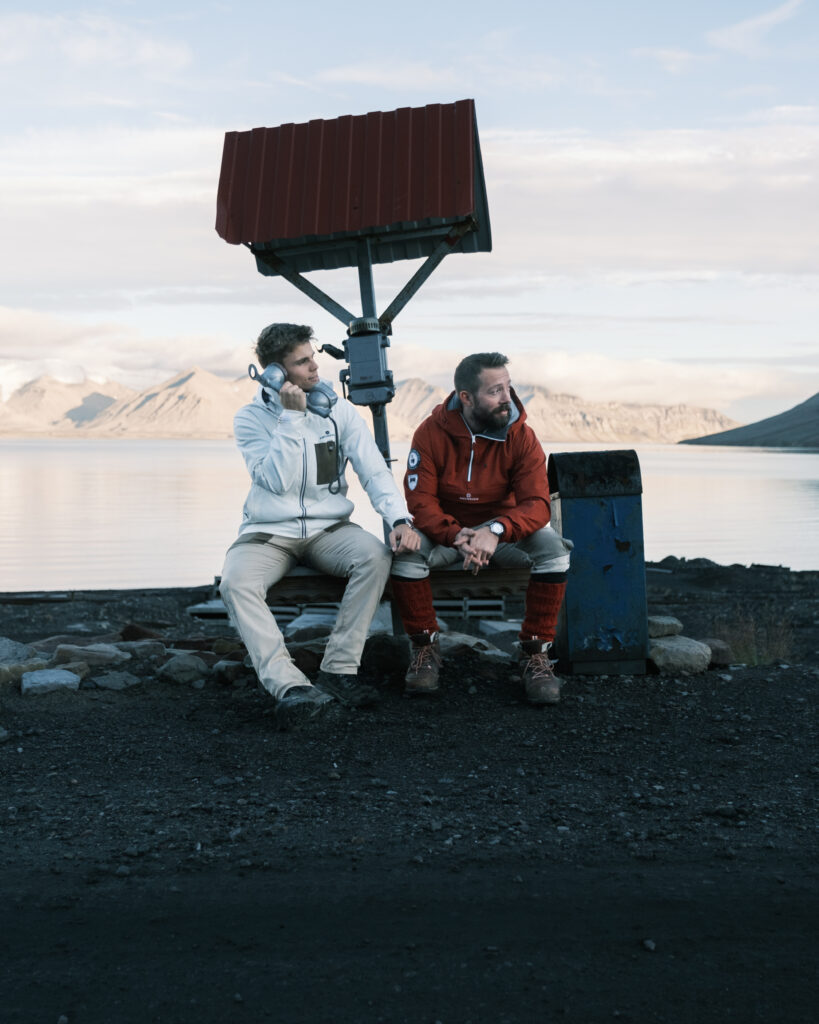
No mechanical watch is immune to extreme conditions. Nor should a 100-metre water-resistance rating be mistaken for a guarantee against every hazard an Arctic expedition might present. But careful material selection, straightforward engineering, and thoughtful design can make a meaningful difference.
At Straum, we believe those decisions deserve to be tested somewhere more demanding than a comfortable workshop.
The Arctic has a well-earned reputation for exposing poor assumptions. And while I’d prefer not to repeat the storm that inspired the Stormy Seas special edition, some things are worth getting wet for.
The Straum × TRTS Stormy Seas Jan Mayen Titanium is currently available on www.straum.co but will be discontinued at 18:00 CET on November 17. After this sales window closes, this model will not return.