
Part 2 of our series on horological tools through the ages tracks how specialised instruments allowed precise chronometry to flourish
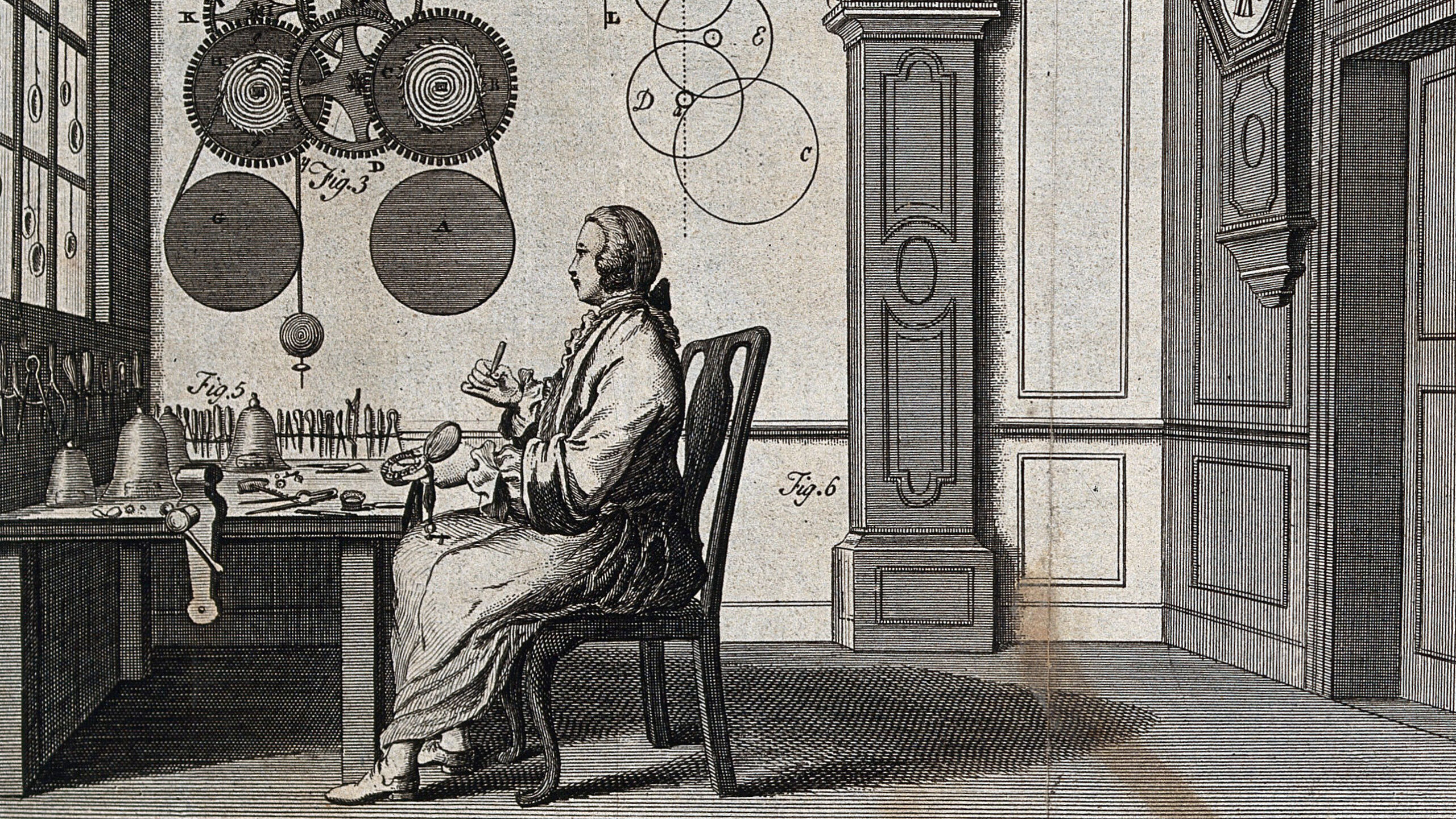
At first glance, the eighteenth-century watchmaker’s bench might appear little different from that of a century earlier. There were still files and gravers, saws and drills, turns and punches. The craftsman still worked largely with his hands and relied upon experience accumulated over years of practice.
But beneath this apparent continuity, something fundamental had changed. The tools had become more specialised.
The watchmaker was no longer simply adapting general metalworking implements to the manufacture of small mechanisms. Increasingly, tools were being designed specifically for horological work. Machines were becoming more precise, operations more repeatable and the relationship between tool and component more exacting.
The eighteenth century was, in many respects, the golden age of the watchmaker’s bench.
A bench becomes an instrument
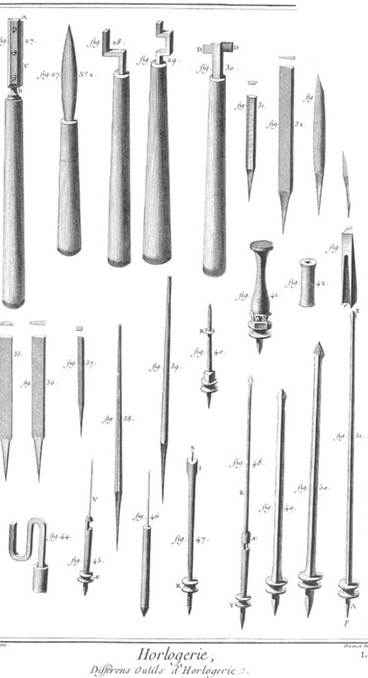
The bench was the centre of this world. A skilled watchmaker might work with dozens of different tools, each performing a very particular task. Files were available in different profiles and degrees of coarseness. Gravers were ground to different shapes for turning, cutting and finishing. Pincers became increasingly delicate, while screwdrivers, broaches, cutters and punches were developed in forms appropriate to the small components of a watch.
There was no universal tool. The watchmaker’s skill lay partly in knowing which tool to select, and then knowing how to modify it.
A graver, for example, was not simply purchased and used. The craftsman ground and sharpened it to suit the operation in hand. The angle of the cutting edge, the shape of the point and the way it was held could all affect the result.
The tool therefore became an extension of the watchmaker’s hand. This is one reason surviving historical tool collections are so revealing. They tell us not merely what watchmakers possessed, but how they thought about their work.
The watchmaker’s turn
The principle was simple: rotate the work while bringing a cutting tool against it, but the possibilities were enormous.
The turn could be used to shape pivots, arbors and other cylindrical components with a degree of regularity that would have been extremely difficult to achieve by hand alone. It could also be used for decorative work, particularly where carefully controlled turning produced repeating geometric forms.
The watchmaker’s turn was therefore both a machine and a platform for craftsmanship.
The operator still supplied the skill, pressure and judgement. The machine supplied controlled rotation. It was an early example of something that would become a defining principle of precision engineering: allowing the machine to establish one element of the geometry while the craftsman controlled another.
Cutting teeth with certainty
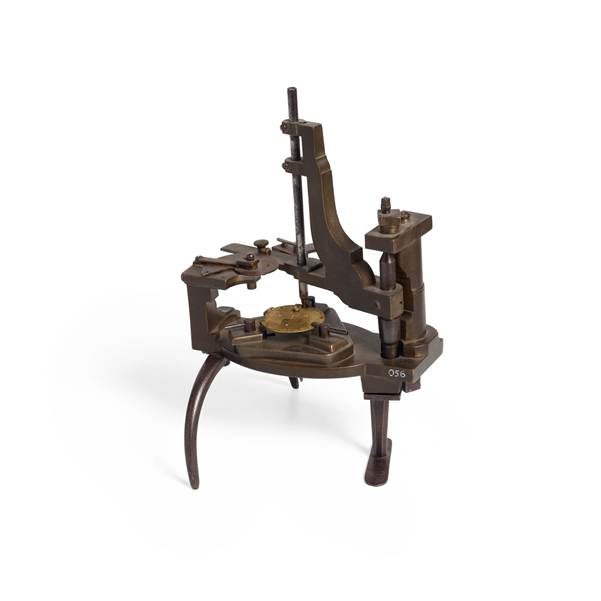
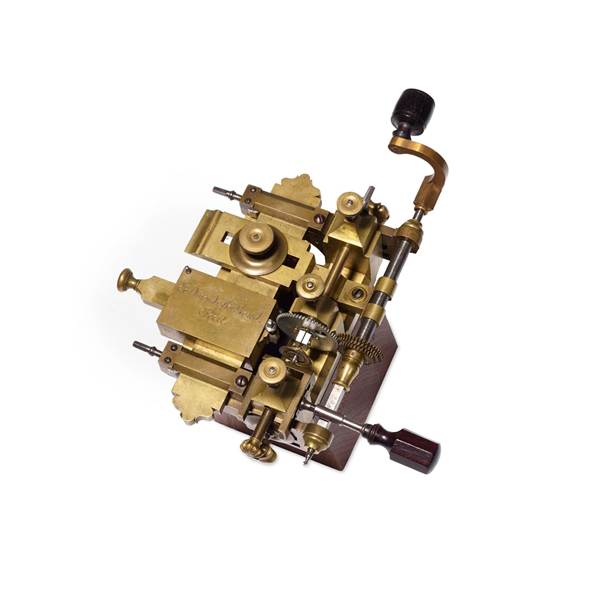
If the turn gave the watchmaker control over circular forms, the cutting engine provided control over one of the most important geometries in the entire watch and that was the wheel.
The cutting of wheel teeth demanded accuracy because even small variations could affect the smoothness of a train.
The eighteenth century saw the refinement of machines that allowed wheels to be divided and cut with increasing consistency. Dividing mechanisms, cutters and indexing systems effectively transformed the problem from one of repeatedly estimating tooth positions into one of controlled mechanical subdivision.
They were not only functional, but objects of exceptional beauty. This was a profound change. The watchmaker no longer had to rely entirely upon the eye and hand to reproduce every tooth. The machine could impose a regular relationship between them.
But this did not eliminate craftsmanship. The machine had to be correctly set, the cutter properly formed and the workpiece accurately mounted. Precision was becoming a partnership between machine and maker.
The depthing tool
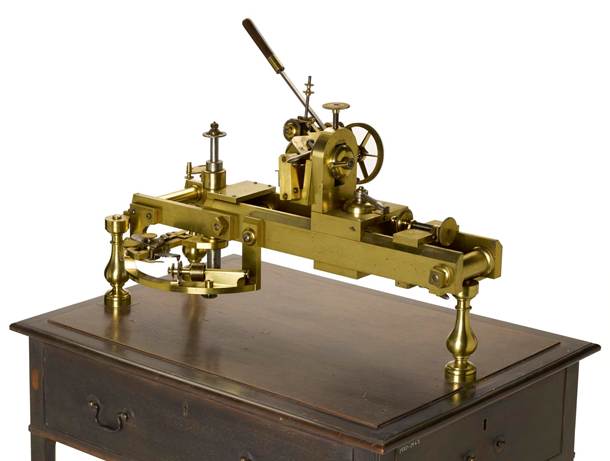
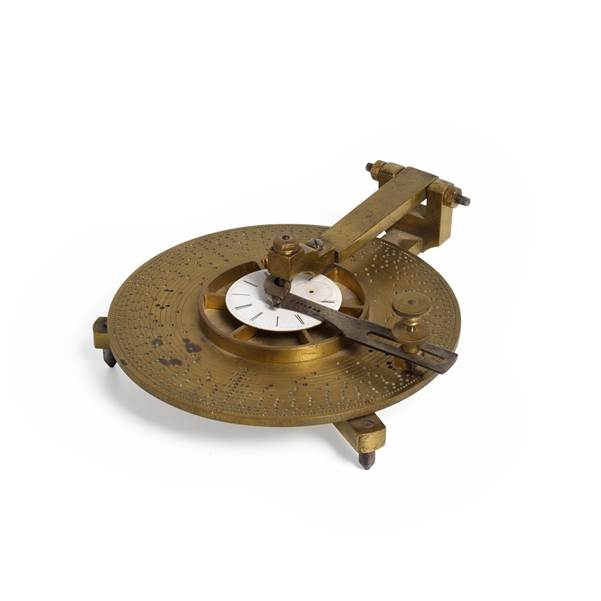
Some of the most fascinating horological tools are those whose purpose is not to make a component, but to make sure that two components work together. The depthing tool is a perfect example.
In a wheel train, the distance between the centres of two wheels is critical. Too close and the teeth may bind; too far apart and the engagement becomes poor. The depthing tool allowed the watchmaker to determine and reproduce the correct relationship between the centres of wheels before committing to the final assembly.
It is a wonderfully revealing object because it demonstrates that horological precision was not simply about making individual components accurately. It was about making them relate accurately, as a perfectly formed wheel is useless if its position within the train is wrong.
The eighteenth-century watchmaker was therefore increasingly thinking in terms of systems rather than isolated parts.
The fusee problem
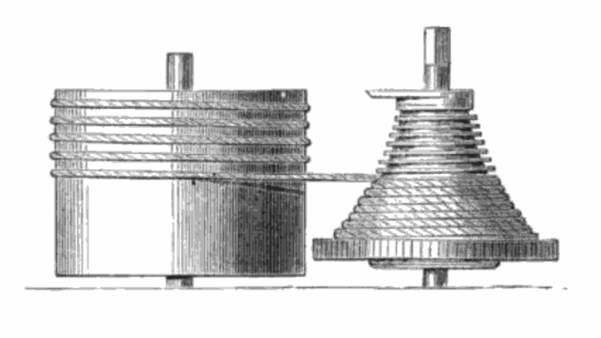
The fusee provides another illustration of this increasingly sophisticated approach.
For centuries, the fusee had been one of the defining components of the mechanical watch. Its purpose was to compensate for the changing force of the mainspring as it unwound, helping the movement receive a more consistent driving force.
But the geometry of the fusee presented a manufacturing challenge. Its spiral was not simply a matter of turning a cylinder. It required a carefully controlled change in diameter along its length.
The specialised fusee-cutting engine solved this problem by coordinating the rotation of the workpiece with the movement of the cutting tool. The result was a machine that embodied the mathematical logic of the component it was designed to create.
This is one of the most compelling characteristics of historical horological machinery, the machine often contains, in physical form, the same mathematical principles that govern the watch itself.
Drilling, piercing and the smallest operations
Not every operation became mechanised as much of the eighteenth-century watchmaker’s work remained resolutely manual.
Piercing was still performed with fine saws, brooches and blades. Holes were drilled with small drills and bow-driven mechanisms. Files and gravers removed material in tiny increments.
The paradox is that greater mechanical precision actually made hand craftsmanship more demanding. As the accuracy of one component increased, the errors in another became more obvious.
A wheel cut with remarkable regularity could expose an imperfect pivot. A finely made pivot could reveal a poorly positioned jewel hole. A carefully finished bridge could make a slight distortion in the underlying plate immediately apparent.
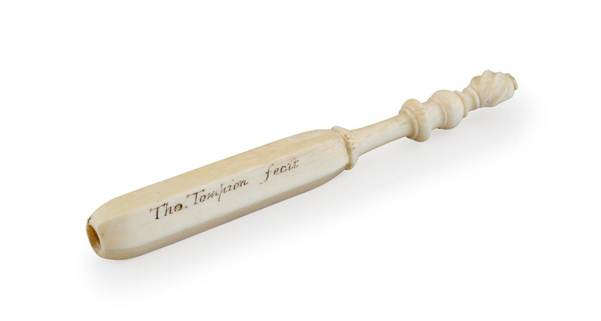
The ivory handle above believed to be for a broach (a specialised toothed cutting instrument) used by one of the greatest makers, Thomas Tompion, is an excellent example of how much care and attention that makers invested in their tools.
Precision creates its own demands, as the better the tools became, the less room there was for error.
Measuring the invisible
The eighteenth century also witnessed a growing sophistication in measurement. The watchmaker needed to know not simply whether a component looked correct, but whether its dimensions and relationships were correct.
Gauges, callipers and other measuring devices allowed craftsmen to compare components and establish repeatable dimensions. This may sound obvious today, but it represented an important philosophical change. The craftsman was moving from judgement by appearance towards judgement by measurement.
The finest watchmakers still relied upon sight, touch and experience. But these senses increasingly worked alongside instruments designed to make otherwise imperceptible differences detectable. The bench was becoming a laboratory of precision.
From craft to system
By the closing decades of the eighteenth century, the watchmaker’s bench represented an extraordinary accumulation of specialised knowledge. The files and gravers remained and so did the bow drill and the hand saw, but alongside them stood turns, wheel-cutting engines, depthing tools, fusee machinery and increasingly sophisticated measuring equipment.
The bench was no longer simply where a craftsman worked, it was the physical embodiment of the craft itself.
Every tool represented a solution to a particular problem and an attempt to make an operation more controlled. Measuring instruments reflected the growing realisation that accuracy could be defined, tested and reproduced. This was the beginning of modern precision engineering.
There was, however, a limit to what could be achieved by even the most talented individual craftsman. Hand production was inherently dependent upon skill. A master could produce extraordinary work, but another craftsman might produce subtly different results.
The next great transformation would come when machines could do more than assist the watchmaker as they could begin to reproduce their work. During the nineteenth century, this principle would fundamentally alter the manufacture of watches and clocks. Machines would increasingly produce components to standardised dimensions; specialised factories would divide production into discrete operations; and interchangeable parts would become an industrial ambition.
The eighteenth-century bench had prepared the ground with the craftsman had spent centuries teaching machines how to cut, drill, turn and measure. Now the machines were about to change the craftsman himself.