
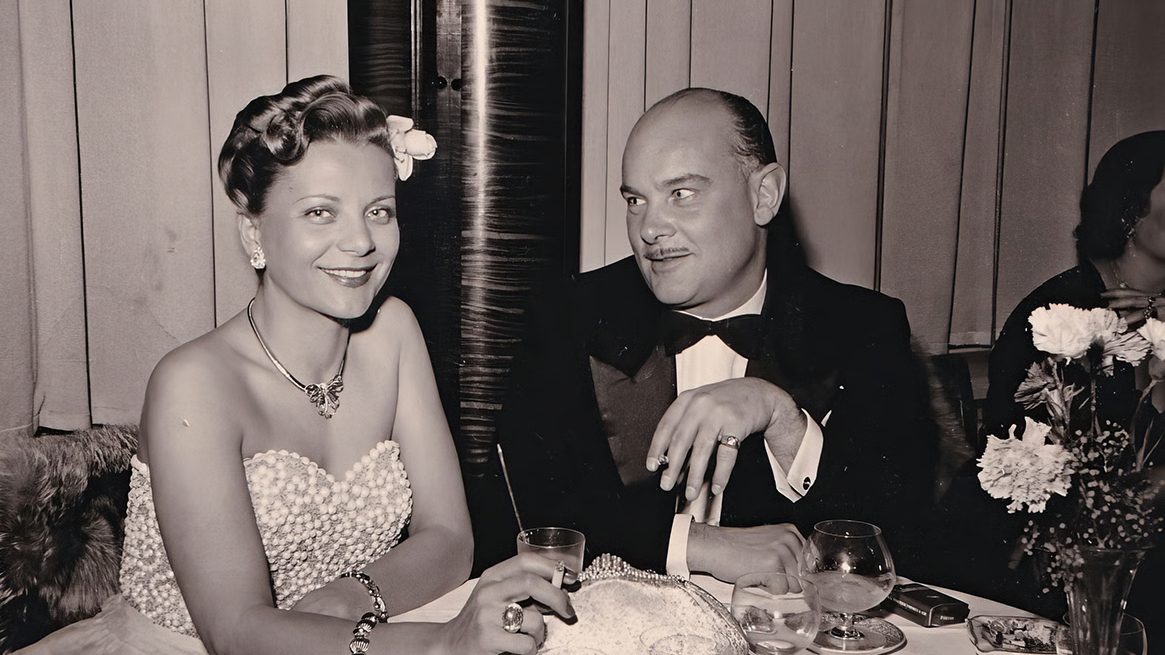
Willy Breitling pictured with his wife Beatrice
In his call to arms to Swiss chronograph manufacturers, Willy Breitling laid the foundations of modern horological marketing
Ah, the youth. Where would we be without them? Rhetorical or not, that’s an impossible question to really answer – and yet it’s one that was haunting the watch industry in the 60s. Even before the advent of quartz, younger buyers were distancing themselves from traditional timepieces, and one Willy Breitling was determined to get to the bottom of why.
You can probably guess which watchmaker Willy was the head of. But that wasn’t his only position. Breitling has historically been a leader in the field of chronographs, so it’s perhaps not surprising that Willy also served as the then-head of industry coalition, the Association of Chronograph Manufacturers.
It was his job to find out why people were or were not buying chronographs and ideally to make sure it was the former rather than the latter. He commissioned a report titled Le Marché des Jeunes, or “The Youth Market”. Yes, it was pretty on-the-nose, and yes there was a stereotypical mod girl on the cover. But the report did reveal a fascinating, if dire, insight to the ACM: the youth were not buying chronographs.
Chronographs specifically were seen as outdated relics from the war. They were dull, specialist tools. Today that’s a bit strange given how synonymous the complication is with racing and high-octane action, but this was before the 1963 Heuer Carrera really established the idea of the racing watch. Before then, chronographs just weren’t cool.
While Heuer was aiming squarely at professional racers, Breitling, however, largely because of that commissioned report, decided to make its play towards the younger market with no subterfuge. How did you make the youth desperate for a chronograph? Breitling’s answer was the Top Time, launched in 1964.
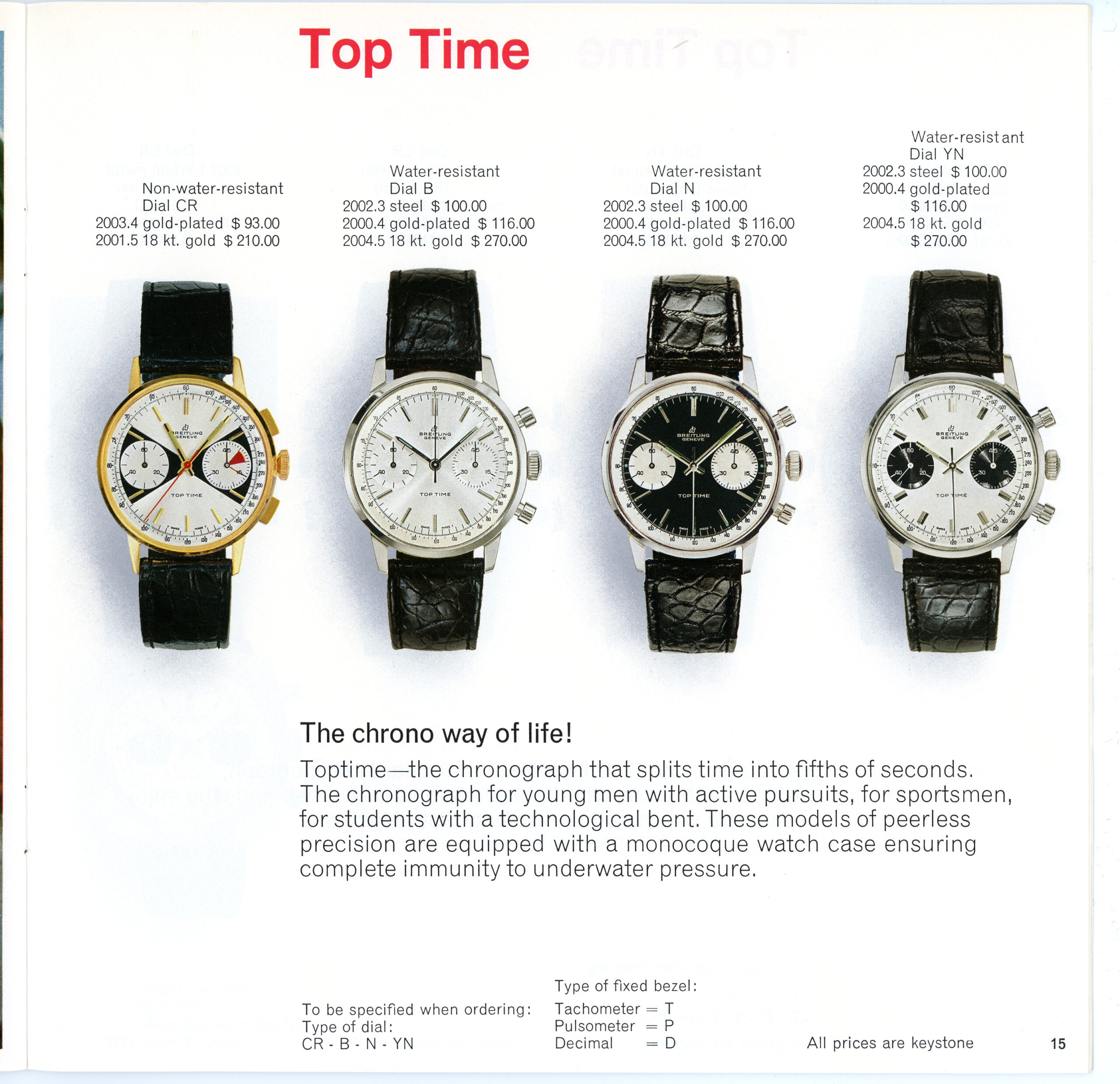
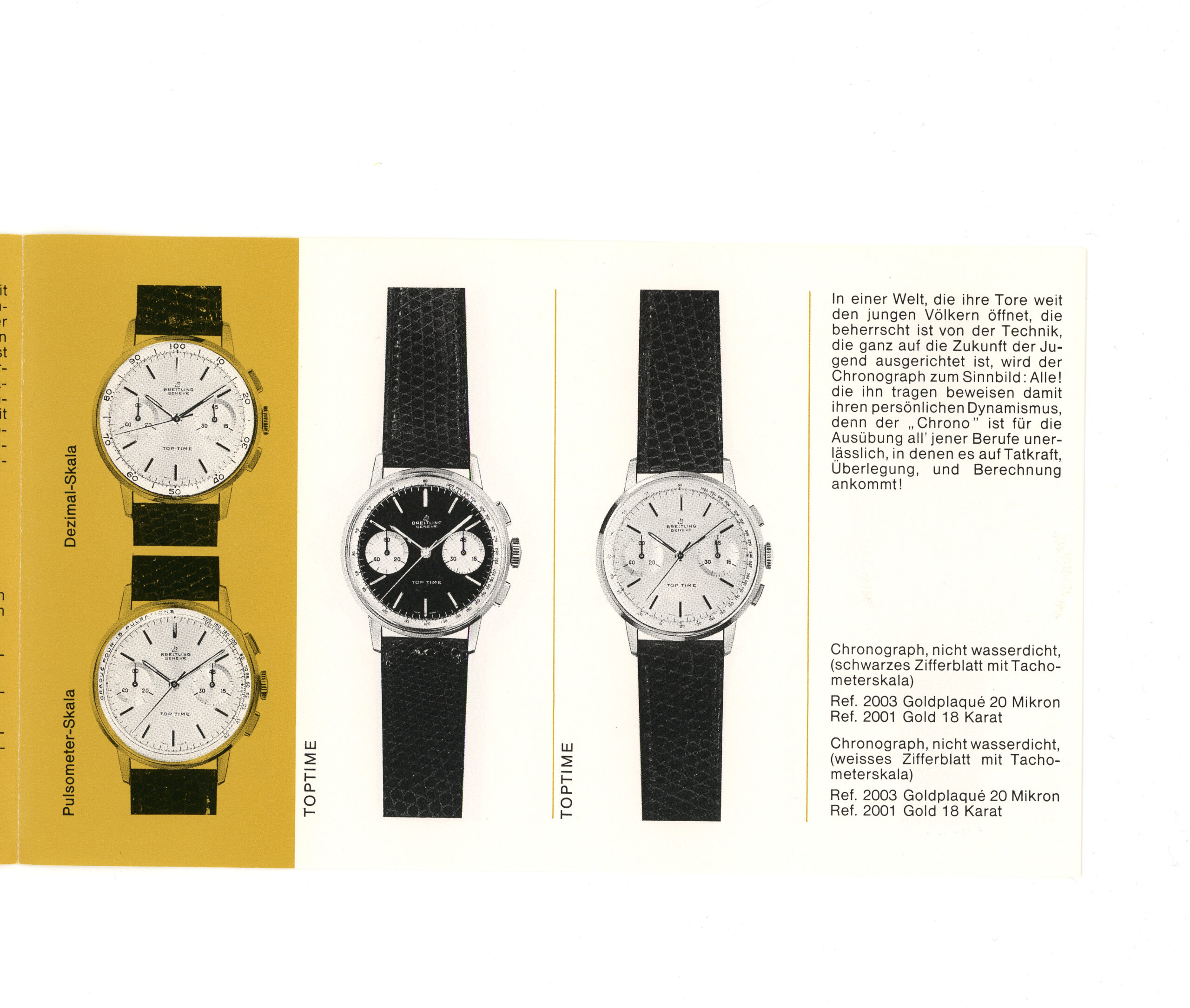
The Top Time nailed what younger buyers wanted. It was more affordable and lighter than Breitling’s heavyweight pilots’ pieces (the Navitimer, specifically). They were colourful, frenetic and, courtesy of 1965’s Thunderball, fit for spy-come-sex symbol Sean Connery.
The Top Time however came after a period of self-reflection for Willy Breitling. His report was a wake-up call and one that he seemed to take to heart as a failure to adapt.
In 1963, he penned a pamphlet aimed not at consumers, explaining all the new features of Breitling watches. Instead, it was a manifesto of sorts, a very Swiss call to arms. Dubbed ‘To Err is Human, to Persist in Error is Diabolical’ (as it was published in both Swiss French and German, I’ll stick to translations), it begins as a reflection on what watchmakers have been doing wrong.
I’ve published the full archival photos of the pamphlet below if you’d like to read / translate it yourself. But even the broad strokes are enlightening.
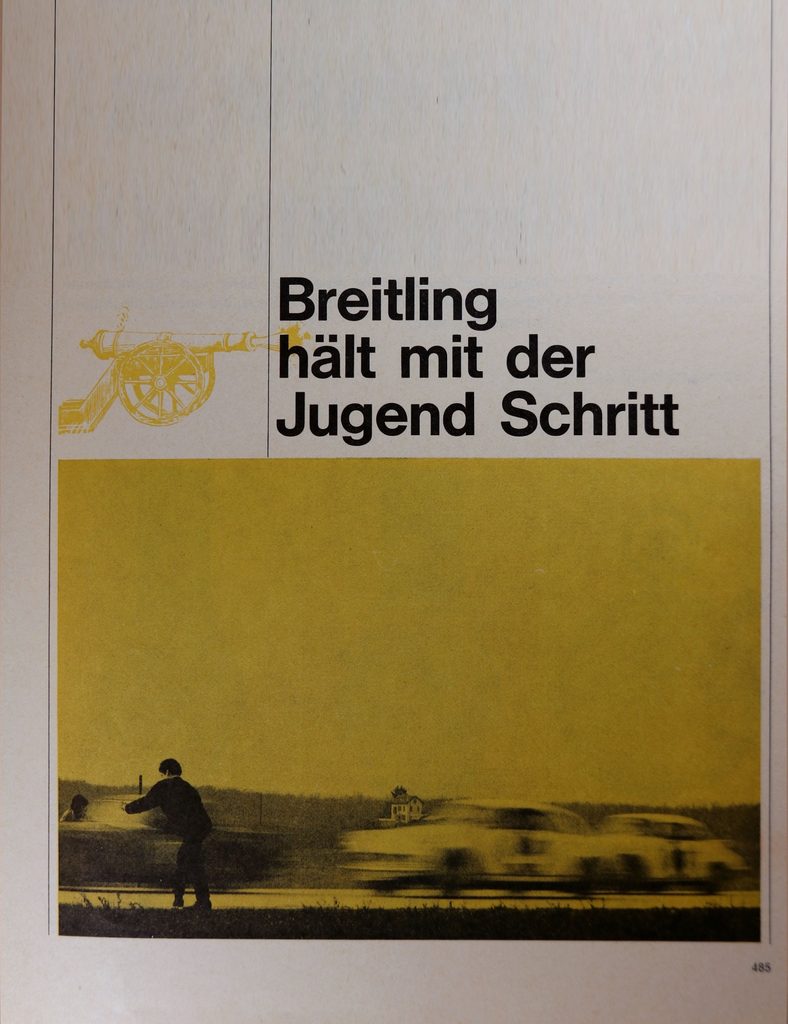
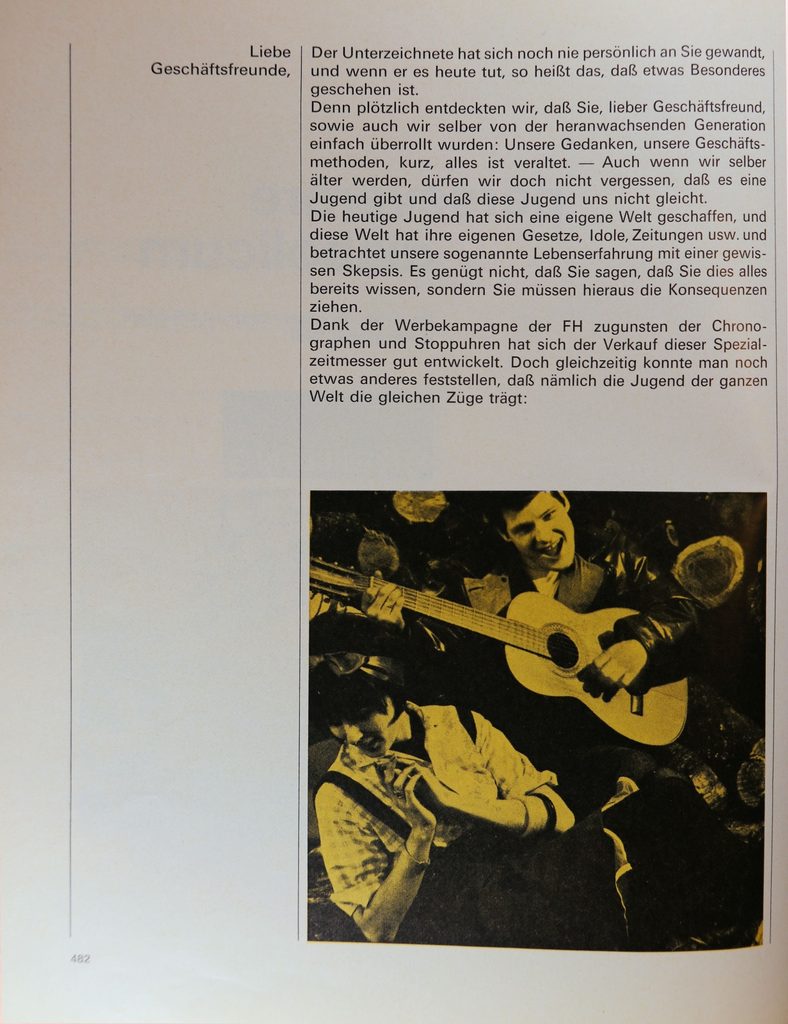
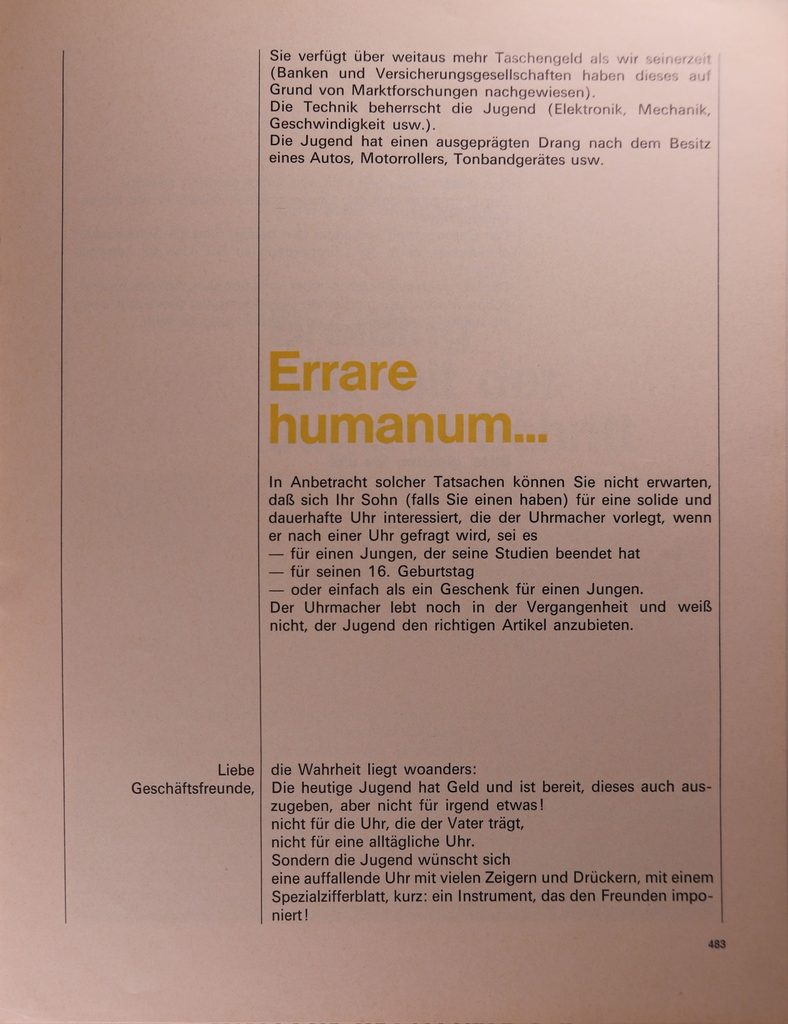
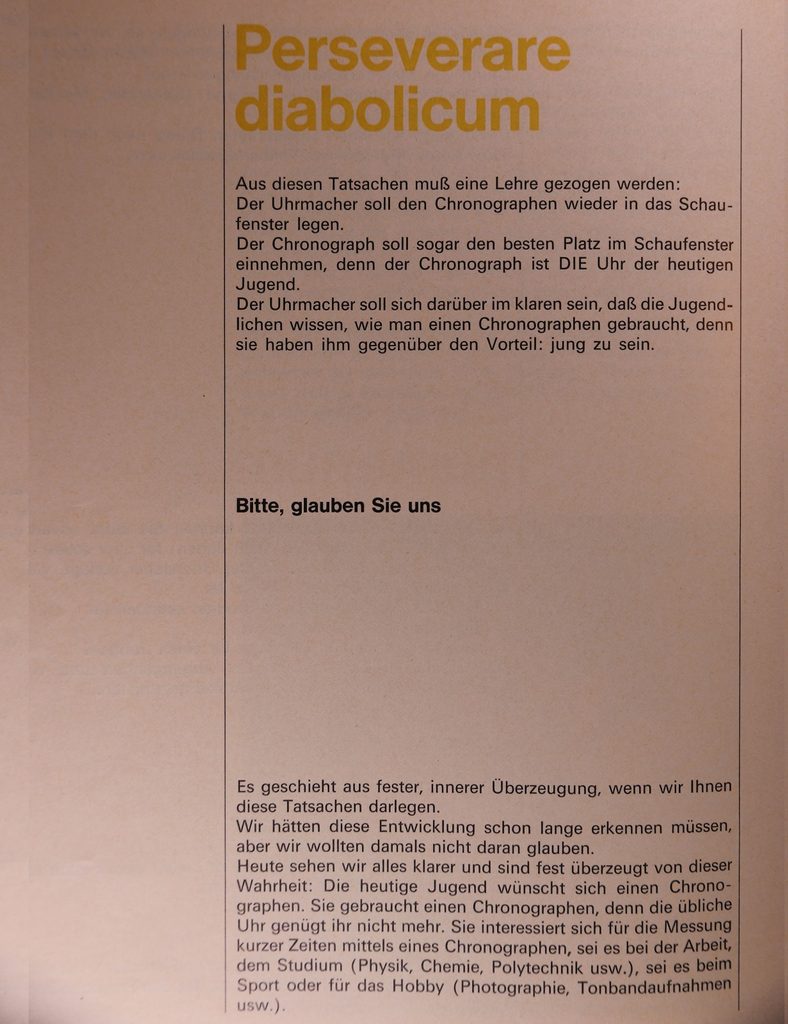
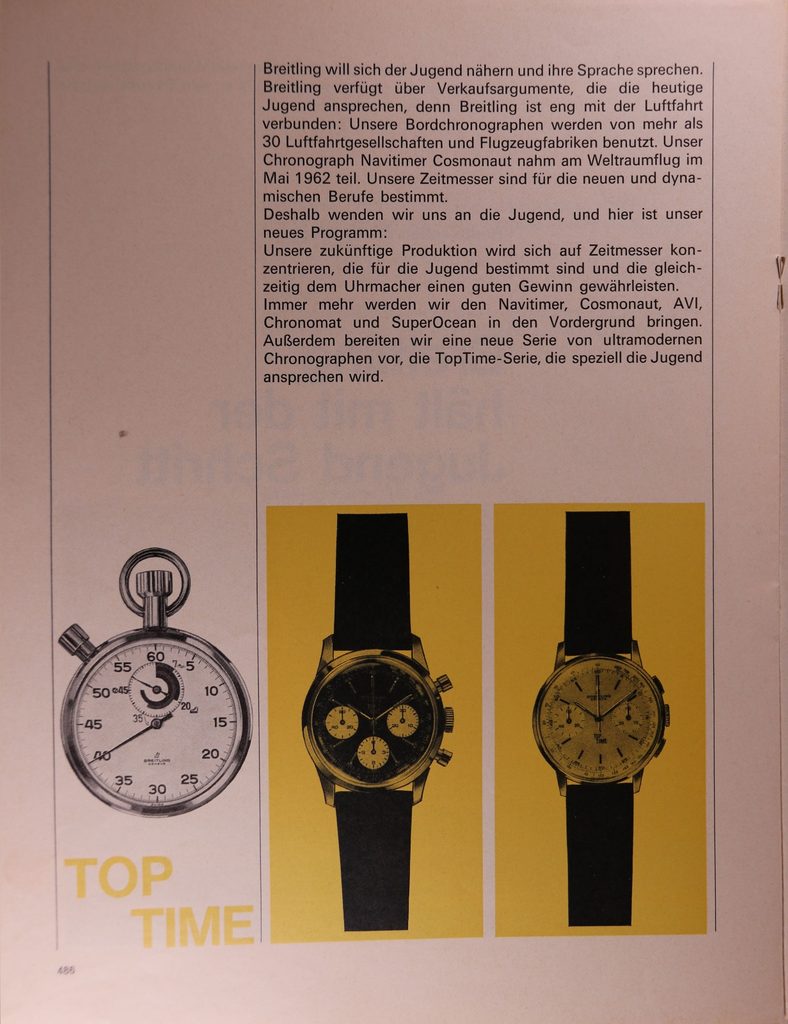
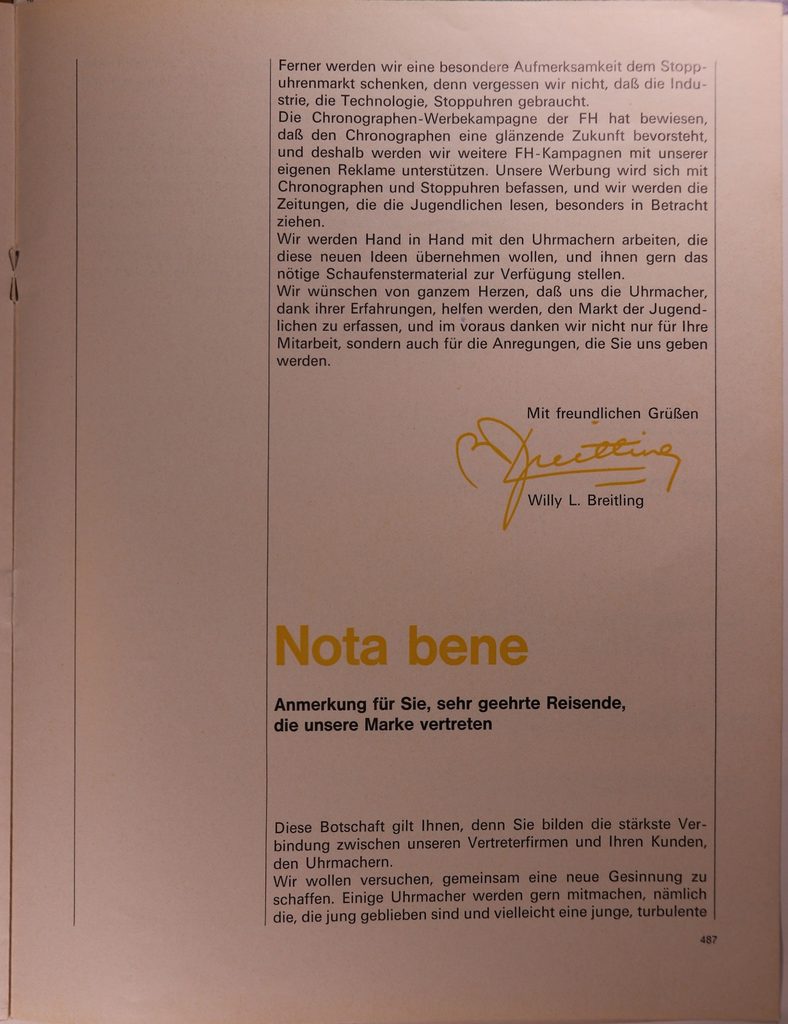
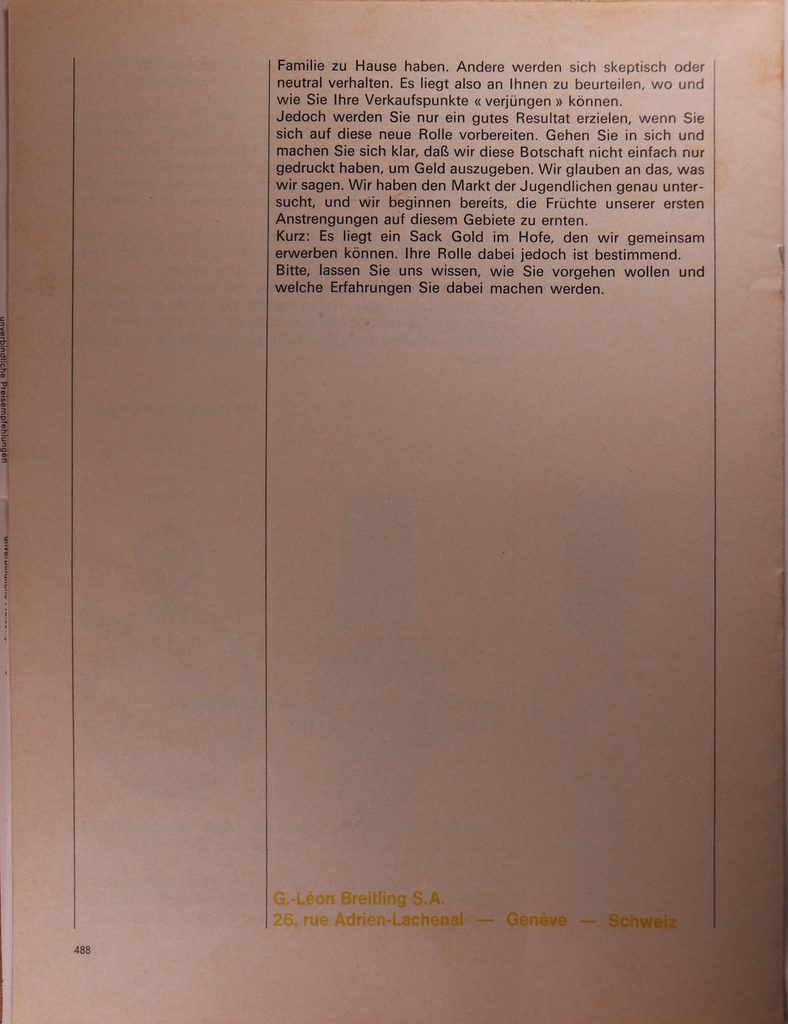
The youth of today, argues Willy, are fundamentally different to how his generation grew up. They have more spending money than ever before, they want their own technology – in the 60s that meant cars, motorbikes, record players – and they wanted something that reflected their tastes. The old ways of working, Breitling included, simply didn’t cut it. You couldn’t expect your children to want the same thing their dad wore; they wanted something technical, something to impress their friends. They weren’t getting it – and it was the watchmakers’ fault.
While there’s something charming about Willy’s insights now, youth culture was still a relatively new thing then. Rebel Without a Cause had kicked off the counterculture movement back in 1955 and Swiss watchmakers aren’t historically the most agile of marketeers. They’d never really needed to chase a trend before. Compare that to today where millions in marketing budgets are sloshed about to brute force the ‘next big thing’. It’s night and day.
What also stands out is that Willy Breitling admitted mea culpa. He plainly states that Breitling should have seen this coming but didn’t want to believe it, which is more self-aware than you’d even expect from watchmakers today. But realising that Breitling should have seen this shift coming also meant he saw it as an opportunity to do better. After all, to err is human… to refuse to learn from it is diabolical.
If teenagers were into technology, mechanisms and impressive pieces then, he argued, the chronograph should be the watch they gravitate to. It has all the right ingredients, just poorly packaged. The pamphlet states that the Top Time is Breitling’s answer to that issue, but as a rising tide lifts all boats, it’ll spur other watchmakers to do the same. Put ads in youth magazines rather than traditional papers; work with watchmakers to come up with new, innovative ideas and get the chronograph back in the limelight. It was a call for an industry-wide push to make chronographs cool.
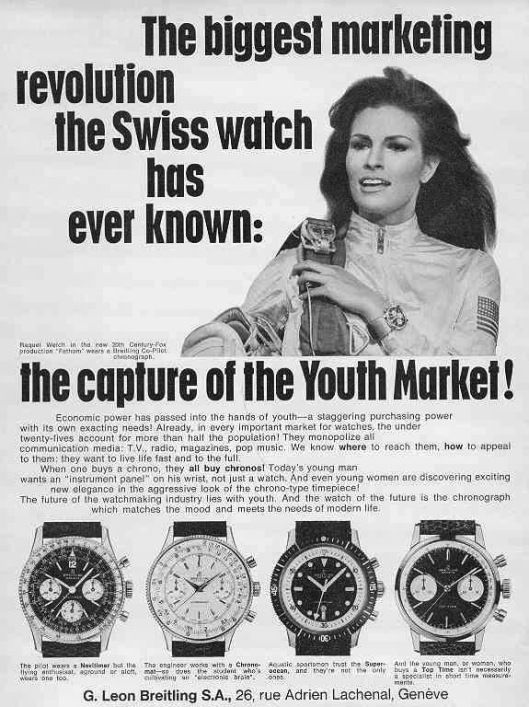
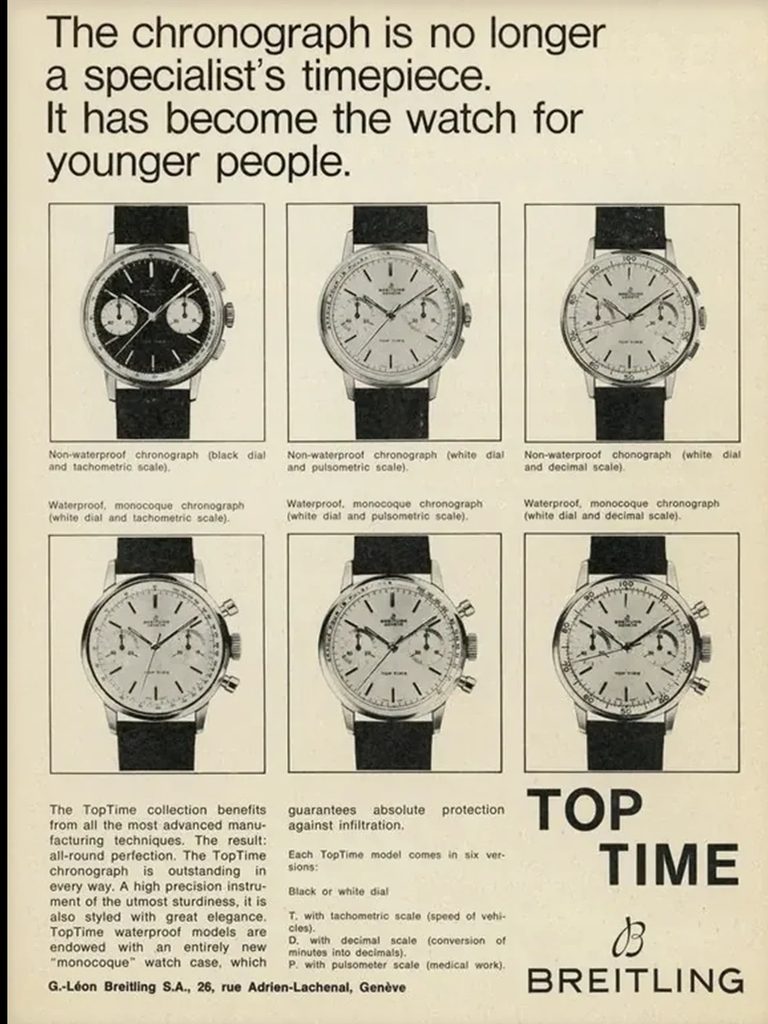
Today, chronographs are cool. Whether it’s because the industry finally woke up or because the chronograph naturally evolved with racing, that’s up for debate. But the Top Time at least proved incredibly successful. Perhaps more importantly though, Willy’s pamphlet was arguably the first time a watch brand identified an opportunity segment of the market and directly aimed to capture it.
Oh, watches had been designed for certain types of people before, that was nothing new. But running a full, holistic campaign, firing on all marketing cylinders and rethinking how to sell a very, very specific product… it was a huge shift in an industry that was more ‘if you build it, they will come’.
Now, we all know our watchmaking history circa 1969. There was another thing coming up in the shape of quartz that perhaps the Swiss watch industry should have seen coming, even if not necessarily from Japan. Not all of that was their fault of course, as Elizabeth Doerr has explored this week. But there is something wryly comical in a blossoming of self-awareness about why chronographs weren’t selling, just before the biggest blow to Swiss watchmaking in history.
At the very least, Willy Breitling’s Errare Humanum… persevere diabolicum, to give its original Latin title, is a valuable snapshot of a striking moment in watch history. It was the beginning of the unending pursuit of getting the youth vote, the germ of a Big Bang that’s evolved into hype-laced product ‘drops’ and both influencers and ambassadors shilling watches from TikTok and billboards alike. Whilst Willy Breitling might have been a first adopter; he most certainly was not the last.