
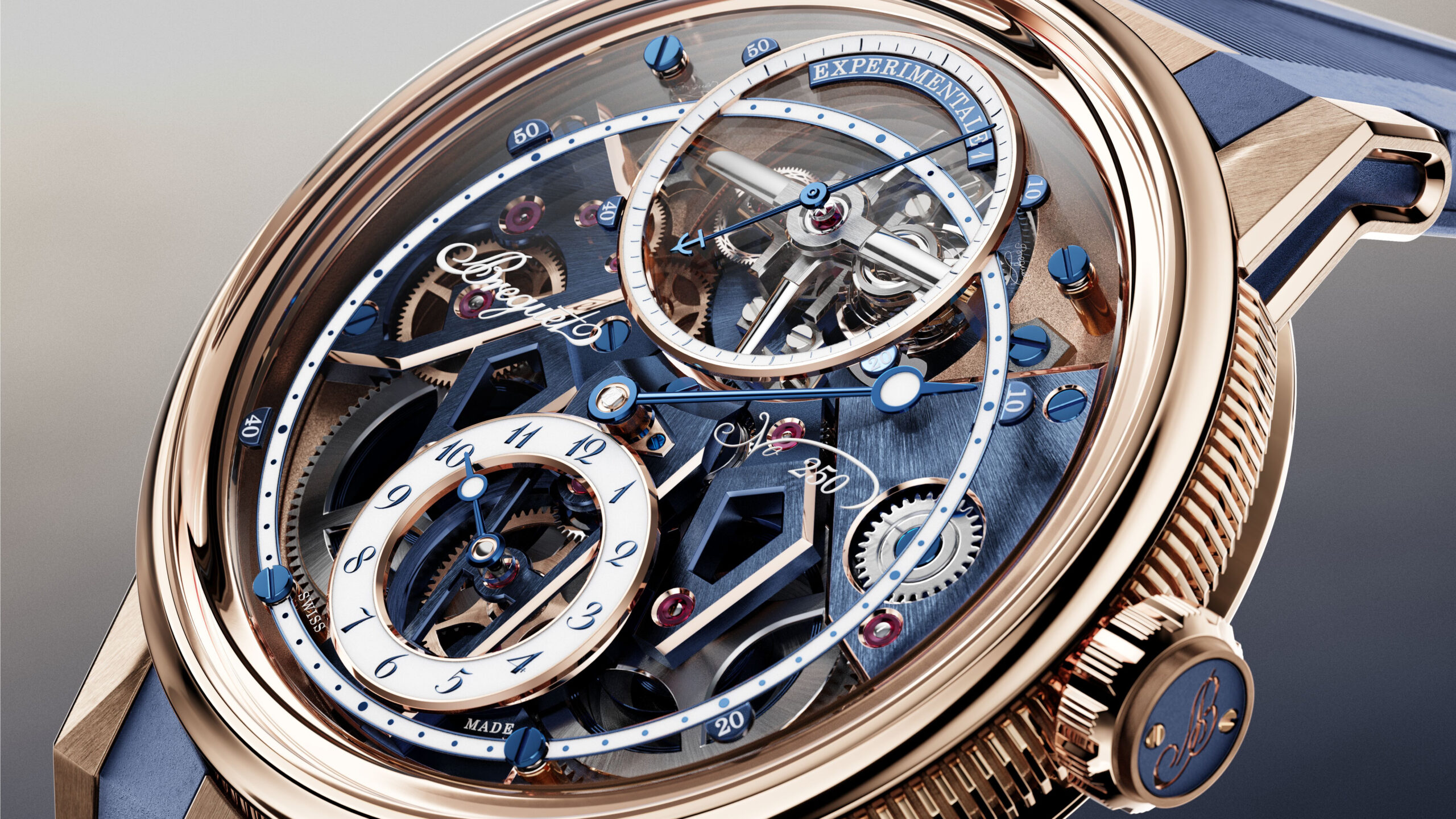
The cutting-edge chronometry of the Breguet Expérimentale 1
Writing about watches is, for a diehard timepiece fancier, almost always a joy. Nothing, however, comes close to matching the satisfaction of being tasked with breaking down a genuine technical novelty. It’s a privilege to research and ruminate on groundbreaking achievements. And, in the evermore esoteric quest for true innovation, brands are tearing up centuries-old rule books and thumbing their noses at established wisdom.
Magnets in mechanical watchmaking? Surely not. Since the rebirth of the mechanical watch industry following the quartz crisis of the late 1970s, it has been generally accepted that magnetism was persona non grata numero uno when it came to the reliable functioning of a watch movement. The fear of magnetic influence has nothing but intensified in the years since, with the advent of mobile technology and its ubiquity in our daily lives.
So many of the things we use regularly — mobile phones, laptops, microwaves, even — emit low-level magnetic fields that are theoretically capable of sending a non-resistant movement doolally. So why on Earth would anyone actually consider putting magnets inside a watch? Surprisingly, that’s exactly what Breguet (of all brands) has done with its Expérimentale 1. Perhaps even more surprising is the fact that the historically innovative watchmaker was not the first to propose such madness. For that, we must delve into the archives and examine several patents filed by C.F. Clifford that were never put into practice.
Cecil Frank Clifford was a significant, although nowadays largely forgotten name in the history of horology. His most revolutionary theories were developed between the 1930s and 1950s. He is best remembered as the inventor of a magnetic escapement for clocks and watches, but his research never made it into the mainstream, largely due to the fact that he was decades ahead of his time and lacked some of the necessary materials to bring his theories to life reliably.
Based in Bath, this Fellow of the British Horological Institute approached watchmaking with an engineering mindset. He, like many before him, identified the foremost weakness of every mechanical escapement as friction derived from the contact of physical components. Both forerunners and successors of this great man operating in the field of watchmaking have attempted to solve this problem in myriad ways.
The most common kind of escapement to this day remains the lever escapement, which was first pioneered by Thomas Mudge in 1775, but remained difficult to manufacture for many years. This was in part because the pallet stones, which Mudge himself identified as a significant point of wear, had to be cut from natural gemstones (almost always ruby or sapphire), hand-finished, and cemented in place. It wasn’t until the development of the flame fusion process (in 1902 by Auguste Verneuil) that synthetic rubies made their way into watchmaking, simplifying the creation of these necessary components and their consistency.
In the latter part of the 20th century, famed British watchmaker George Daniels redesigned the lever escapement with his Co-Axial version, which was originally conceived to operate with no lubrication at all (although Omega, which purchased the rights to commercialise the Co-Axial, does actually lubricate the contact surfaces, albeit more sparingly than with a traditional lever escapement).
Summarily, the main issues watchmakers are forever trying to overcome are components that repeatedly collide, slide, wear, and require lubrication. Clifford however proposed replacing the physical connection between the escape wheel and the oscillator with a magnetic connection. He considered several versions of this system, but they all amounted to the same thing: no contact, no problem.
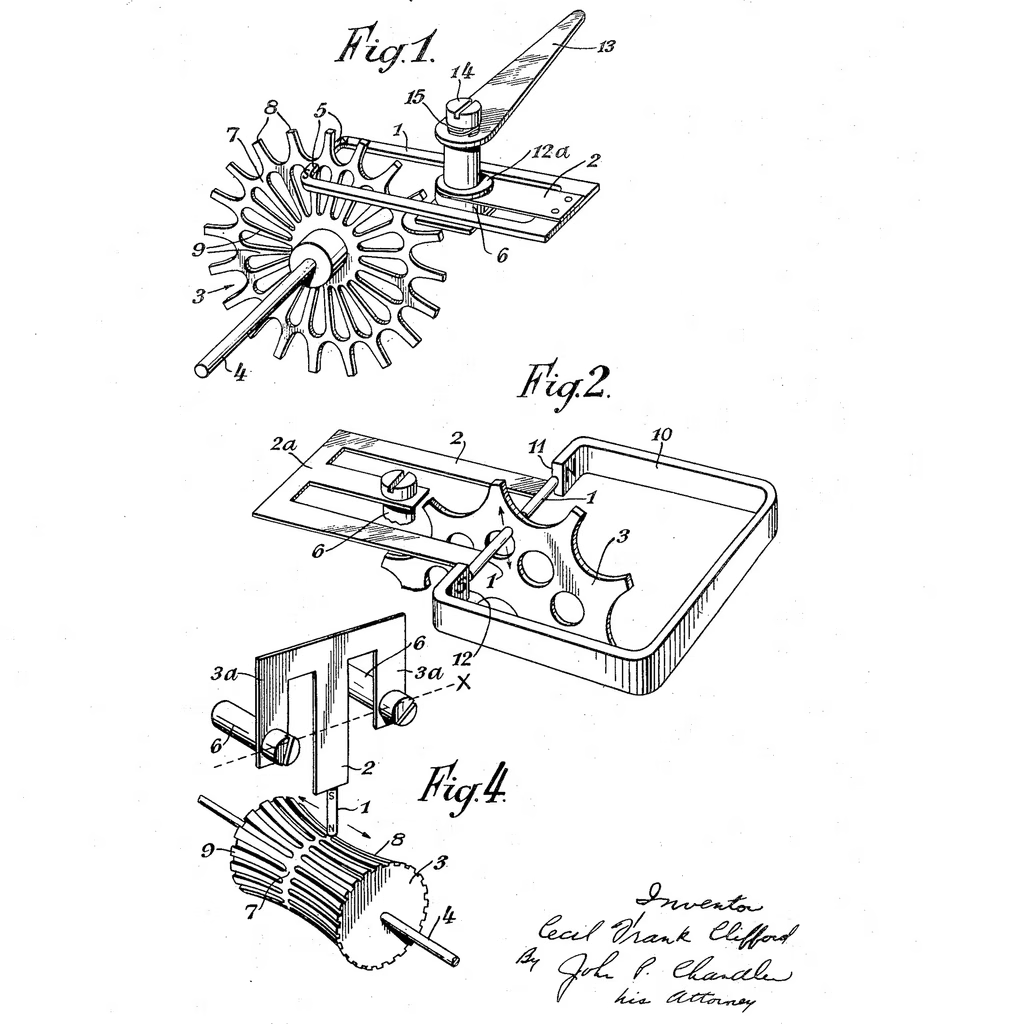
Despite the fact that Clifford’s regulation organ never made it into a commercially available wristwatch, he did find some success through his company Horstmann Clifford Magnetics Ltd., with his inventions being used in silent clocks and timing devices (which found some rather grim but welcome applications during wartime, as the absence of ticking was a major advantage for naval time bombs and other underwater devices).
The timing of Clifford’s patents was poor. In those days, he lacked access to the necessary rare-earth magnets with stable, powerful magnetic fields, non-magnetic alloys such as nickel-phosphorus, silicon micro-fabrication, micron-level manufacturing tolerances, and the ability to precisely model the behaviour of magnetic fields — something facilitated by modern computers.
What we are seeing in the Breguet Expérimentale 1 is not a facsimile of Clifford’s idea, but rather the first effective execution of the same concept. Clifford proposed the possibility that magnetism could become the impulse medium of a purely mechanical escapement, but he never realised it in practical terms. For that reason, we, as a collective, should doff our cap to the jewel in the Swatch Group’s crown for finally showing it can be done (despite the result costing approximately the same as 914 entry-level Royal Pops).
The watch in question measures 43.5 mm in diameter and is made from solid 18K Breguet gold. The 7250 movement contains 268 components and is manually winding. And it is stunning, inside and out.
For a manufacture whose name has become almost synonymous with classical watchmaking, Breguet has never actually been afraid of challenging convention. It is easy to forget that Abraham-Louis Breguet wasn’t merely refining existing ideas. He was inventing entirely new ones. The tourbillon, the pare-chute shock protection system, overcoil balance springs, natural escapements — these weren’t nostalgic exercises. They were solutions to problems that nobody else had solved.
In many respects, the Expérimentale 1 feels less like a departure from the brand’s heritage than a return to its founder’s mindset. And, as many of my peers and I have said ad nauseam, it’s about time – and when you consider the way in which the Expérimentale actually works, it’s even more impressive.
The basic architecture of the movement begins as one would expect: a mainspring, or, in this case, four of them. Two barrels house two mainsprings each. The mainsprings are stacked on top of one another and separated by sapphire discs to reduce friction. Despite the high-drain tourbillon and the rapid 10 Hz operating frequency (which further protects this watch from shocks), these four (blue) mainsprings can generate enough power for a 72-hour run time.
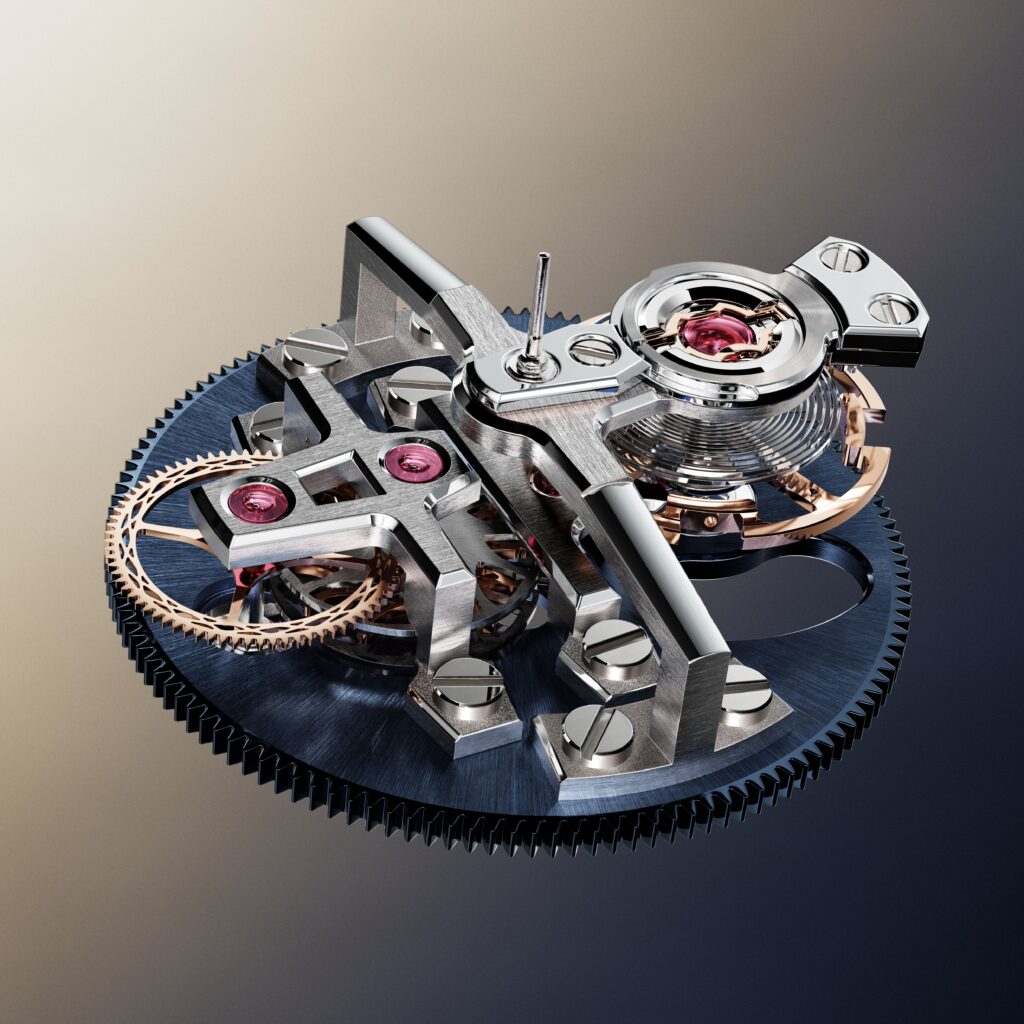
Working in parallel (and offset by 180 degrees, which helps smooth the increased torque delivered by the barrel), these mainsprings drive a traditional gear train that engages with an escape wheel that is anything but traditional. Created from a specially formulated ferrous alloy, the escape wheel sits between two titanium plates, included to focus the magnetic field.
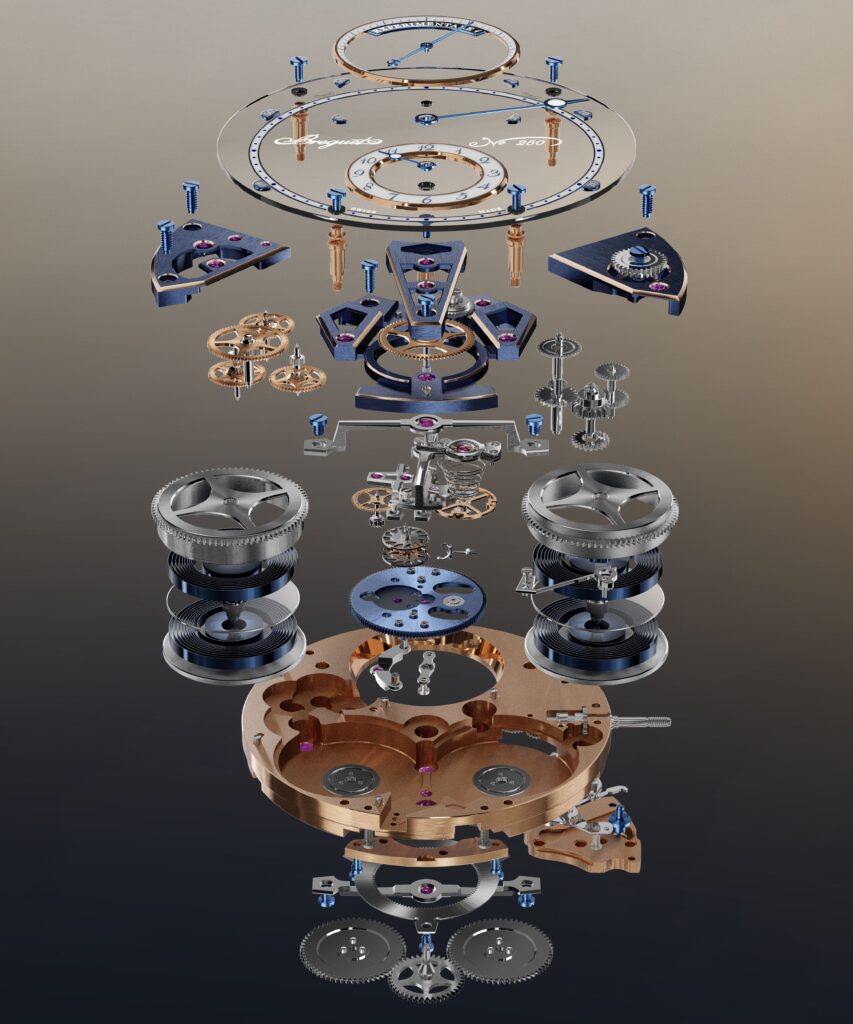
If you picture a traditional escapement, impulse is only delivered during contact. To make the difference between this and the magnetic escapement of the Expérimentale 1 as simple as possible to explain, let’s just say that the impulse from a traditional escape wheel, when imparted to the pallet jewel, is binary — either zero or one. When you think about the impact of the escape wheel teeth components, occurring (in total) 28,800 times per hour in a standard 4 Hz movement, it feels almost violent in comparison to the contactless functionality of the Expérimentale 1.
Instead of pallet stones/jewels, the pallet lever of the Breguet Expérimentale has small samarium-cobalt magnets, set within the frame of the lever (they do not protrude as pallet stones do — they are entirely surrounded by the lever itself). The escape wheel uses a sandwich style construction with the top and bottom levels made from titanium, and the middle — which is the bit that looks most like a traditional escape wheel — crafter from samarium cobalt.
The “filling” of the sandwich is the portion the magnet-tipped pallet lever interacts with. As the “teeth” of the samarium cobalt portion of the escape wheel sandwich approaches the magnetic “pallet stone”, the magnetic force increases (or “ramps up” to use Breguet’s own terminology), pushing the lever aside without contact. The balance wheel vibrates and then swings back on itself, completing its oscillation, and moving the pallet lever and escape wheel back into contactless engagement. This “energy ramp” results in an extremely smooth motion that feels more otherworldly than mechanical.
This remarkable (and remarkably secure) operation takes place 72,000 times per hour. It is truly incredible to watch and, like all the best very complicated ideas, looks strikingly simple in action. It almost makes you wonder why this has never been done before, but that thought quickly leads you to an appreciation of the tolerances and fine balance of magnetic forces at play.
Now, I said “contactless” as that’s how it’s intended to function. Breguet has noted that contact may occur during extreme shock, but one imagines it would be but a glancing kiss, and so uncommon during general wear that the negative effect of it on function and longevity to be almost negligible. Because of this, lubrication of these components is entirely unnecessary, solving one of watchmaking’s biggest problems.
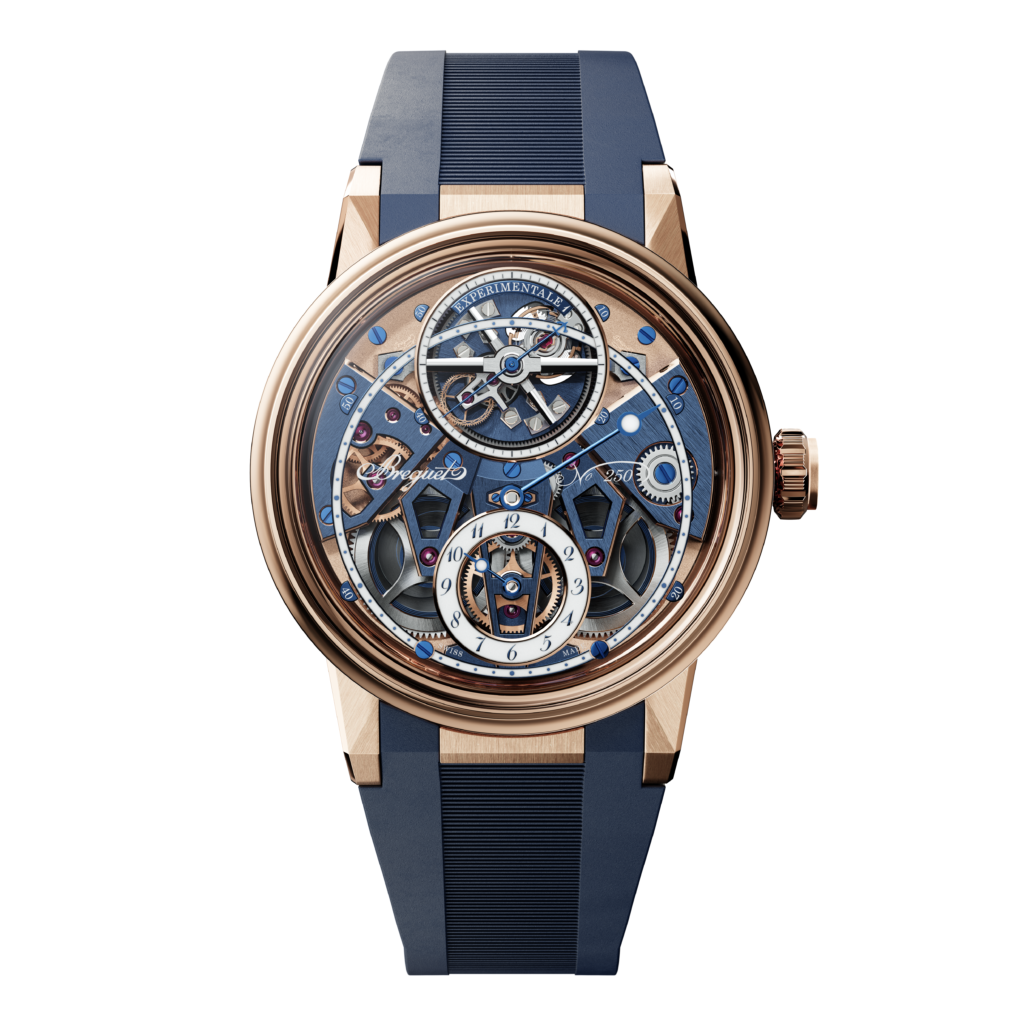
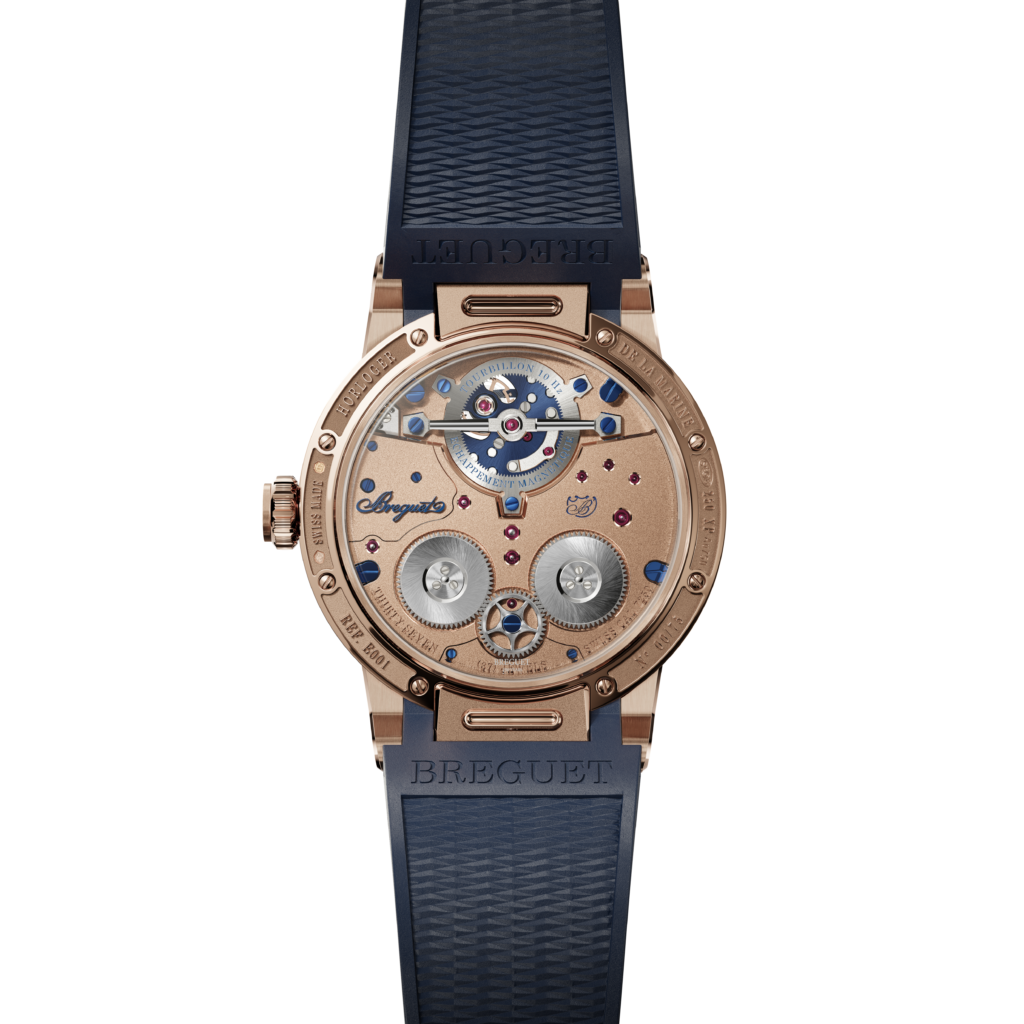
The Expérimentale 1 may not be a particularly commercial product, but it is commercially available. It is the kind of thing the majority of us watch lovers will never own but are surely glad to see made. Just as Hublot breaks boundaries with material experimentation, MING shatters ceilings with bracelet manufacture, and Grand Seiko labours with love over quartz movements and the potential of integrated circuits, so too should we celebrate Breguet for acting more like Formula 1 than Fiat.
On the subject of the last brand mentioned in that trio of pioneers, there is an interesting comparison to be drawn between this Breguet escapement and the Grand Seiko Spring Drive calibre’s raison d’etre. It’s a comparison I’ve yet to see noted in any other title, but as indirect as it may be, I feel it worth making.
Both the Expérimentale 1 and the Spring Drive use magnets in mainly mechanical movements. There is a distinct difference in their application, but the ethos is the same. The biggest and most obvious difference is that Spring Drive calibres don’t actually have an escapement at all. The output of the gear train is transferred to a continuously spinning glide wheel, which makes approximately eight revolutions per second (480 rpm). Attached to the glide wheel is a tiny magnet, and situated next to the glide wheel is a stationary coil. As the magnet passes the coil, it generates a very small electrical charge, which is just enough to agitate a quartz crystal, which vibrates at 32,768 Hz. An integrated circuit compares the oscillation frequency of the quartz with the actual speed of the glide wheel and feeds that information back to the static coil (which also acts as a magnetic break) to ensure the glide wheel spins at the correct rate as dictated by the quartz crystal. The similarity? Zero friction. The result? A stable rate that requires less human intervention over time.
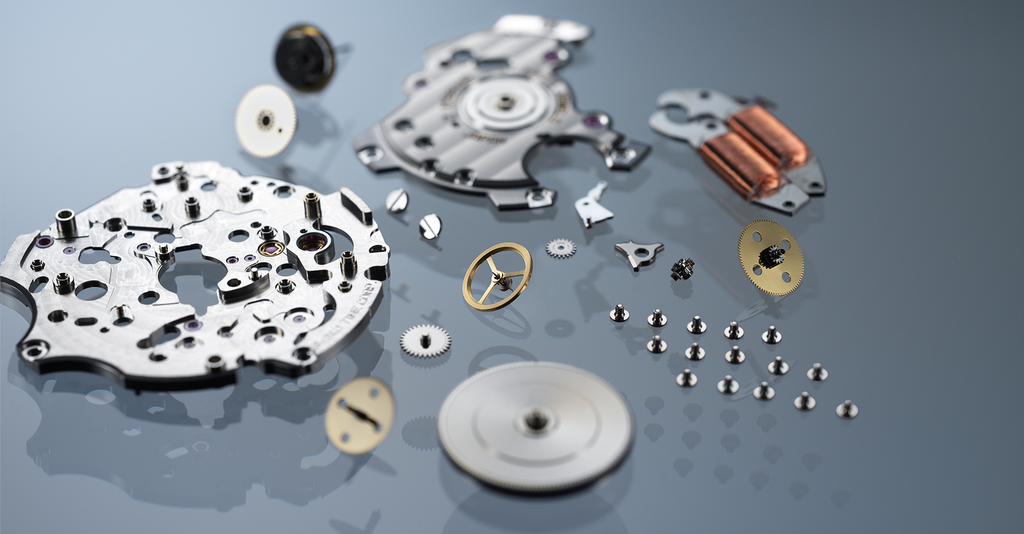
Maybe it’s a reach, but the symmetry in engineering philosophy is, at least for me, worthwhile highlighting for the sake of further discussion. While Grand Seiko asked, “Why have an escapement at all?” Breguet instead posed the question, “Can we keep the escapement but remove the thing that causes almost all of its inefficiency?” Different questions, yes, but identical objectives regardless.
Both solutions improve chronometric stability, reduce wear, minimise energy losses, and make the rate less dependent on fluctuating mainspring torque. Instead of relying on a fundamentally passive system like the Swiss Lever escapement, in which geometry determines performance, both the Spring Drive and the Expérimentale 1 rely on engineered force curves. That’s unusual in watchmaking and in an industry dominated by aesthetic separation; sharing such an uncommon technical philosophy is notable.
All that said, don’t allow me to bury the lede: Breguet has achieved this goal with a purely mechanical movement, which might go some way to explaining why Grand Seiko’s revolutionary technology can be had for four figures, while Breguet’s demands six.
One of the reasons I find projects like this so compelling is that they acknowledge something collectors don’t always admit: mechanical watches don’t need to become more accurate to justify their existence. Your smartphone has already won that battle. Quartz settled the argument decades ago. What mechanical watches can still become, however, is more intellectually enriching.
Every reduction in friction. Every improvement in energy transmission. Every increase in long-term stability. Every component manufactured to previously impossible tolerances represents another chapter in humanity’s ongoing attempt to master precision engineering using springs, wheels, levers, and now, magnetism.
Viewed through that lens, the Expérimentale 1 isn’t competing against electronic timekeeping at all.
It is competing against the physical limitations of mechanical engineering.
Collectors often talk about provenance. Sometimes they mean ownership history. Sometimes rarity. Sometimes historical significance. Experimental watches create a different kind of provenance altogether.
They become milestones.