
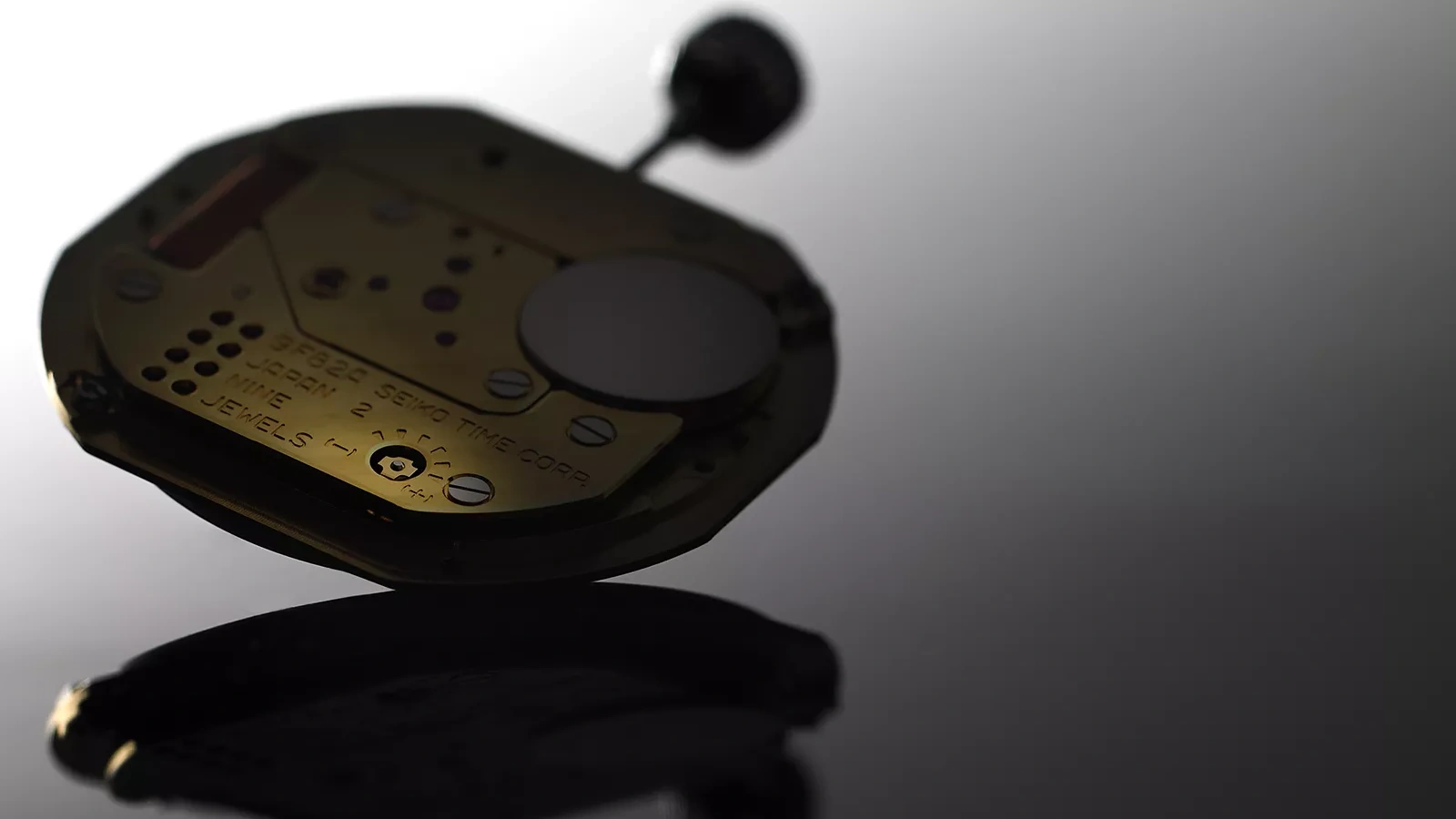
The so-called quartz crisis is a seminal event in the history of Swiss watchmaking. But its cause was not nearly as simple as the advent of mass-produced quartz movements in the late 1970s. Elizabeth Doerr explains.
What was the quartz crisis?
Historically, the quartz crisis is also known as the quartz revolution. For the Swiss, it destroyed a way of life (at least for a time) and eliminated tens of thousands of jobs. For Japanese and American watch manufacturers, it created an opportunity. This crisis (or revolution) took place in the 1970s and 1980s and was a severe time of upheaval and, yes, renewal for the watch industry.
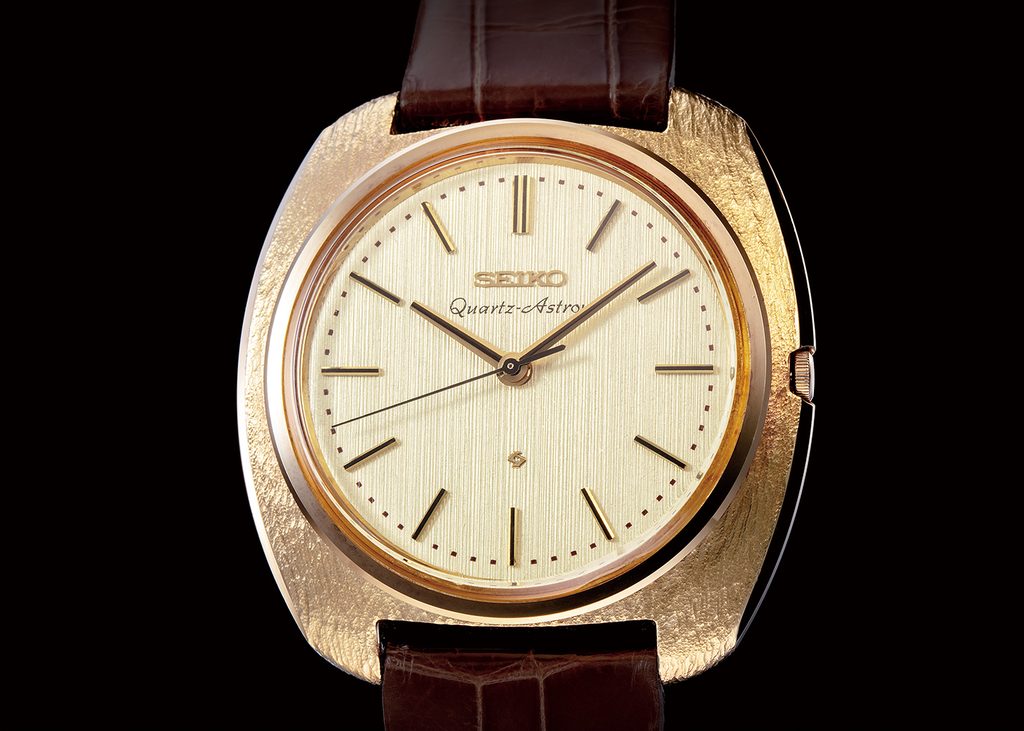
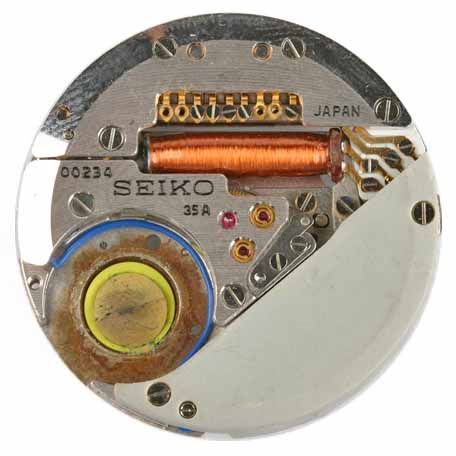
The kick-off for the worst part of the quartz crisis might be traced to December 25, 1969. This was the day Japan’s Seiko introduced the Astron, the world’s first quartz watch. It rang the bell signalling the advent of a digital revolution in timekeeping, something that Switzerland’s watch companies strove to avoid. And even though it was Swiss engineer, Max Hetzel, who invented the tuning fork electronic wristwatch in 1954, local watch companies chose to ignore the impending signs. Not fruitful in pitching to his compatriots, Hetzel ended up selling his Accutron to Bulova, an American company, who became famous for it. The U.S. firms, of course, were not battling centuries worth of manufacturing, marketing, and sales hangups. Instead, they welcomed new technology.
Despite steadfast avoidance tactics, the Swiss could not ignore the coming tsunami. It was one caused not only by a wave of inexpensive Japanese quartz watches made by Seiko and Casio – which were additionally far more accurate than mechanical watches! – but also by a second factor as out of their control as an earthquake. Both are worth taking a look at.
Factor 1: technical disruption
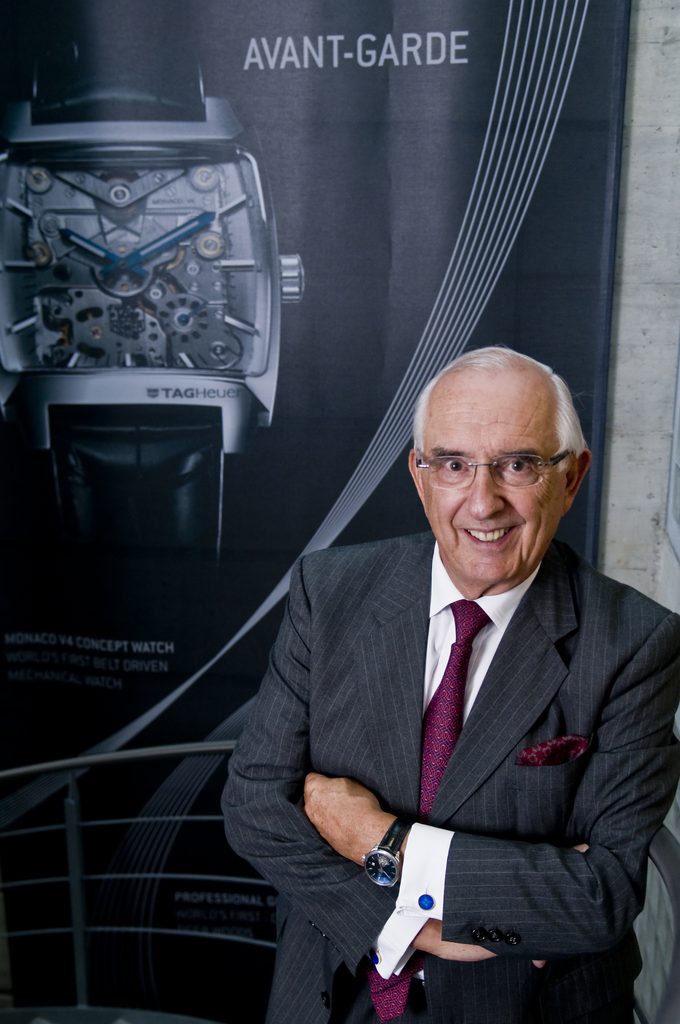
The mass-produced quartz movement is generally credited for causing the quartz crisis. However, an interview I had taken several years ago with Jack Heuer, great-grandson of the founder of chronograph specialist Heuer (today’s TAG Heuer) and the man who first sold the company in 1982, gave me further insight into earlier technical disruptions leading into the era. As the words of Mr. Heuer, who is now 94, are riveting, I am going to widely quote from this interview.
“Chronographs were traditionally hand-wound,” Heuer began after I asked about the infamous “automatic chronograph race” of 1969. “After the World War II years, in 1945-50, the self-winding watch existed but was quite new and had few suppliers. Not many people could make them. It was only in the late 1950s that the self-winding watch became THE thing, and people no longer wanted watches they had to wind. It’s not like today where people have 8-10 watches; back then they had one and they didn’t want to wind it every day.
“So the market for mechanical chronographs drastically started to fall, and our exports started to systematically fall. It was so bad that the FH even subsidized advertising for the chronograph manufacturers association, and we knew that our company was one of the leading manufacturers of chronographs at the time. We knew that if we didn’t find an automatic chronograph, our survival would be at risk. There was big pressure for companies like us and Breitling, who was our colleague and competitor, to find the solution.”
This was a backdrop leading up to 1969…and naturally, our conversation turned to the quartz crisis since both the Astron and the automatic chronograph, including one made by Seiko, arrived in exactly the same year. And if Heuer thought that their only issue would be racing to an automatic chronograph, the watchmaker was in for a rude awakening.
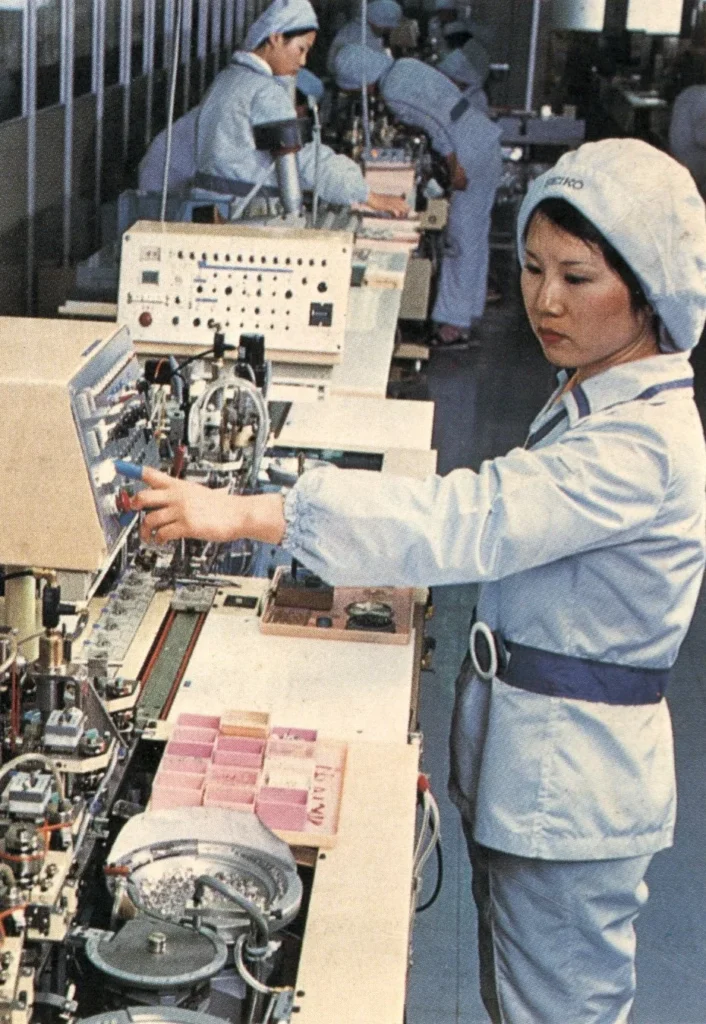
“The semiconductor started in Silicon Valley in 1971 or ’72. In ’73 the simplest application for a semiconductor chip was a digital watch. It became the first practical application for a mass market. Eighteen months later they said, oh now we can do a watch with a date. And 18 months later a watch with a stopwatch, and split-seconds, and, and, and… 18 months later they said, oh, we can make calculators. That is much more interesting than watches. The semiconductor companies dropped watches overnight and started to make calculators, and then more complicated calculators. And 18 months later they made the first little computer machine. Off they went and forgot all about watches.”
But Seiko, who had introduced the Astron after 10 years of research and development and at that time had almost 100 years in the watch business, did not forget about watches. While the Astron was a luxury at a price of 450,000 yen in 1969 (or US$1,250), Seiko quickly learned how to mass produce quartz – a movement that became significantly more accurate, cheaper to produce, and required way less maintenance than mechanical watches.
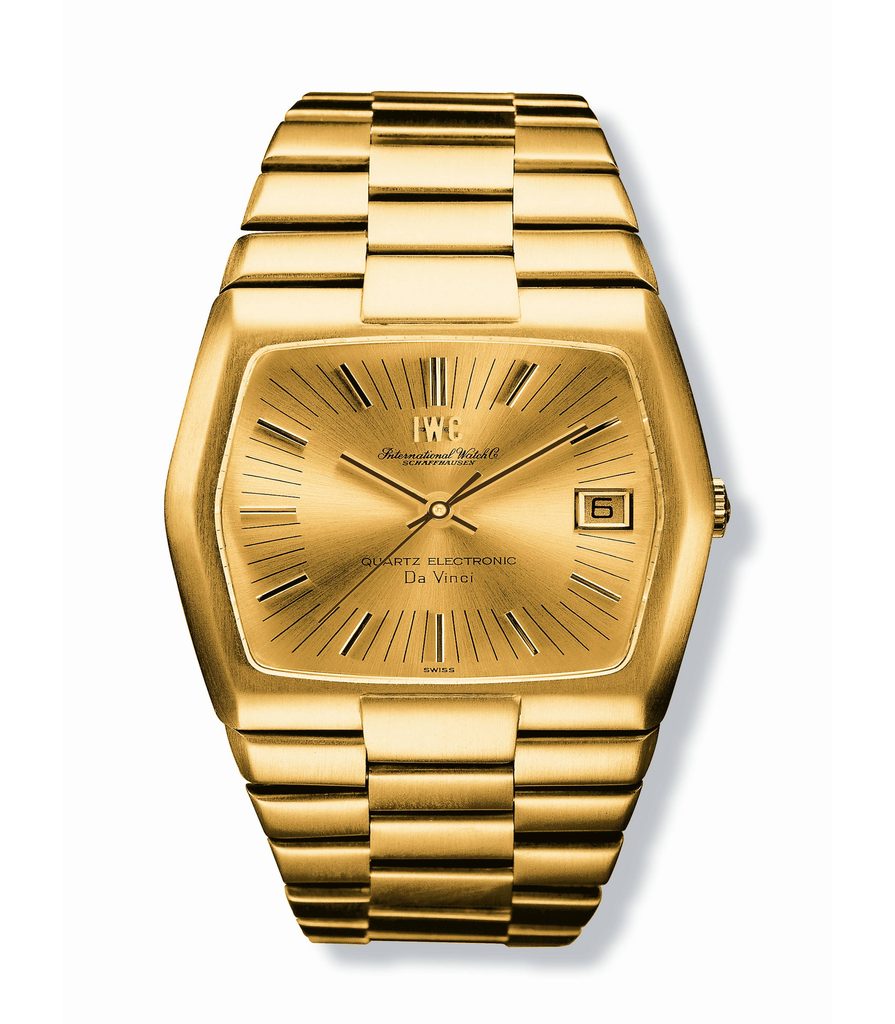
It wasn’t until 1970 that a consortium of 16 Swiss companies brought out their own (expensive) quartz watches outfitted with the jointly developed Beta 21. Some of these brands included Patek Philippe, Rolex, Piaget, Rado, Omega, Longines, Jaeger-LeCoultre, Zenith, and Bulova (who called its version Accuquartz, a name alluding to the previously launched, very successful Accutron). IWC ended up housing the Beta 21 in a six-sided watch called the Da Vinci. That early Da Vinci is a novelty these days as only 6,000 Beta 21 movements were ever made, and history looks at these timepieces as points of curiosity.
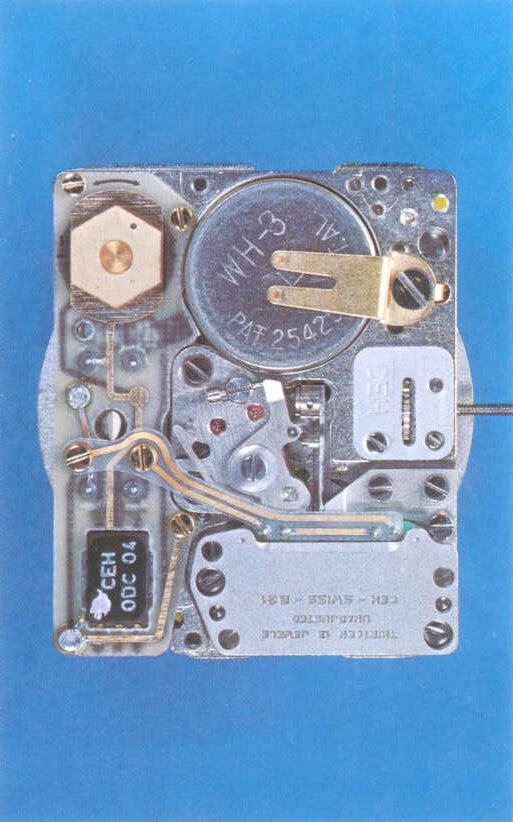
In 1971, Girard-Perregaux had the most success with its quartz Caliber 350, which was not derived from the Beta 21. Its 32,768 Hertz-beat became the standard frequency for quartz watches, which is still true today.
There was a lack of real innovation inside Switzerland while other nations’ entities were taking full advantage of emerging technologies. This was an instrumental factor during this time of Swiss crisis, when the number of Swiss watchmakers was reduced from 1,600 to 600 by 1983. Employment in the Swiss watch industry between 1970 and 1988 fell to 28,000 from a lush 90,000. But it’s an industry disaster that can’t be placed entirely on quartz.
Factor 2: Bretton Woods disruption
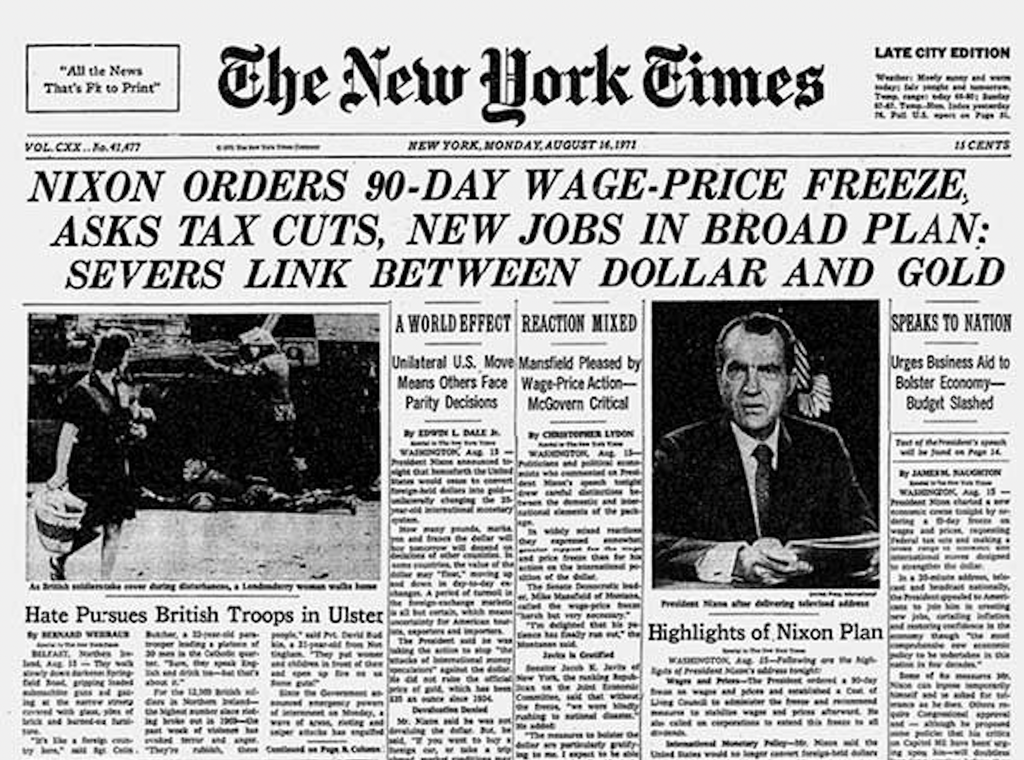
“There is another factor most may not realize,” Jack Heuer continued. “In 1970, Richard Nixon broke with the gold standard and let the dollar float. Over the next 5, 7, 8 years the Swiss franc went from one dollar equalling 4.33 francs to dropping so dramatically that it went down to 1.50. Which meant that our watches in America tripled in price. And at the same time, the Japanese very smartly tied the yen to the dollar.
“In those years, the Japanese overswamped the American market for watches. The Swiss tripled the retail price, and it killed the low end of our industry. That was even the much more important factor than the quartz. Switzerland followed with quartz a year or two after the Japanese. The dollar problem was a much more dramatic factor,” he said.
Hannes Pantli, member of and spokesman for IWC’s board of directors and now 80, had pretty much the same thing to say when I interviewed him a few years ago and our conversation turned to this time period. “They say it was the quartz crisis, but it wasn’t only that. It was the termination of the Bretton Woods treaty [which established an international monetary system that pegged global currencies to the U.S. dollar], the exchange rate, and the price of gold. Our watches became three times as expensive in dollars without us doing anything at all.”
Pantli joined IWC in 1972, and he was instrumental in setting IWC down its modern path toward horological fame. “No one knew what the future would bring. Thus, we began with tuning-fork watches [produced between 1971 and 1973], and then quartz watches.” During the quartz crisis, in 1978, IWC was for sale, and VDO Adolf Schindling AG, a German automotive group, answered the call, laying one of the cornerstones for what would later become the Richemont group.
So on the one hand, Switzerland had the advent of inexpensive, mass-produced, extremely accurate quartz movements from Japan the USA. At the same time, they had U.S. president Richard Nixon breaking the Bretton Woods agreement, thereby unhooking the international system of fixed exchange rates based on the price of gold and sending the Swiss franc into a tailspin – giving foreign competitors an even healthier edge. It was a combination of being out-innovated and undercut and the graveyard of Swiss manufactures that followed illustrates that twofold impact more than raw numbers ever could.
How Switzerland pulled out of the crisis
By 1983, the low end of the Swiss watch industry was gone, and the high end was struggling with identity. It was in that year that two important things happened in Switzerland. Two groups formed by the remains of the Swiss watch industry’s suppliers and some brands, SSIH and ASUAG, were forced by their banks to merge. ASUAG had been created in 1931 with the assistance of Swiss banks to help lift the industry out of the Great Depression, while SSIH, founded in 1930, contained Tissot and Omega as well as Lémania and others. This new combined company was named SMH (Société de Microélectronique et d’Horlogerie). Many years later, SMH was renamed Swatch Group.
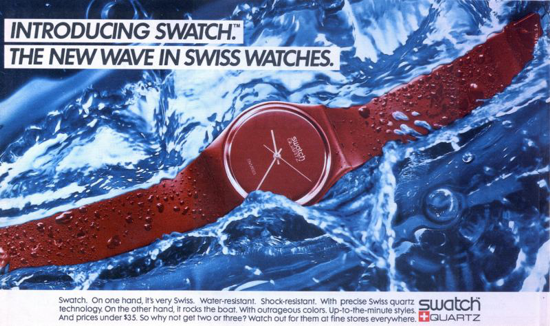
The reason for the renaming had to do with the second important event of 1983: the invention of the Swatch, a quartz watch made of colourful plastic that can be said to have saved the Swiss watch industry in the wake of the quartz crisis thanks to its automated production and immense popularity all over the world. The Swatch brought focus back to Switzerland and allowed its watch industry to recreate itself.
Over time, products in the high end of the market became seen more as luxury goods than actual timekeepers, giving them new relevance. These timepieces are now mainly appreciated for their ingenuity, craftsmanship, design, and social status rather than for their primary function: timekeeping.
“A Patek Philippe doesn’t just tell you the time. It tells you something about yourself.” This tagline from a 1983 print campaign perfectly encapsulates what the mechanical renaissance became about – even if this slogan was a bit early, Patek was always a step ahead.
Epilogue
This brings us to the modern era of watchmaking, whose beginning is often referred to as the mechanical renaissance, a term that denotes the return of the world’s interest in mechanical watches. In 2026, we are in fact in the era of the post-mechanical renaissance, for which no one has yet coined a term that has stuck. Feel free to leave a suggestion in the comments.
Shades of the quartz crisis reappeared with the popularity of the Apple Watch, but truthfully the high end of the Swiss watch industry hardly even noticed it was there. It does seem that the only thing that can actually topple this part of the mechanical watch industry is Switzerland itself.