
On the road in Vietnam with a (discontinued) Seiko SKX007
When planning an eleven day, 1,000 mile motorbike ride through the mountain trails of northern Vietnam earlier this year, there were a couple of important questions that needed answering. Firstly, as an at-best moderately intermediate rider, what was I thinking? Second, what camera setup should I bring to best document the trip? And third, what watch should I wear? I was commissioned to photograph the trip for a national weekend paper with a quick turnaround, so a light set-up meant a small, pocketable digital camera so I could file the photos quickly and efficiently. As for the watch? It needed to be rugged, waterproof and easy to read while on the move. It had to be my trusty Seiko SKX007.
I bought the SKX back in 2015, when they were still being made new and could be bought for £140. They’ve since been discontinued and superseded by the Seiko’s current 5 Sports line that has a very similar look and feel. There’s something about the 007 that has always appealed though. It’s a very simple watch, executed with that classic Seiko durability and a functional design and a look that can be traced back to the earliest Seiko divers of the 1960s.
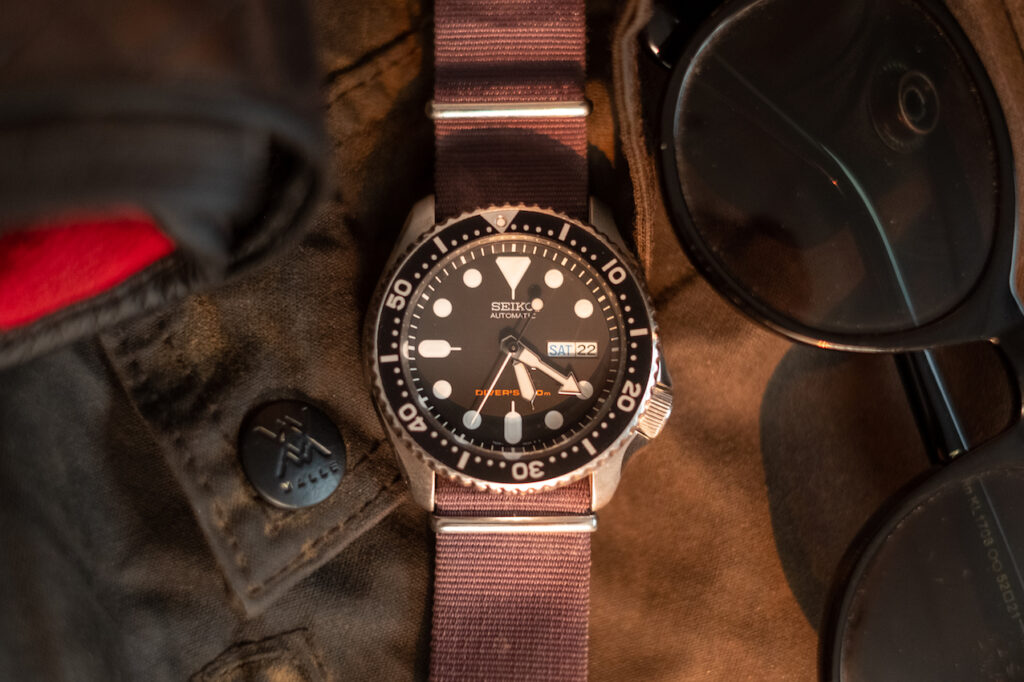
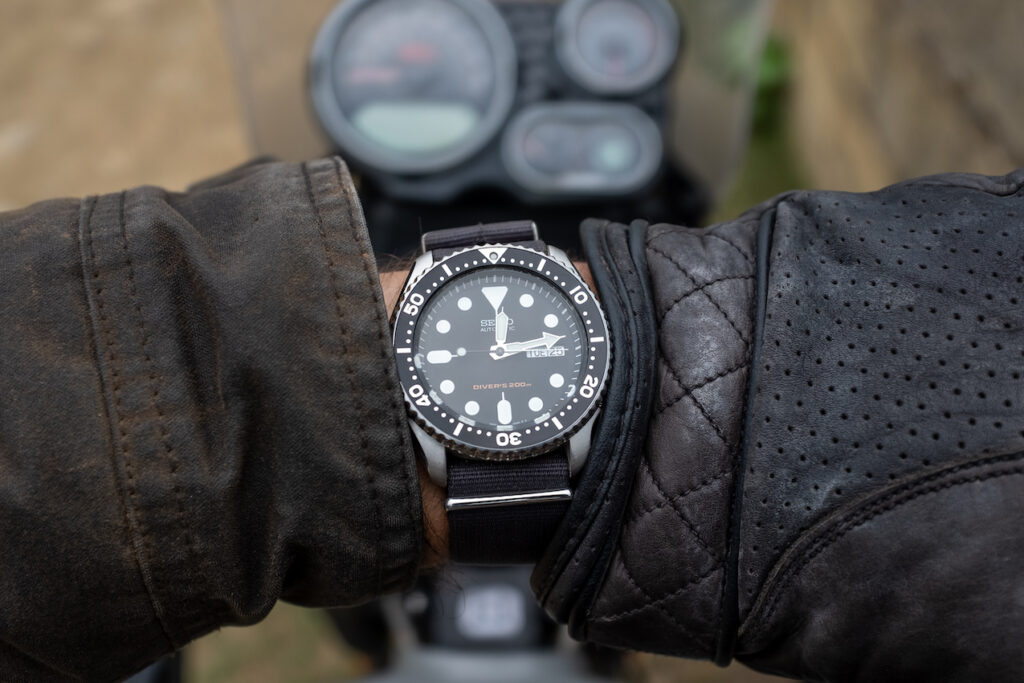
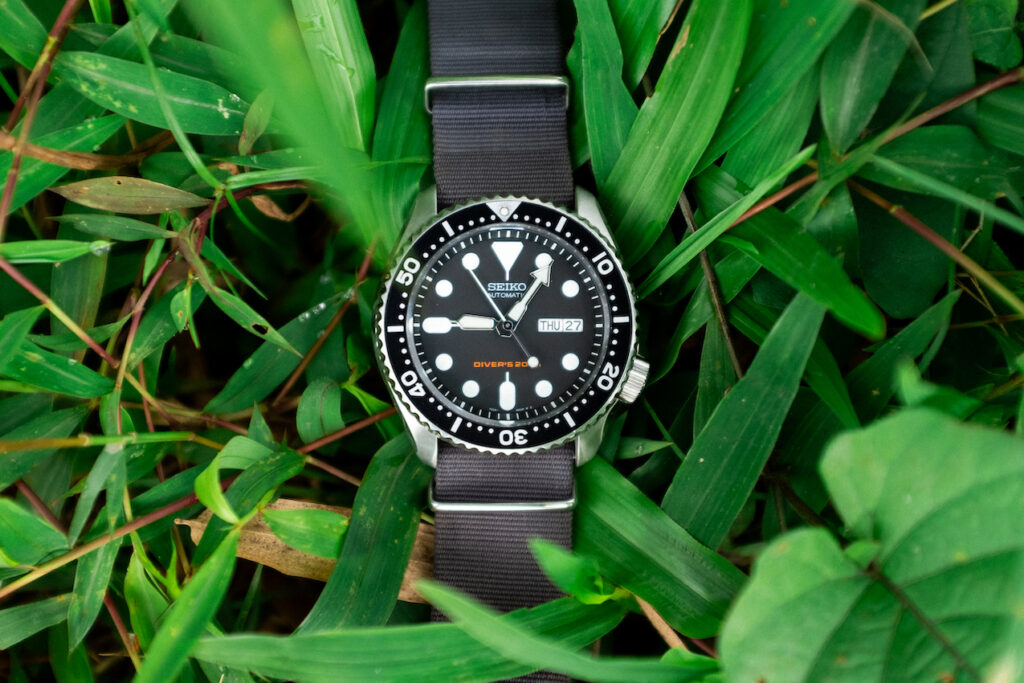
There are the large, almost oversized circular hour markers, complemented by two rounded oblong markers at 6 o’clock and 9 o’clock, and a huge triangle marker at 12. These three are punctuated with small lines pointing towards the watch’s centre, a design trait shared by the original Seiko Turtle ref 6306 introduced in 1976. The bezel is classic Seiko too, and is identical in design to one of the brand’s earliest diving watches, the ref 6105 from 1968. In classic Seiko fashion, its shared bezel refuses to line up perfectly, with the signature lume-pipped triangle sitting slightly left of the 12 o’clock hour marker when reset. More thematically, the 6105 was the watch worn in the legendary Apocalypse Now, and the 007 is its direct descendent. It felt like bringing it home.
There isn’t anything superfluous on the 007, which is part of its appeal. It’s a professional diver’s watch, rated to 200m water resistance, not that you’d ever need that, and it’s designed for practicality above all else. The only slight flair is the red-orange lettering at 6 o’clock indicating its abilities, its bright colour contrasting with the neutrality of the rest of the dial. There’s a day and date window at 3 o’clock, and a 4 o’clock crown, a signature of the Japanese brand. It’s there so that it doesn’t dig into your hand, which is a possibility considering the rather chunky 42.5mm case. Indeed, the 007 is a bit of a brick, with a sturdy build that feels indestructible. The solid caseback furthers this feel, with its raised wave engraving. It’s a watch that refuses to age and despite my best efforts the 007 still looks brand new, its Hardlex glass and bezel unscratched with only the polished sides taking on a few micro-scratches.


This durability is what made it perfect for Vietnam. The 007 has become my go-to riding watch, and makes for perfect company either underneath a jacket cuff or worn on the outside of the sleeve a la Buzz Aldrin. For this, it needs a NATO strap. As standard the watch comes on a rubber strap or bracelet, but it’s a natural pairing for a canvas band. For this particular trip I went with a grey strap by Phoenix. UK-made, they’ve been supplied to HM forces since 1978, and have no particular connection to the 007 aside from looking cool. A NATO strap also ensures that were a spring bar to fail, the watch wouldn’t immediately fall from my wrist – which as I found out, is handy at 60mph on the winding switchbacks of Ha Giang.
The watch performed perfectly. Together we encountered the intense heat and humidity of a late spring April, with temperatures reaching 40 degrees celsius. There was a powerful surge of rain on one day, which barely tickled the 200m water resistance, but did upset my understandable preference for grip and predictability on a road’s surface. The watch also survived a crash. Over-confidence caused my Royal Enfield Himalayan to lose the back end on a dusty mountain path in Ha Giang, but a face full of dirt and a bruised ego on my part did nothing to deter the 007 from ticking on.
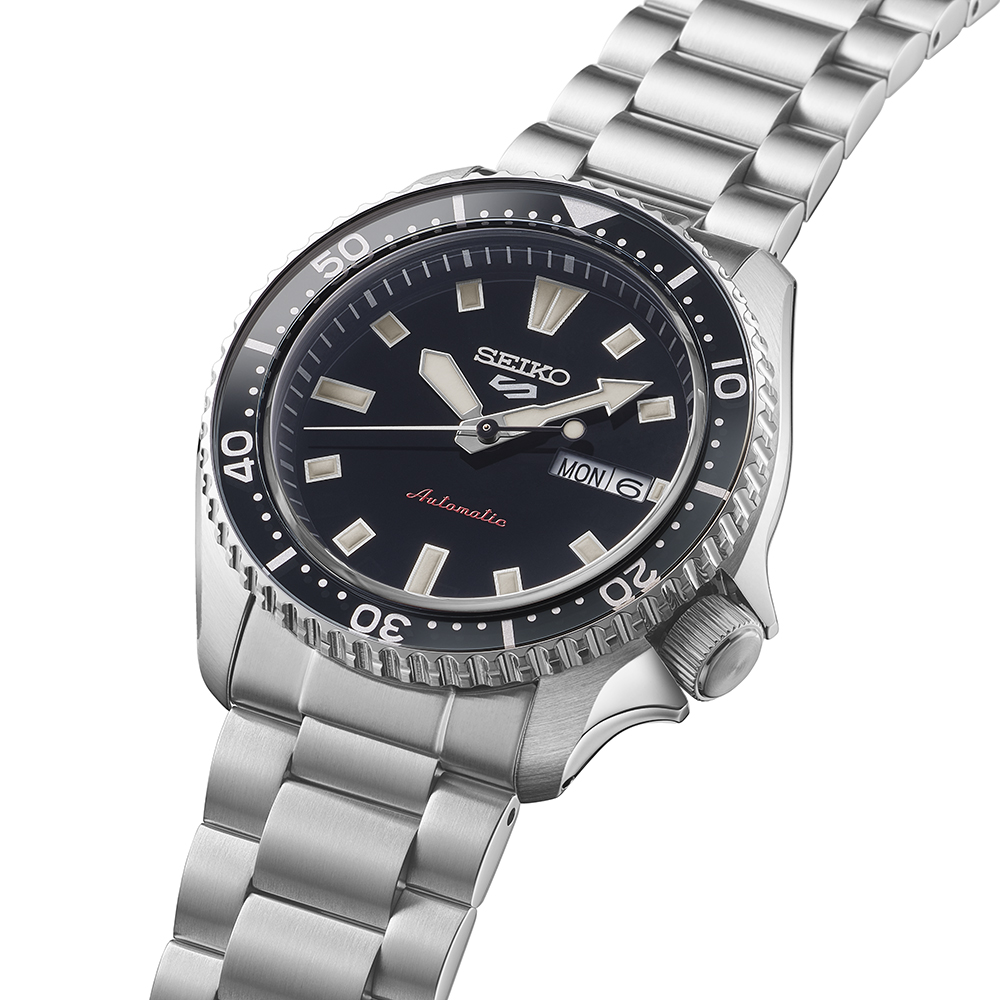
As mentioned, the 007 has been discontinued and despite it now being the original’s 30th anniversary, that doesn’t seem to be changing. Instead, the closest in-production version is the SRPL85. It’s got the same case size, and the same overall design, albeit with slightly different markers. It has an exhibition caseback which shows off its new movement, and the classic ‘5’ logo at 12 o’clock. It can ‘only’ dive down to 100m, which means it’s not a true diver, losing some of that tool watch appeal but none of the charm. Seiko has brought out numerous editions with colourful dials as well as collaborative pieces, so if you’re in the market for a new, affordable mechanical diving watch, this is a great option.
Alternatively, you can still pick up the old 007 on the second hand market for well under £300. It’ll serve you as well on a beach holiday or a hike as much as tearing around Vietnam on a motorbike – and you’ll be far less likely to end up with a face full of mud.