
From technical milestones to historical oddities, these are the short-run Seikos grail watches are made of
Lurking in my watch box is a piece that I rarely wear, but I just can’t bear to part with it. If I sold it, I would likely never find another one. You may have a similar piece in your collection. It is not a unique Audemars Piguet or a Constantin Chaykin modelled after my favourite DreamWorks character, but a humble Seiko that cost £24.78 on eBay.
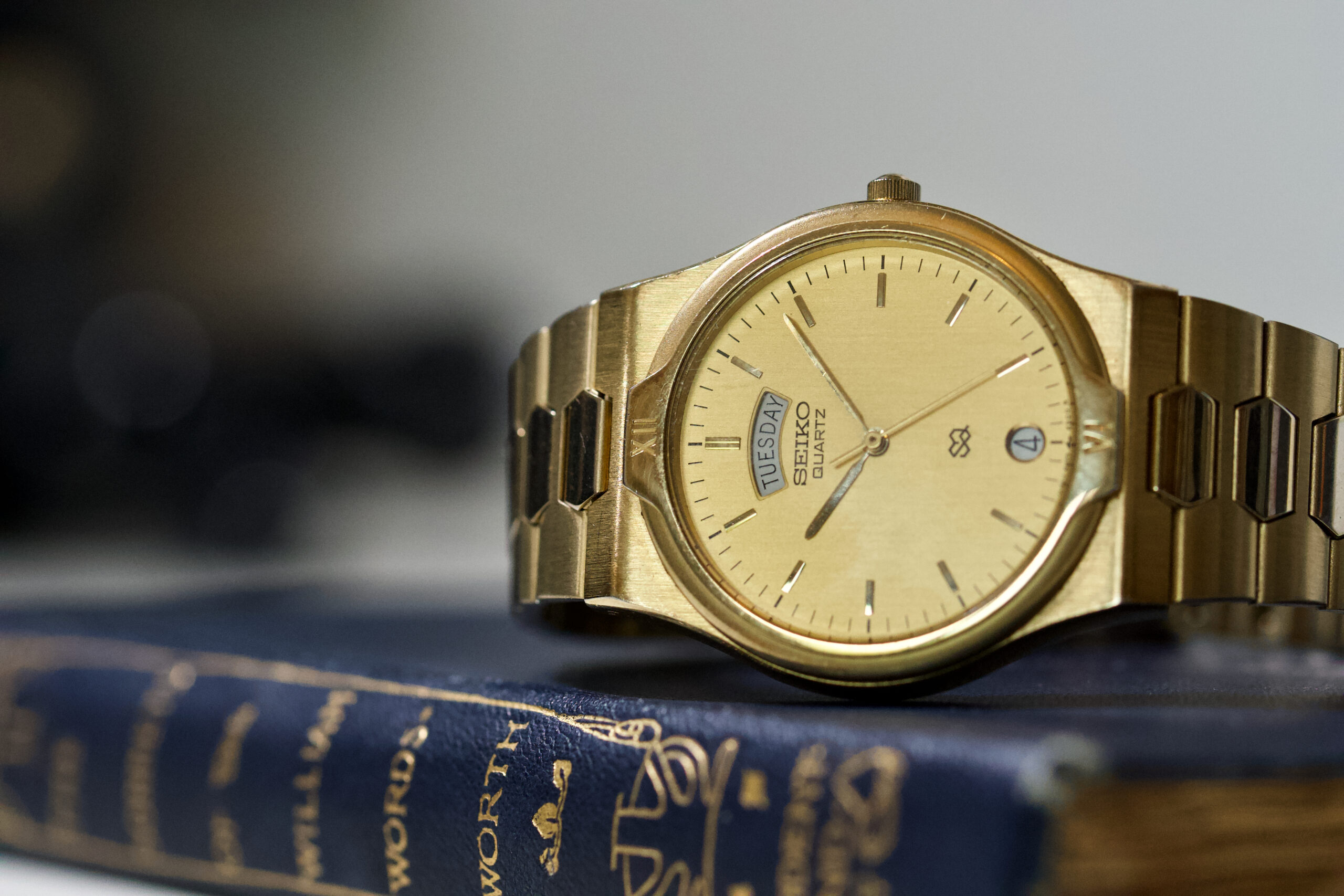
Pictured above, it’s a gold-toned Seiko SQ with a day-date display and an integrated bracelet style that lifts inspiration from the grail-worthy Vacheron Constantin 222. This is a true oddity. With the reference 5H23-6270, it’s part of a series of quartz-powered watches from the 1980s. The serial number on the back reads 740095. The 7 thus means 1987, the 4 the fourth month of the year, April, and the 95 the 95th unit of the month.
Around 10 listings of these have come up online, and every single one of them starts with a 7, and none of them was made after April. So what I have here is a Seiko made for four months in 1987.
Why such a short run? Did it not sell? Did Vacheron Constantin’s lawyers send Seiko a letter? We will likely never know, but what we do know is that it is not the only Seiko with an incredibly short run.
You can use this logic to find the rarest Seikos to some extent, at least. But this ignores those models from before the 1960s, and any piece made after 2019 as well. But finding the rarest watches this way, that’s boring, that’s easy and it neglects the best stories from Seiko’s history.
Today this article will chart not just the rarest but the most interesting and notable Seikos that time forgets. The ones with stories not just worth telling but that watch collectors will be interested in hearing, that you haven’t heard about before or, at the very least, not in a while. And ones you probably won’t find on eBay for £24.78.
Astronomical Observatory Chronometer 4520-8020
Often when we think Seiko or talk Seiko we gravitate towards the mass-market divers, the SKX007s, the Prospex 1965s. Now, these are all great watches, but they are mass-produced and not an accurate reflection of the Japanese watchmaker’s capability for finer watchmaking.
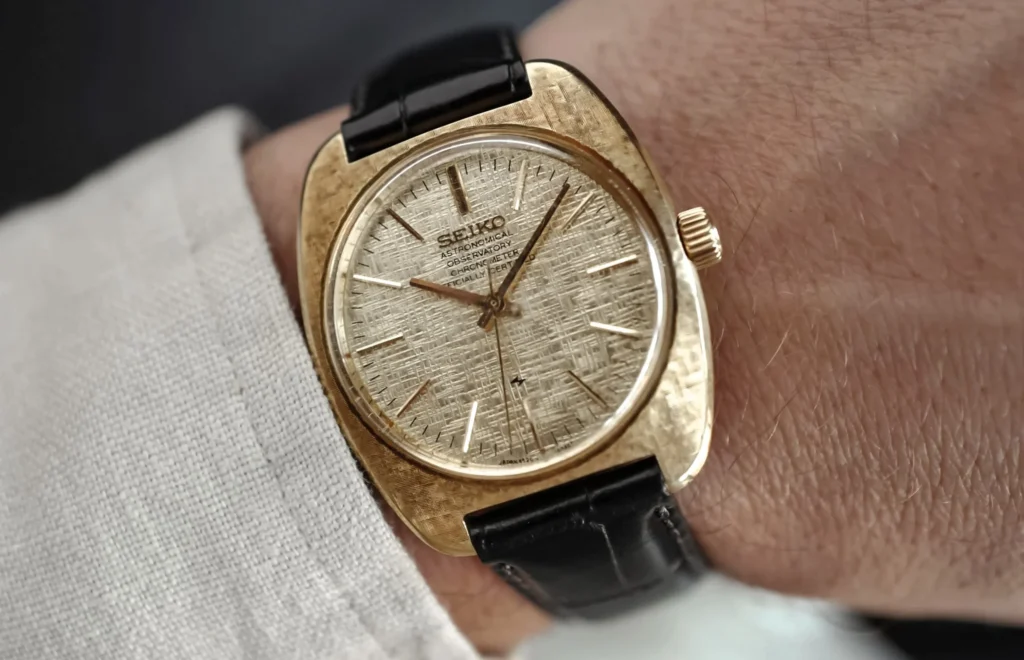
The Astronomical Observatory Chronometer 4520-8020 is an example of the brand’s real abilities. Every single one of these watches was certified by the legendary Neuchâtel Observatory.
For those in the back that may have missed the memo, this observatory, from 1858 into the 1970s, rigorously tested watches to levels that exceeded even COSC standards, and it was a test that Swiss watchmaking obsessed over.
So in the late 1960s, with Seiko determined to shake the whole industry up, the manufacturer put forward their watch for testing. 73 4520-8020s passed in 1968, 25 in 1969 and 128 in 1970, for a grand total of 226.
These watches cost ¥180,000, which at the time was about 6 times that of a Grand Seiko, and is an important reminder that not even Seiko was fully committed to quartz technology heading into the 1970s.
The Swiss-movement Seikos, cal. 5328A
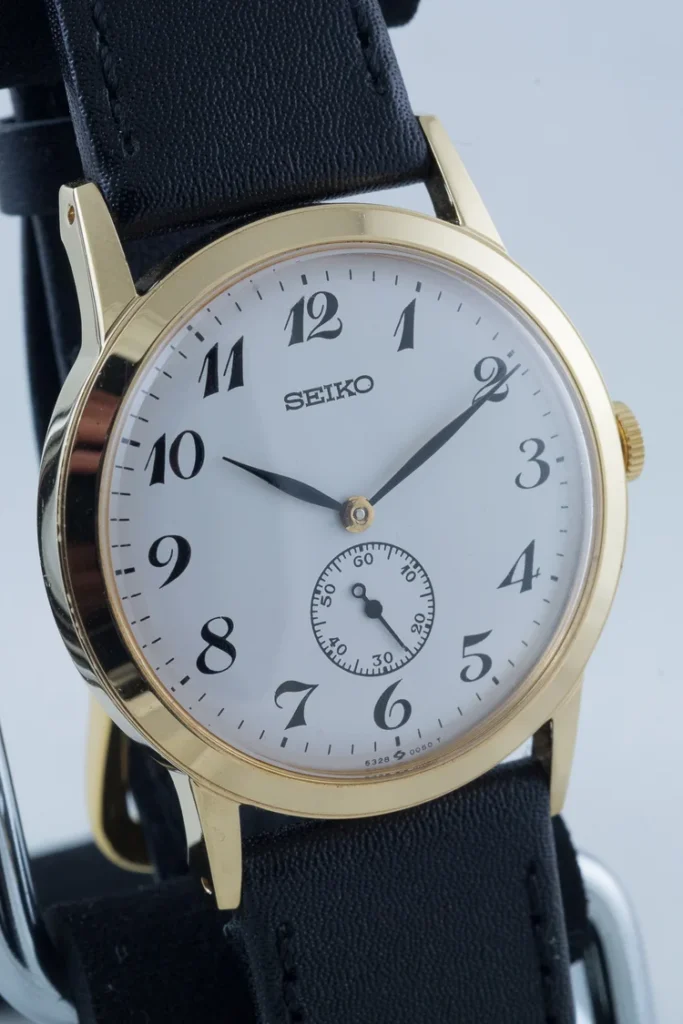
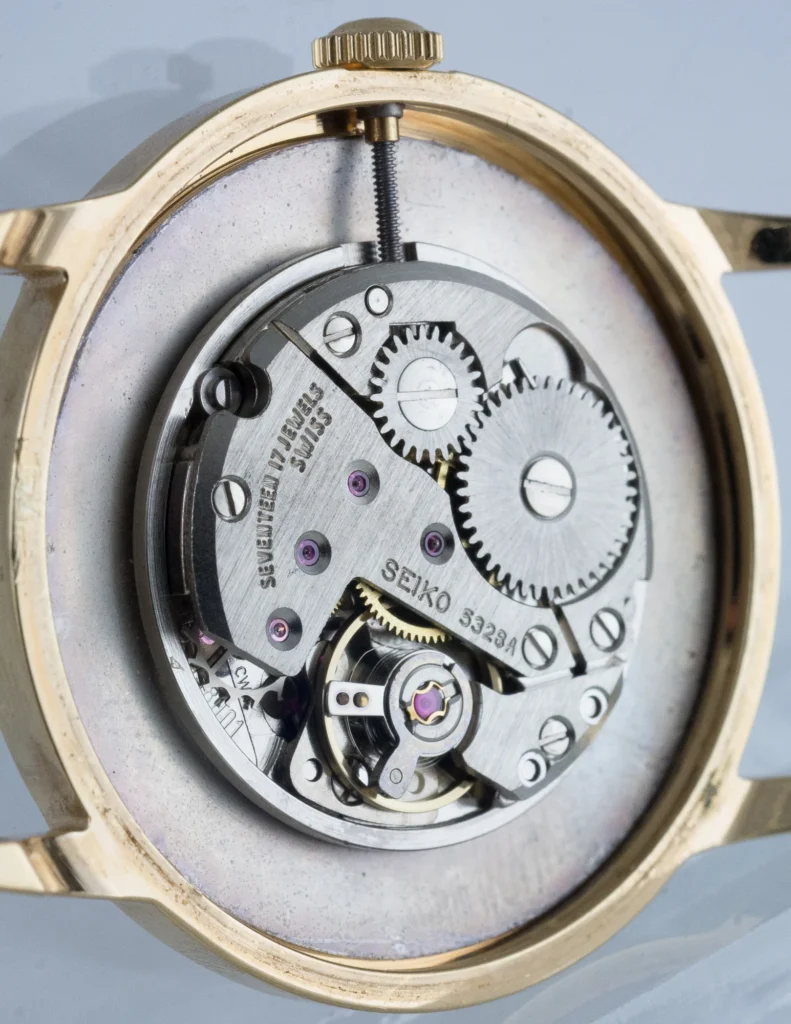
Keeping our attention on Seiko’s fleeting dalliance with the Swiss, we ought to give the calibre 5328A its moment in the spotlight. This movement is the least Seiko of all movements to have entered into their watches, as it was not made in Japan – it is, in fact, a Swiss movement.
Watches featuring this movement appear in only two volumes of Seiko catalogues in 1987, showing us just how brief an experiment this was.
For calibre 5328A watches, Seiko did not attempt to hide these watches’ origins. Now, you won’t find Swiss made on the dial, but you also won’t find the script Japanese made or Japanese movement either. So it perhaps wasn’t a move to try and latch on to the Swiss watch world’s new position post-quartz crisis as a luxury product.
Seiko, just like Rolex, has long pursued complete vertical integration, meaning that the company has complete control over their supply chain; this brings many benefits for a business. The first, of course, means control over margins, but the second security.
The 5328A was built on the FHF calibre 138.001, a movement you’d be forgiven for not having heard of. This was produced by one Fabrique d’Horlogerie de Fontainemelon. FHF was founded in 1793 and became a part of the établissage network, the traditional Swiss watchmaking supply chain, before building a mechanised movement factory. They helped co-found Ebauches SA and as a result merged into the Swatch Group in 1985.
This is where the Swiss movement Seiko arguably failed. Swatch Group acquired everything from brands to movement manufacturers to further its own production, and parts sold on contracts to out-of-group brands like Seiko were actively discouraged. This move encouraged many brands to pursue their own in-house movements, and likely is part of what killed the Swiss-powered Seiko.
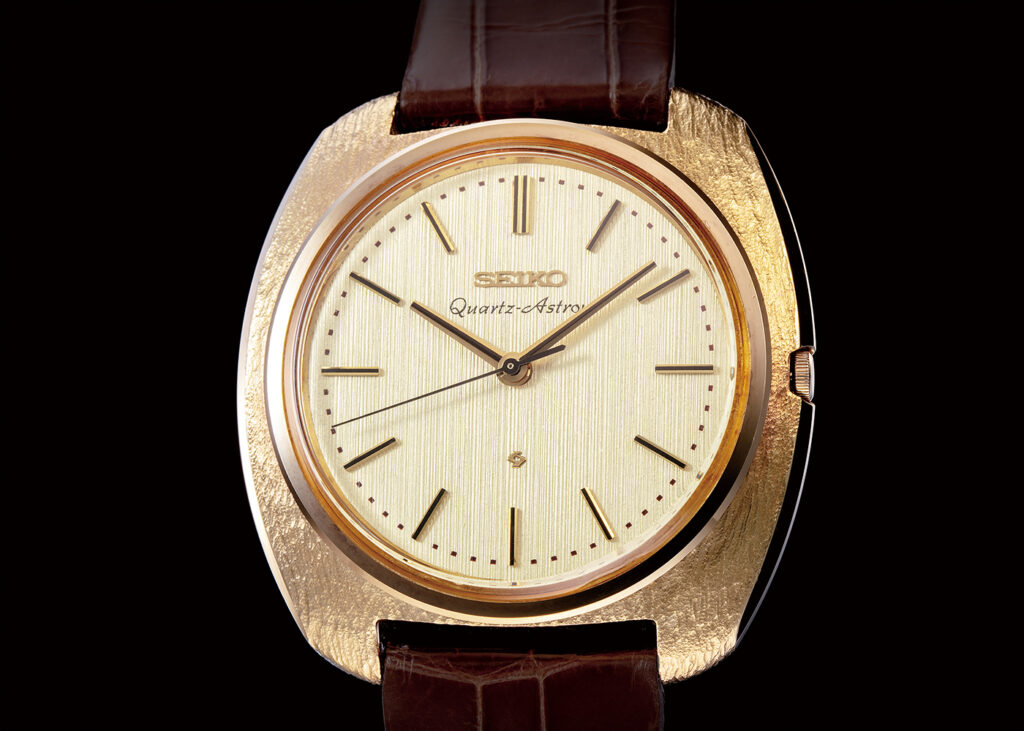
Quartz Astron 35SQ White Gold
The Seiko Astron 35SQ is largely cited as one of the most important wristwatches of all time. It consolidated quartz technology into a compact enough case that it could be worn. Truly revolutionary.
However, what is less frequently discussed is that even though this watch paved the way for mass-produced battery-powered watches, it was a luxury piece. The original Astron came in a stunning 18-karat gold case and retailed for ¥450,000; that’s $2,850 USD, and adjusted for inflation, just over $26,000 or just under £20,000 in today’s money.
So it’s no surprise then that this watch did not sell in Casio F-91W volumes.
In 2009, a Seiko press release claimed that only 100 units of this watch were sold, and many would repeat this; however, it’s widely believed that this was in the first month of production. The actual production run, according to The Seiko Guy, shows there to have been a slightly larger run of 411, which by Seiko’s standards is still incredibly small.
However, this is where it gets more interesting. While producing this article, I happened to attend a Seiko press event marking their 145th anniversary, and the team there were convinced that Seiko produced these Astrons in a rarely seen white gold, so rare that the internet hasn’t documented it.
Following my journalistic intrigue, I dug a little deeper and found that during this period Seiko did experiment with precious metal offerings in their quartz lineups. Delve into forum posts, and you’ll find pieces like the Seiko Superior 4883-8100, a white gold quartz piece. This means not necessarily that the prophesied white gold Astron was a certainty, but that it was certainly a possibility – and would make it one of the rarest, most important Seiko watches ever built.
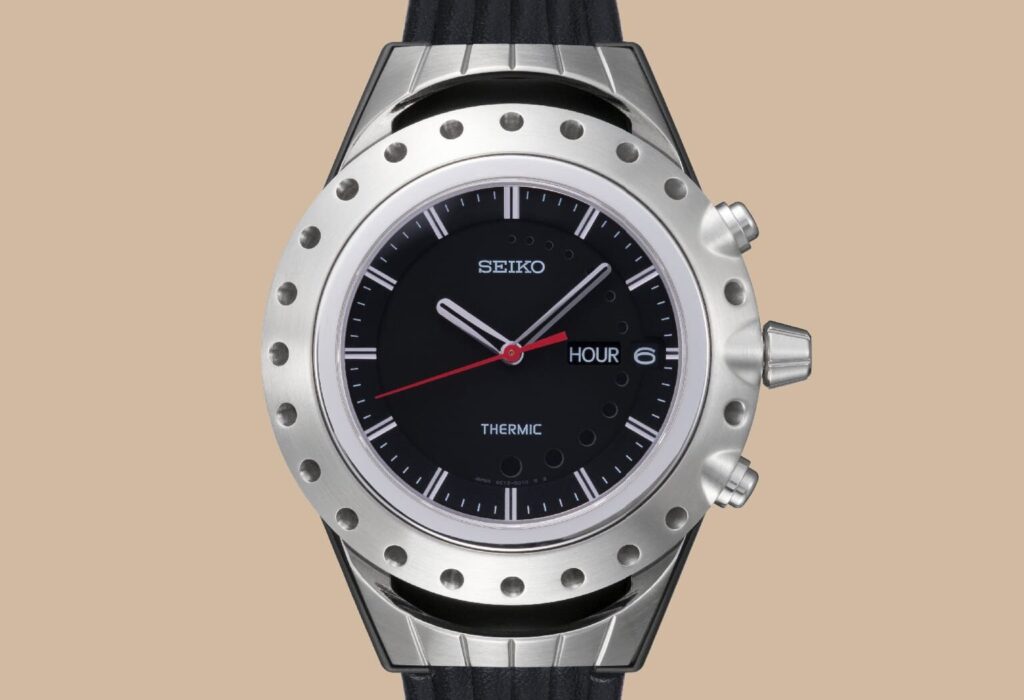
Seiko Thermic SBET001
Unfortunately, we must turn our attention to another “failed” Seiko. The SBET001 was released on the 15th of December 1998 in a limited production run of only 500 pieces.
What made this watch different to any watch Seiko had done before was the 6C12 calibre, a movement that ran on body heat. That may sound a little peculiar and like the sort of thing that would happen if you put a solar watch or a Grand Seiko piece into an episode of Black Mirror.
But it is again a testament to Seiko’s engineering ability. The piece charged on body heat with a full charge last 10 months.
From a design perspective, it is a quirky watch; the bezel sports a ring of circular holes to serve as cooling vents. I’d argue this is why this technology wasn’t taken any further; solar cells like we see implemented on the current Prospex Speedtimer are just far easier to integrate into a design without marking a watch as an acquired taste. Nonetheless, it’s an interesting oddity from the turn of the millennium.
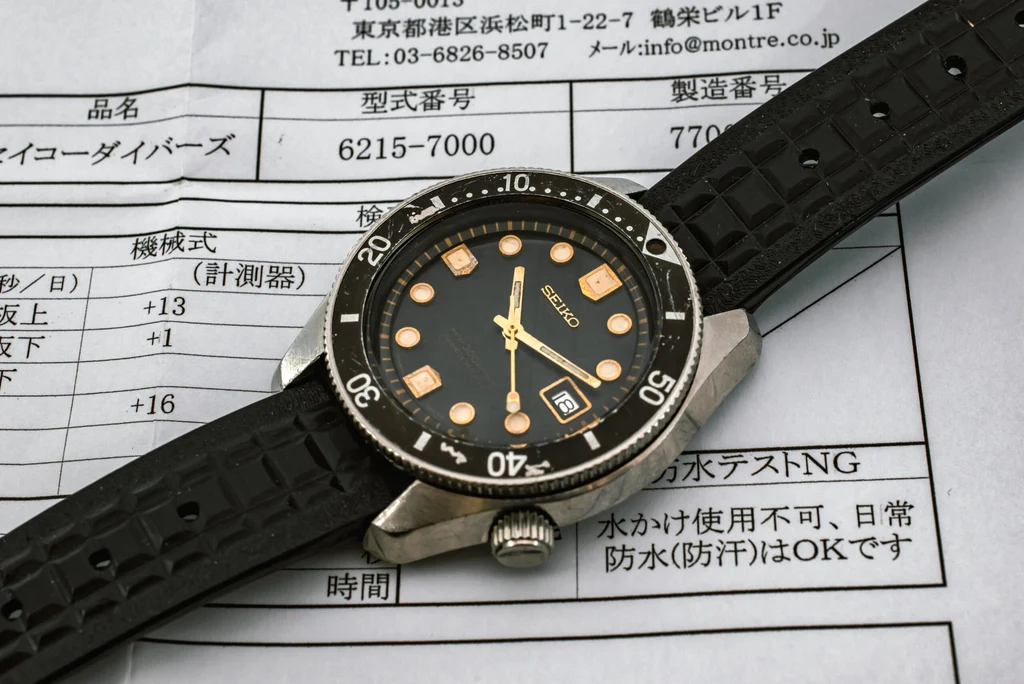
The Failed Divers
Seiko’s divers have a reputation for reliability, with pieces like the Willard 6105-8110 and the Seiko 5 having survived warzones the world over. However, these watches were not an instant success.
Between 1967 and 1969, Seiko made three professional dive watches in three years. 1967’s watch, the 6215-7000, was Seiko’s first attempt at a 300 metre dive watch, and The Grand Seiko Guy has identified a grand total of 58 examples. 1968 would bring the 6159-7000 and 1969 the 6159-7001. This latter model would end Seiko’s attempts at dive watches until 1974, making this an intriguing trial period for the brand.
As for why they didn’t take off, it was a mix of elements. They pioneered the now ubiquitous monocoque case and 4 o’clock crown, but they were expensive and had some inbuilt mechanical failings, especially in the brand’s newly-implemented split crown joint, which broke under daily wear-and-tear.
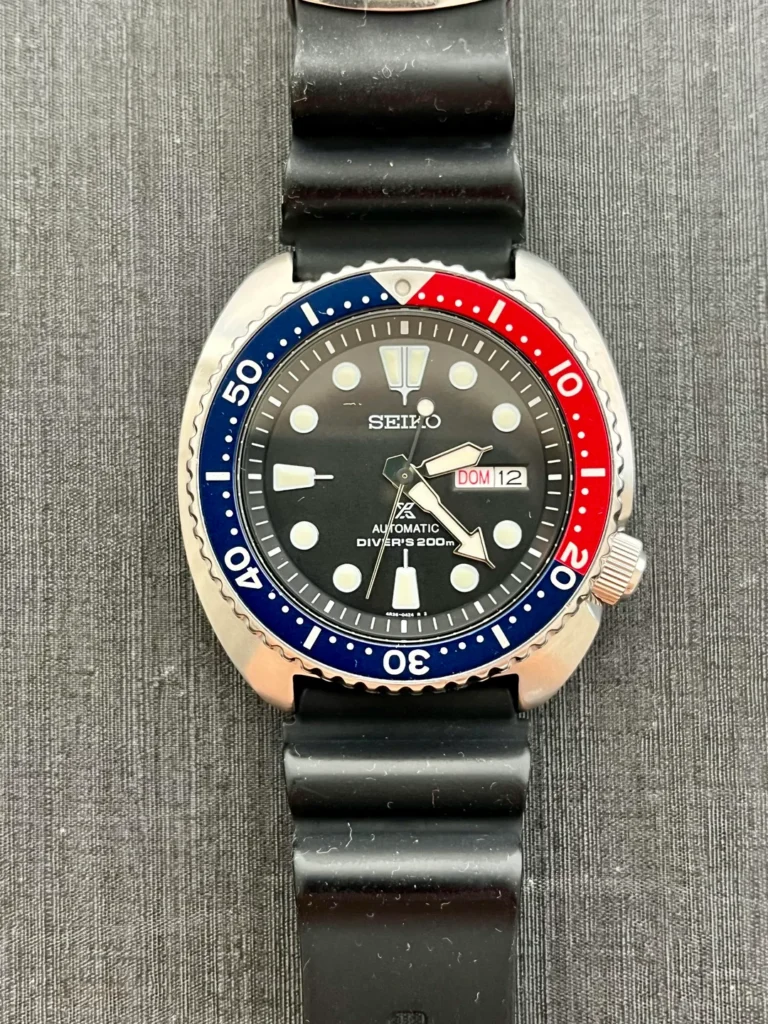
Seikos Made In Brazil
Watches, like any business, are a product of the much wider world, and across every country there’s one all-powerful force we all have to answer to: tax.
Brazil do not make it easy to import a watch. Duties on foreign watches are heavy, so a Japanese watch shipped in finished is never going to be cheap, which for volume brands is not ideal. But that does not mean there isn’t a loophole; the Manaus Free Trade Zone is effectively a tax haven in the jungle, set up to bring economic development and more people to the region. Build your watches there, and the import duties more or less go away.
Seiko, never one to miss an opportunity, got in early. In 1981, it set up Seiko Industrial da Amazônia, with a factory in the Manaus Free Trade Zone and an office in São Paulo. Around the turn of the millennium, the operation passed to Technos da Amazônia, which, according to Brazilian sources at least, was the only factory in the world authorised to assemble Seikos outside Japan. And it still pays off today. Bloomberg Línea reports that part of Seiko’s assembly still happens in Manaus with parts shipped in from Japan, purely to keep the tax bill down.
Go to Seiko’s own website and look up its Brazilian representative, and you won’t find Seiko. You’ll find Orient Relógios da Amazônia. Despite the name, this is the company that handles Seiko in Brazil today, and the Seikos it puts out carry Seiko on the dial, not Orient.
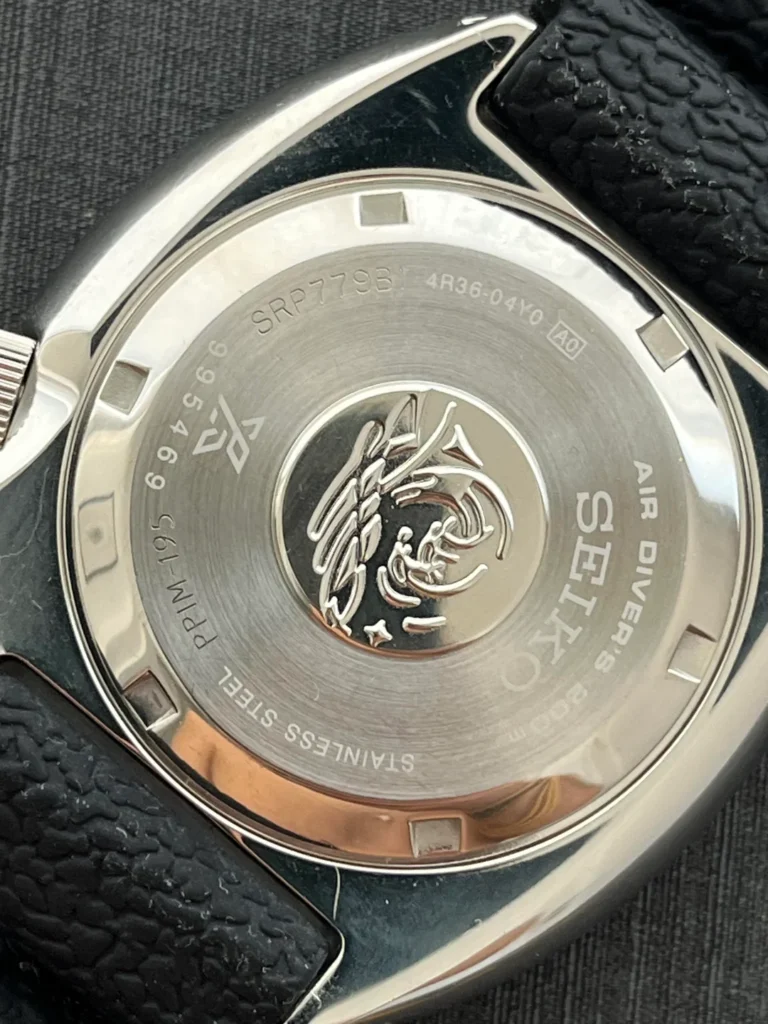
Turn one of these Manaus-built Seikos over, and the caseback tells you where it’s from: “ZF MAO AM” and “IND. BRAS.”, meaning Zona Franca de Manaus, Amazonas, and Indústria Brasileira. Some go further with a PPIM number, the maker’s registration in the zone, a bit like a passport stamp on the back of a watch.
And because these watches were made for Brazil, plenty of them never left. Dig into the forums and you’ll find claims that the Brazilian operation isn’t allowed to sell its models abroad, so as not to tread on the Japanese parent’s toes. That has left a trail of Brazil-only Seikos that rarely turn up outside the country.
So in this case, rarity wasn’t down to design, demand or Seiko pushing the boundaries of watchmaking. It came from tax law and a free trade zone in the middle of the rainforest, creating a few oddities and the occasional different bit of engraving.
Tokyo Olympics 1964: The Watches
We now turn our attention to two of the most interesting and shortest available watches from Seiko’s history. When you think of timekeeping and the Olympics as a watch enthusiast, your mind will likely be drawn to various types of Omega timekeeping devices from swimming pool pressure pads to trackside stopwatches. However, in 1964, Tokyo were to hold the Summer Olympics, and ever ready to seize the opportunity, Seiko readied a new collection of watches for the occasion.
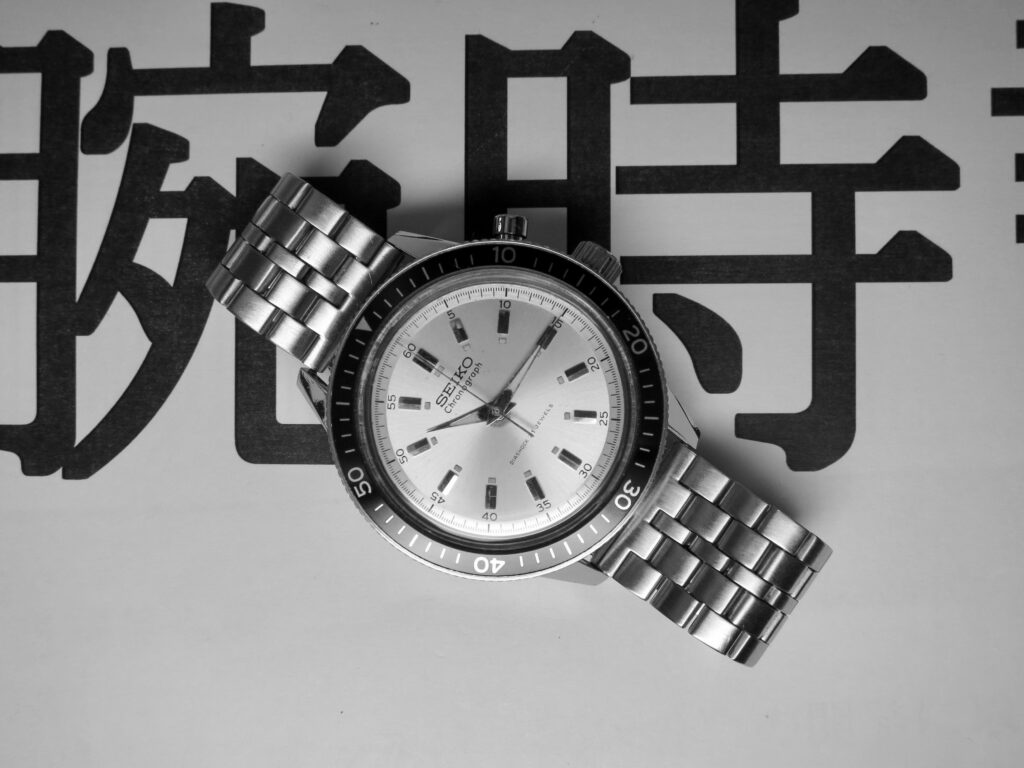
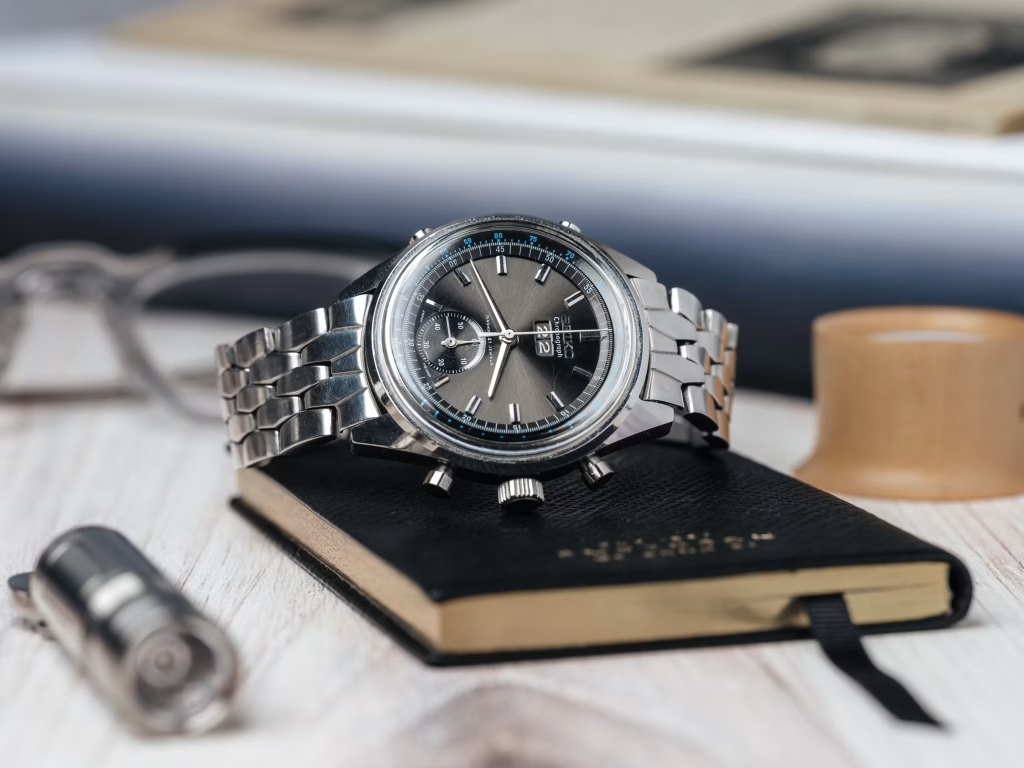
The 5719 Crown Chronograph was Japan’s first wristwatch with a stopwatch function. Seiko launched it alongside the Seiko World Time, the first Japanese watch with a GMT hand and world time display.
But the chronograph, that’s the interesting one. The 5719 was only available for a very brief period during and after the Olympics, and only available for purchase at the venue. Perhaps the MoonSwatch was not the original FOMO-inducing watch after all.
The 5719 Crown Chronograph came in two separate variations: the date model, the 5717-8990 and the far more complicated 5718-8000 with a two-digit counter at 12 o’clock, which is a fascinating model. The pusher at 10 O’Clock advances the counter. This makes it arguably a far more functional chronograph than a Daytona or Speedtimer, with an easy lap-tracking feature.
But get this as an added novelty. The counter automatically ticks over at midnight, meaning it’s a date complication as well. So those who can’t stand a 4 O’Clock date window, well, there’s a Seiko out there for you.
The number of these floating around in the world is quite frankly unknown, but we know it’s rare. In preparation for an auction of one of these in 2020, Bonhams went as far as calling this watch a “Holy Grail”. The hammer fell at HK$138,125, approximately $17,000 USD, quite a lot for an “old Seiko”.
Tokyo Olympics 1964: The Equipment
Now there is a second part to Seiko’s story at the 1964 Olympic Games that must not be ignored.
On May 29th 1959, it was announced that Tokyo would hold the first Olympic Games in Asia. Then president of Seiko Shoji, Hattori, decided that it was only right that Seiko took on the timekeeping role for the games and tasked the job of getting it done to Seiko’s development teams.
Only there was a small issue: Seiko had no experience in sports timing whatsoever.
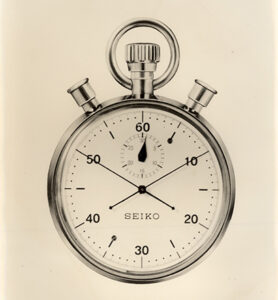
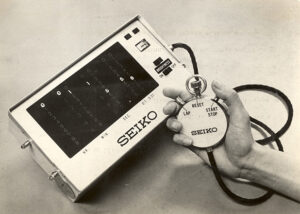
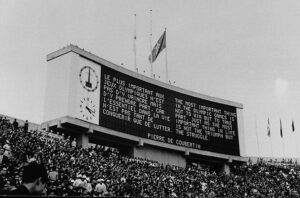
Ready to be assessed in 1962, Seiko produced the 89ST in both 1/10th and 1/5th of a second variation; these won the contract, leading to more headaches for Seiko, who then needed to produce large display clocks, car-mounted clocks and even a photo finish system.
The 89ST would remain in production from 1963 to 1977, but with 1,278 devices brought into the games across 19 different sports, some oddities do arise, such as the two clocks used for timing the 30-second pin rule in judo.
Imperial VFA 4580-7020
Next we have a watch that is different from everything else on this watch for one incredibly interesting reason: Seiko didn’t ever sell it.
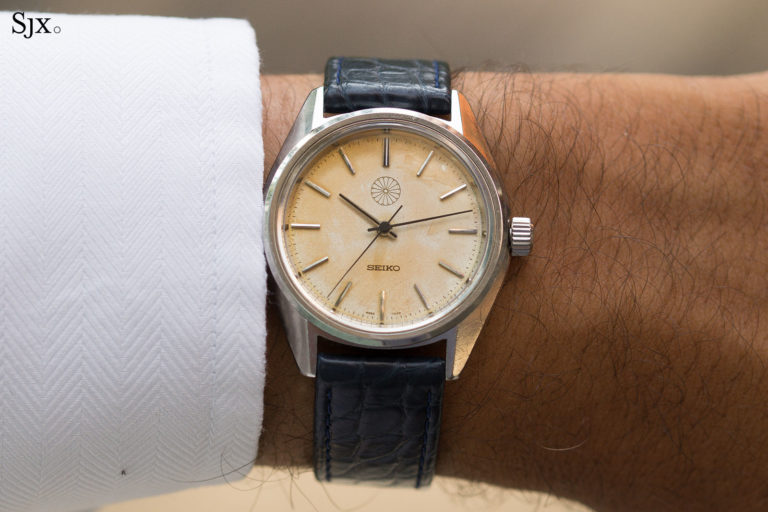
The Imperial VFA 4580-7020 was given away as a gift from Emperor Hirohito, who ruled Japan from 1926 until he died in 1989.
There is not much separating these watches from other King Seikos of the era; they boast a case shape you’ll be able to recognise and sport a manual-wind, chronometer-grade calibre 4580 movement, an evolution of the movement in the Observatory-tested watches mentioned earlier.
What distinguishes these watches from a regular King Seiko, though, is the dial. At the 12 O’Clock position, you’ll find the Imperial Seal of Japan’s Chrysanthemum flower.
The exact reason for these watches’ existence is a little hard to pin down. However, I dove into Reddit, and the theory is that these were made as gifts to be given on Hirohito’s visit to Europe in 1971.
With all references and registered trademarks other than Seiko on the dial at 6 O’Clock. How many were made? Not even the Seiko museum can tell you that.
The First Spring Drive
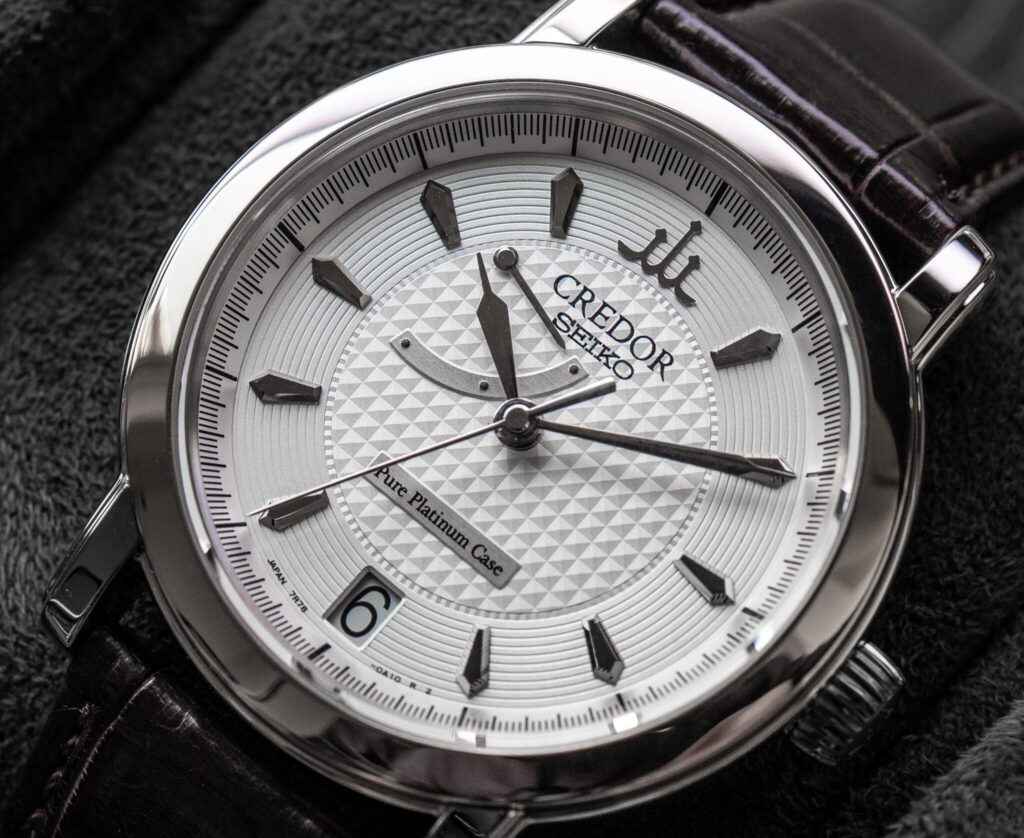
This next Seiko is a little obvious, but it has an excellent story behind it and needs to be acknowledged as a result. The first Spring Drive watch launched in 1999, and with it, three limited edition models. The SBWA001 in steel was restricted to 500 units. The SBWA002, the gold version, is limited to 300 watches. Then the properly limited GBLG999, a Credor limited to only 100 units.
This is a true oddity within the back catalogue. It is a Credor with one of Seiko’s most famous movements, the 7R78A, the calibre that started what Seiko hoped would be the Spring Drive revolution, a progression of watchmaking beyond the quartz movements we started this article with.
But behind this moment of greatness for Seiko is a moment of sadness. Yoshikazu Akahane, the genius behind Spring Drive, passed away in 1998, aged 52. Having joined Seiko in 1971 Akahane has been influential to much of Seiko driving improvements in quartz technology such as with the Twin Quartz movement.
The 7R78A left production fairly quickly after it launched, with the 7R88 on sale in 2000 and the automatic 9R series launching in 2004. However, the impact of Akahane’s work can still be felt across the Spring Drive movements of Seiko today. This all means that the initial run of Seiko Spring Drives, the SBWA001 and SBWA002 (and the Credor GBLG999) aren’t just the first spring drive models; they’re potentially the last models the designer of the movement would have worked on.