
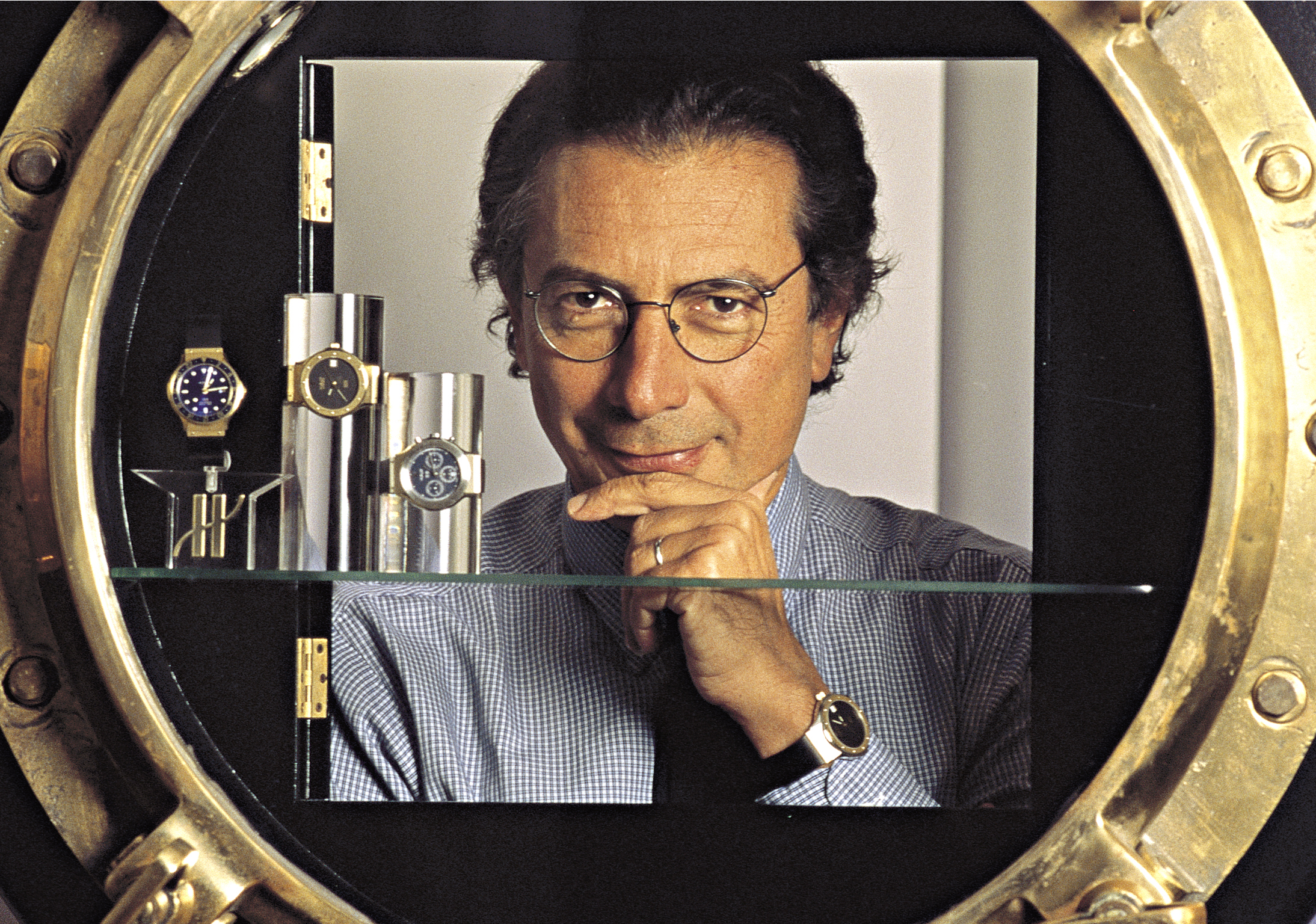
In the new Tributo, Hublot are harking back to a formative time before they were even called Hublot – and the man that built the brand before Jean-Claude Biver
To most people ‘Hublot’ means watches that are big, brash, loud and proud – and intended to be worn by types with similarly extrovert personalities.
In 2005, when horological marketing guru Jean-Claude Biver took-on the task of giving the then fading dial name a turbo boost with the launch of the Big Bang, his principal aim was to put Hublot well and truly on the map with a watch that could be identified at considerably more than arm’s length.
He succeeded famously well, unleashing the ‘BB’ at a time when bigger was definitely thought better and the only way to compete with an ever-increasing slew of in-your-face designs was to launch something bolder.
But trends come, and then they go. And it’s now getting on for five years since we were told that small is again beautiful. Far from being something to be ashamed of, a watch with a 36mm case might even be starting to look a little ostentatious.
That must be a bit inconvenient if you’ve made your name by going large, which is why Hublot has now decided to go back to the future with a reasonably faithful reproduction of the watch that, literally, made its name – i.e., the Hublot.
As well as the many who think Hublot has always been a brand name, there is also an entire generation of young watch fans who believe the Big Bang to be the watch that started it all; that, without rappers, sports stars, action hero actors and other contemporary celebrities, Hublot would be nothing.
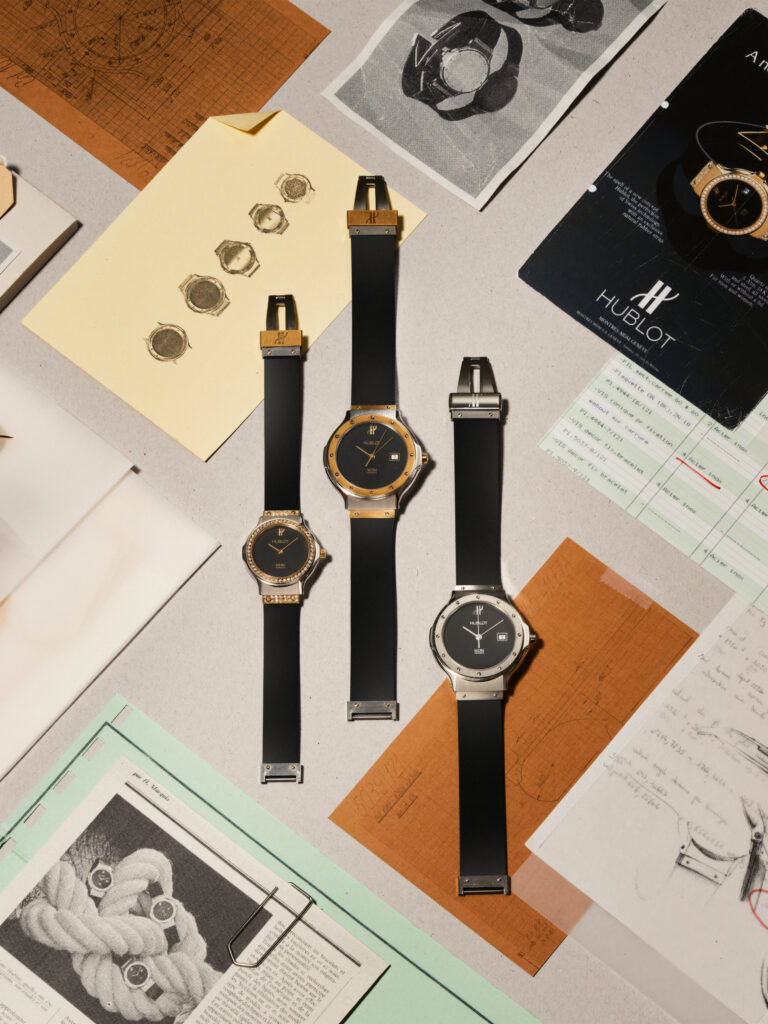
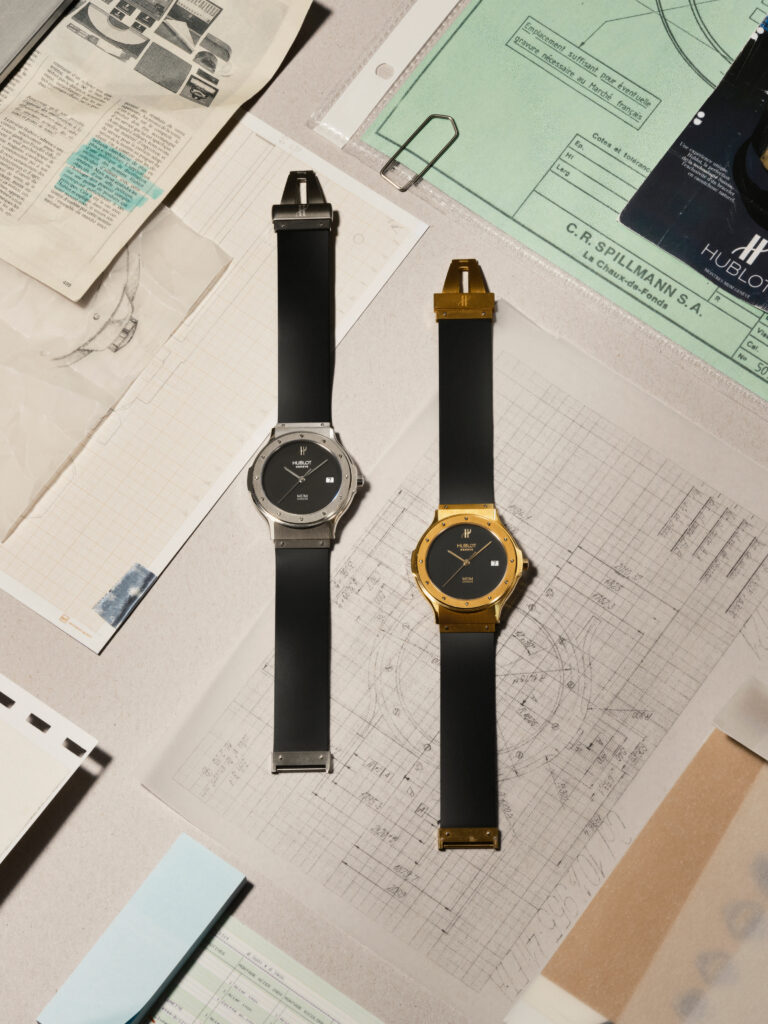
But that’s not true. The origins and history of the original ‘port hole watch’ have been kicked so far into touch that, at this month’s unveiling of the Hublot Tributo, the brand itself could only produce photocopies of faded 1980s advertisements and the odd photograph of different models – although it did manage to delve into the archive and find a few interesting, original pieces.
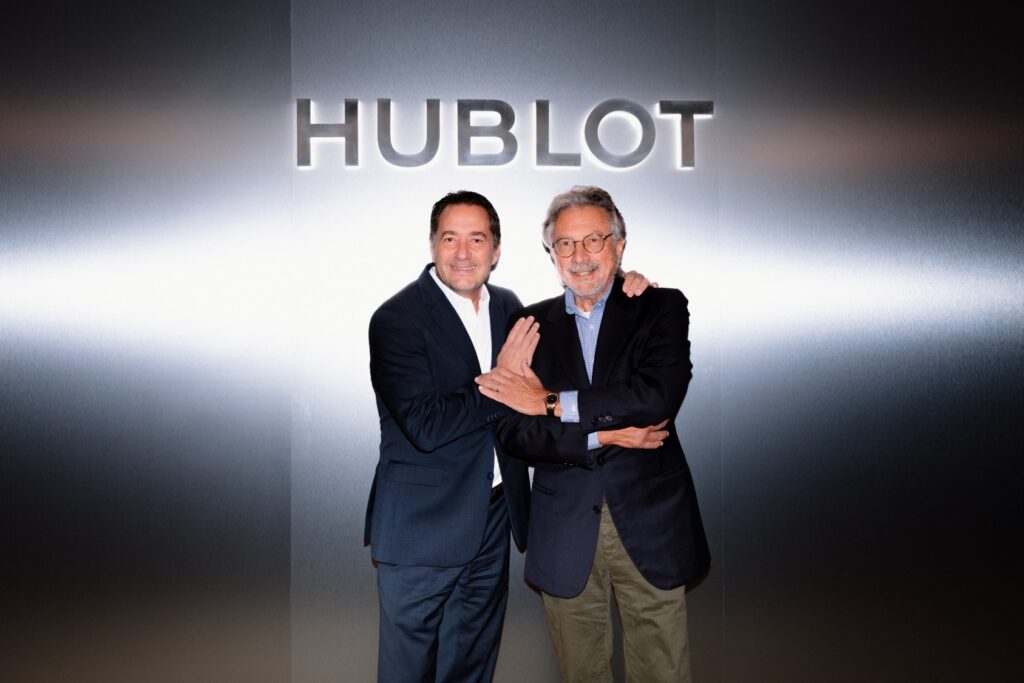
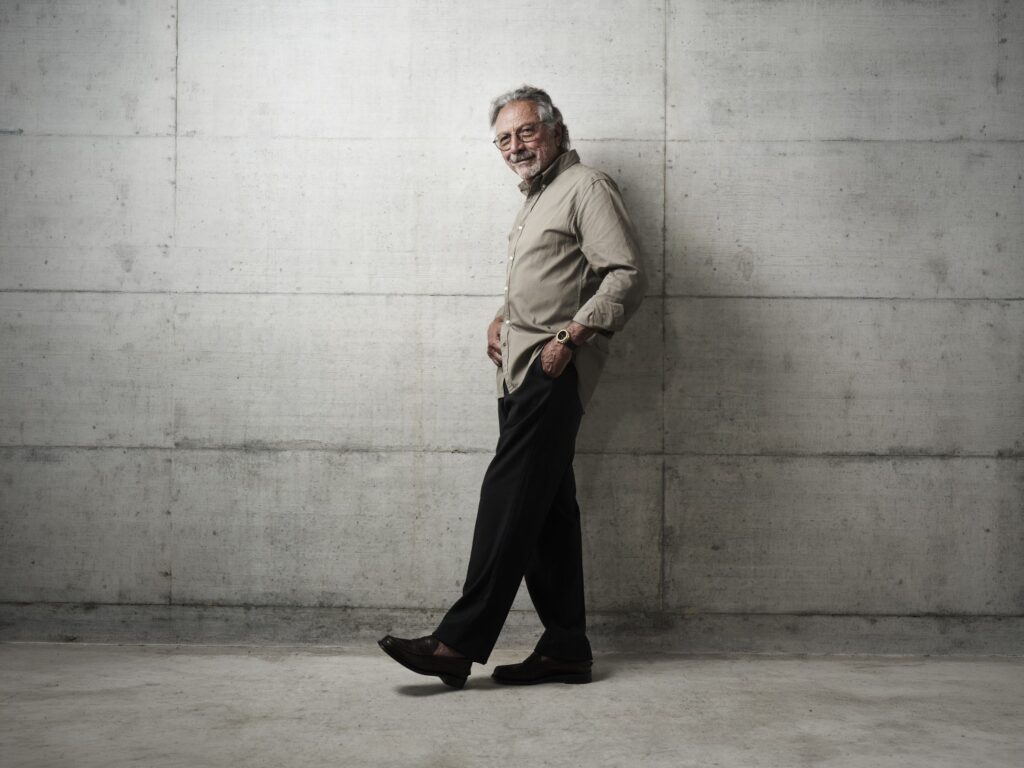
And despite the Big Bang being lightyears away from the ethos of the original Hublot watch, the latter’s creator, Italian entrepreneur Carlo Crocco, has remained on excellent terms with the brand he started – and which Biver came along to help revive in 2004 before leading it through its acquisition by LVMH four years later. Biver is believed to have owned a 20 percent stake in Hublot by then, with the sale reported as having been worth Euros 490m. So, a nice little earner for all concerned, Crocco included.
But as his appearance at the Tributo launch demonstrated, he wears his success lightly. He was pleased to have arranged for $100,000 from sales of the first two Tributo models (200 in white gold, 200 in yellow, $30,900 apiece) to go to his Main de la Mains children’s foundation he set-up in 1998.
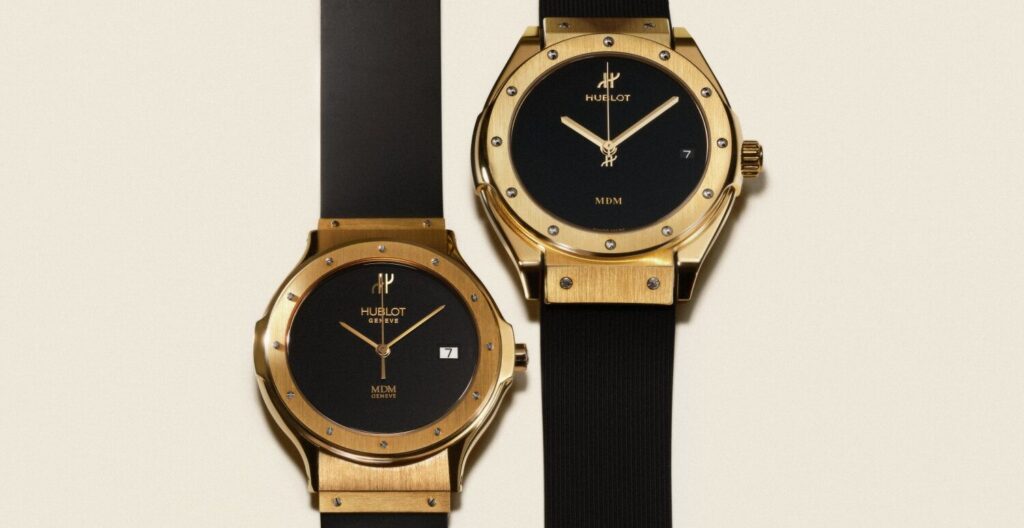
The Main de la Mains name evolved from ‘La Montre des Montres’, the brand name Crocco created for the original Hublot – which, in turn, evolved from ‘Marie Daniel Montres’, or MDM, the watch company he set-up in 1976 and named after his wife.
He had previously worked for Binda, the Milanese manufacturer and distribution group founded by his uncle Innocente Binda in 1906. It was actually for this company that Crocco developed the Breil brand, aiming to create what was seen by many as Italy’s improved answer to Timex.
Although he was successful at Binda, Crocco wanted to go his own way and began by making moderately well received ladies watches under the MDM dial name. Within a couple of years however, he mysteriously ‘dropped out’, dropped off the radar and disappeared to Lugano.
His absence was the result of a brainwave. Rather than catering to a mass market, he saw the future in more expensive, precious metal watches of unique design which might appeal to a smaller number of high-end (really high-end, as it turned out) buyers.

As Crocco himself explained, he only likes round-cased watches. But, he reasoned, with a few small tweaks, a round watch could be made to stand out from all of the other round watches that constituted around 90 percent of Swiss production.
Calling on knowledge gleaned from his studies at Italy’s prestigious Bocconi business school, he determined to make a relatively simple but high-quality watch which would be recognisable from a distance – both from the appearance of its case and dial and, unusually, from the bracelet to which it was attached.
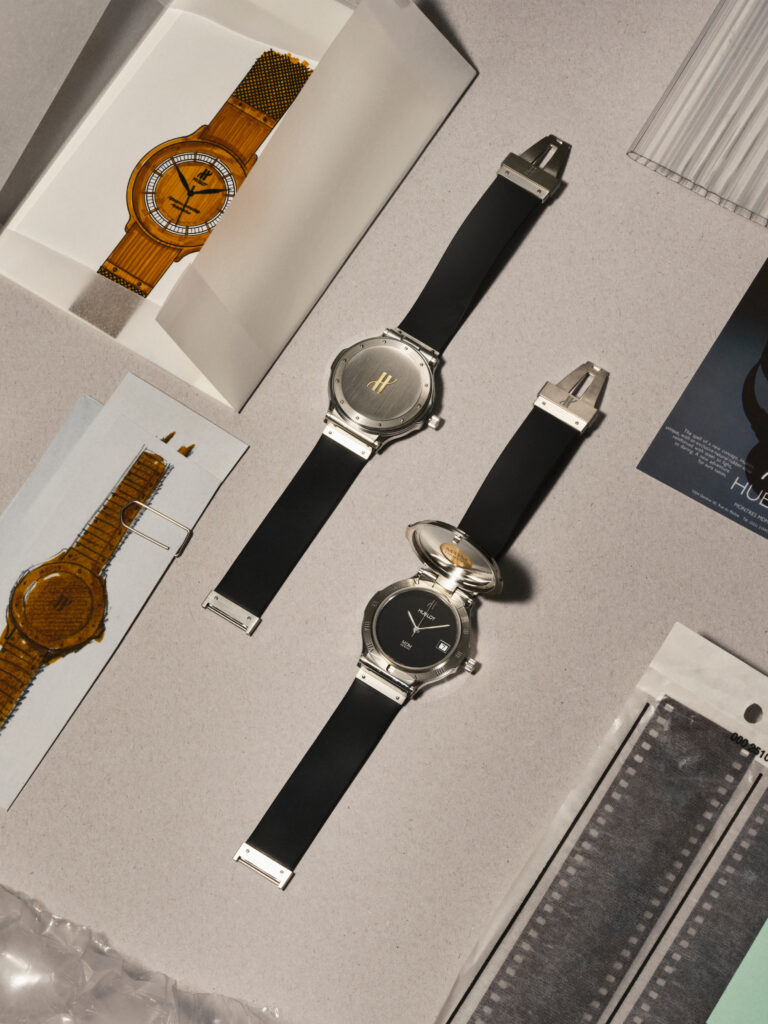
Adding a solid gold bracelet to match the case of his creation would increase production costs significantly and, anyway, he didn’t like any of the suggested designs. So much so that, on one rendering, he decided to adopt the blank, black space where the bracelet was intended to go as the ‘look’ his watch would have. A black strap, Crocco decided, was the answer, and it would be made from natural rubber, its blackness blending nicely with the glossy, jet black dial.
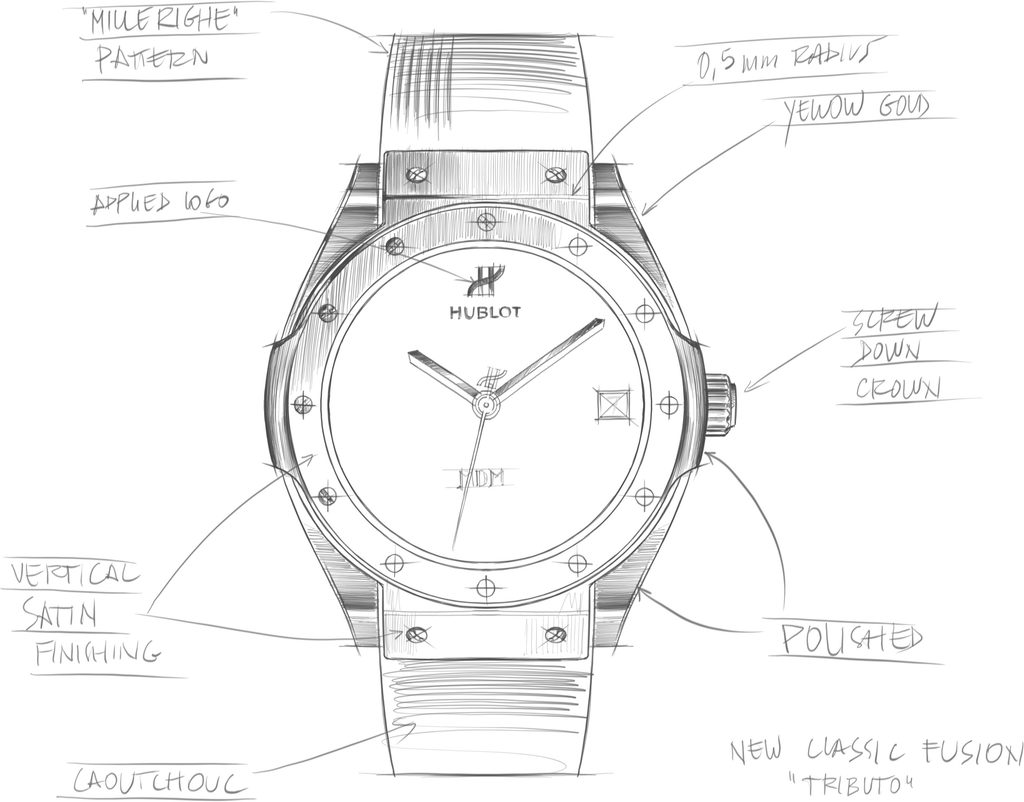
Rubber also fitted rather well with the nautical theme of his new creation which, while round, was decidedly different (and more luxurious looking) thanks to the lack of any form of timing scale on the dial. Instead, the dozen small screws that secured the bezel onto the rest of complex, seven-part case doubled-up as hour markers.
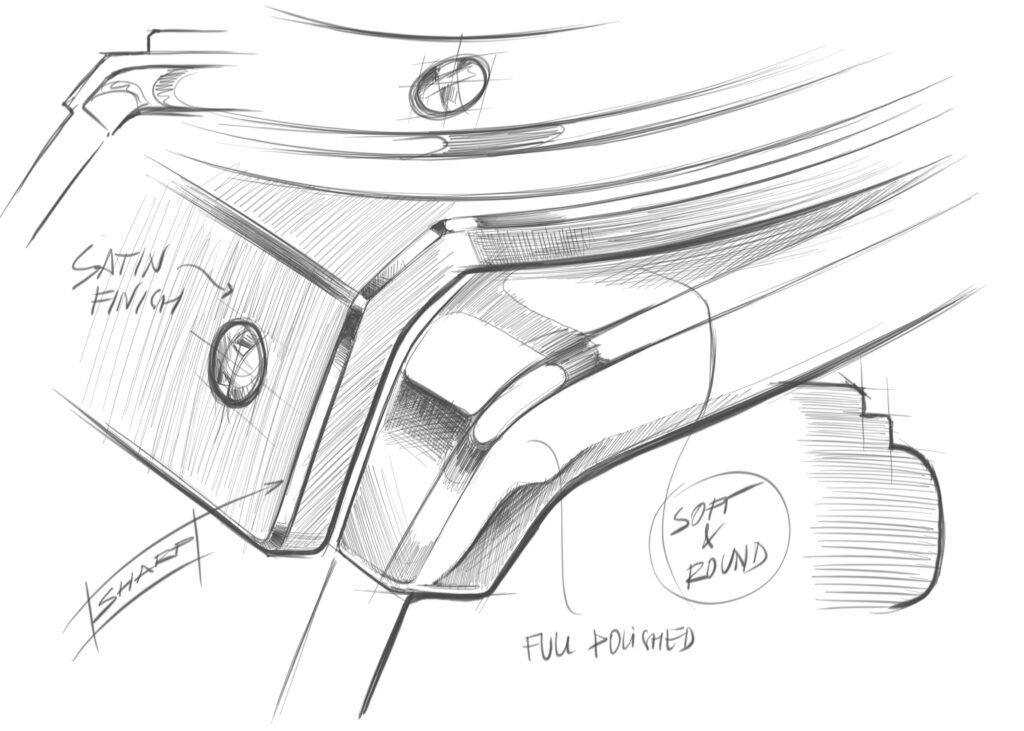
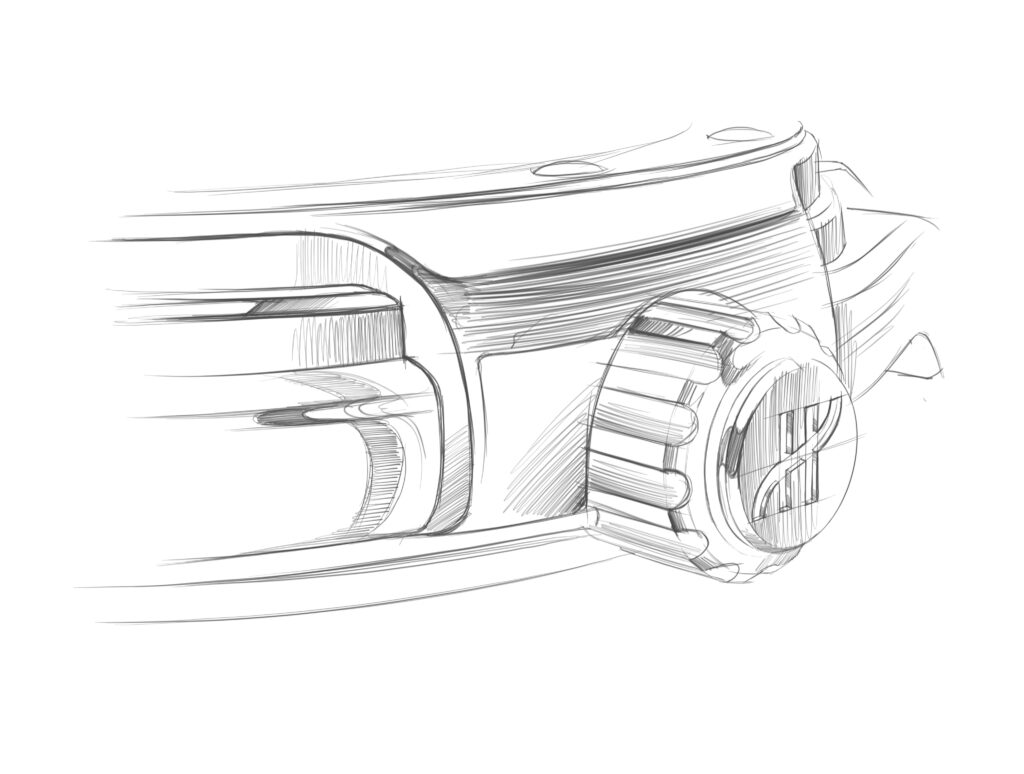
Combined with the ‘ears’ at three and nine o’clock (shades of Nautilus?) and the sloping extensions that ran from 12 and six to which the strap was secured, the watch looked very like a miniature ship’s porthole (shades of Nautilus?) – hence Crocco giving it the model name ‘Hublot’.
The idea of mixing gold with rubber is said to have caused shock and horror in the stuffier parts of the Swiss watch industry. For Crocco though, that odd mixture (or ‘fusion’ as marketing man Biver would later call it) was a sure-fire way of gaining recognition.
There were only two problems with the natural rubber strap. Firstly, it could easily tear apart from its securing screws. That was solved by bonding small, metal plates into the material which the screws could not so easily damage. The second problem was more delicate: natural rubber stank. Crocco’s solution was to have it infused with a vanilla scent during the vulcanisation process – an idea that, he says, met with quizzical looks from the company tasked with making the straps, which was more used to working on items such as car tyres.
After numerous tests, alterations, detail amendments and supplier meetings, the MDM Geneve Hublot was ready to go and arrived on the scene with an outing to the Basel watch and jewellery show.
“Nobody knew about us when we went to Basel in 1980,” Crocco told me during the Tributo event.
“The price was high, the watch was unlike anything else, and we had done no market research – so it could have been a flop.”
The small but elegant MDM stand featured circular showcase windows and was positioned right opposite Cartier’s, enhancing the likelihood of visits from the right type of clients. No one bit on day one but, by the second day of the fair, several Italians bought-in to the Hublot concept, followed by a Mexican and a Brazilian , all acquiring the very first of what would prove to be 5,000 watches sold in year one.
By the end of 1980, the then 35-year-old Crocco’s advertising team had taken inspiration from the ‘porthole’ theme to create an initial campaign featuring a photograph of the watch overlaid on that of a storm-tossed sea with just a hint of yacht in corner. It was an image that quickly caught the attention of one particular sailing fan: King Constantine of Greece who, soon after spotting the ad in Time magazine, is said to have nipped out to buy himself a Hublot – and another one for his brother-in-law, King Juan Carlos of Spain.
It was a level of celebrity endorsement that today’s luxury marketing types would give their right arms to achieve – and Crocco remains proud that it was all for free.
“We never once gave a watch away,” he told me.
By the middle of the decade, annual sales were approaching the 50,000 mark, with the Kings of Greece and Spain having inadvertently kick-started a VIP rush for Hublots that drew in a vast roster of famous names.
How famous? Try Giorgio Armani, Silvio Berlusconi, Sylvester Stallone, Prince Albert of Monaco and Candice Bergen for a start. Then add Eddie Murphy, Queen Noor of Jordan, Jose Carreras, Jacques Lafitte, Dodi al Fayed, Elton John, Andy Warhol, Robert Kraft. Oh, and let’s not forget Ivana Trump (I wonder if she still has it?).
The list really does ‘go on and on’ – but even being on the wrists of so many of the great and the good couldn’t prevent Hublot’s popularity from waning (the success of the model fairly soon led Crocco to adopt it as the brand name and ditch MDM).
As the 1980s faded away and the late ‘90s saw the renaissance of luxury watchmaking, one historic dial name after another was snapped-up and revived by conglomerates with voracious marketing departments, and Hublot’s shine began to fade – not least because the quartz movements used in the base models held little appeal to the new wave of ‘connoisseurs’.
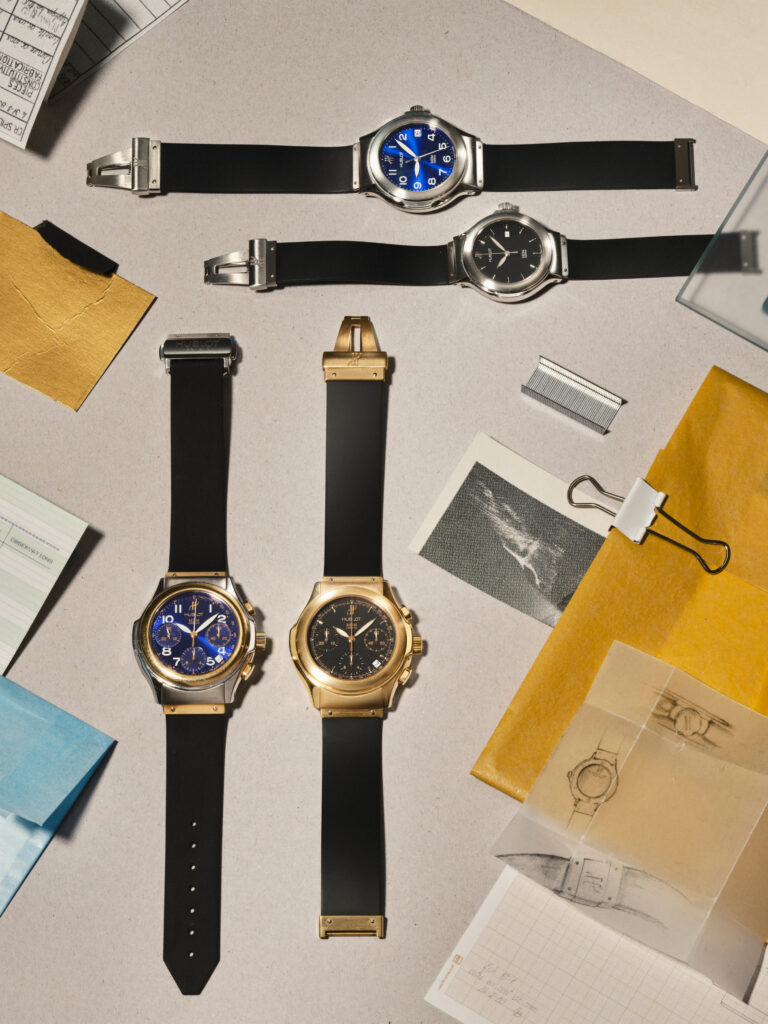
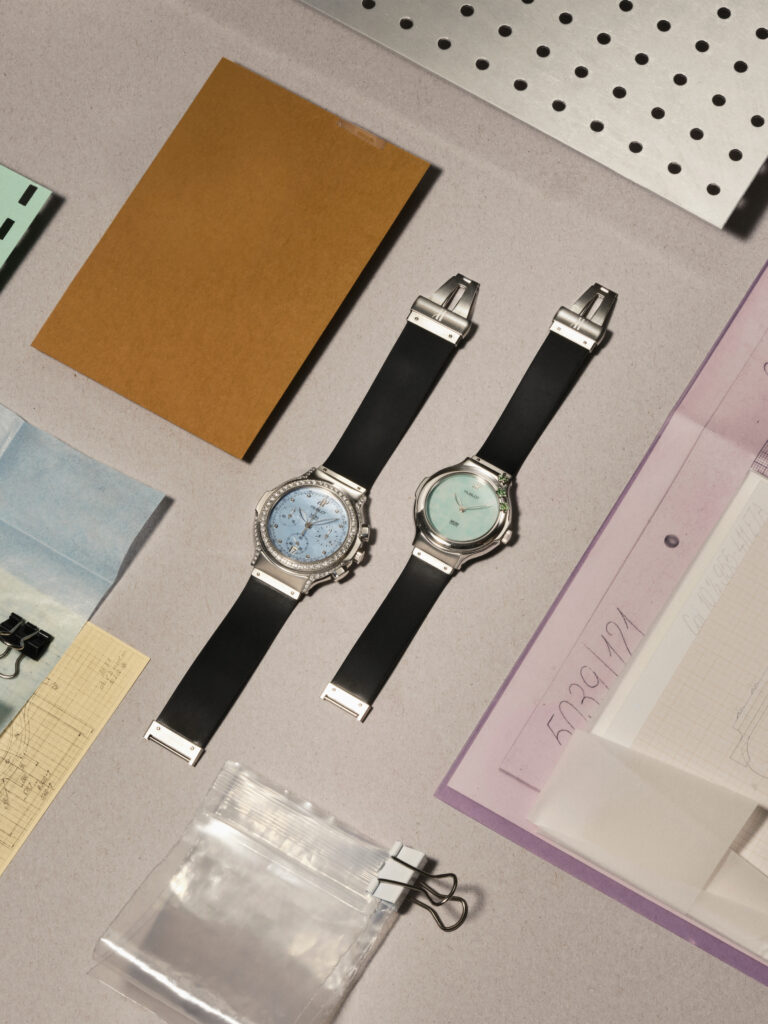
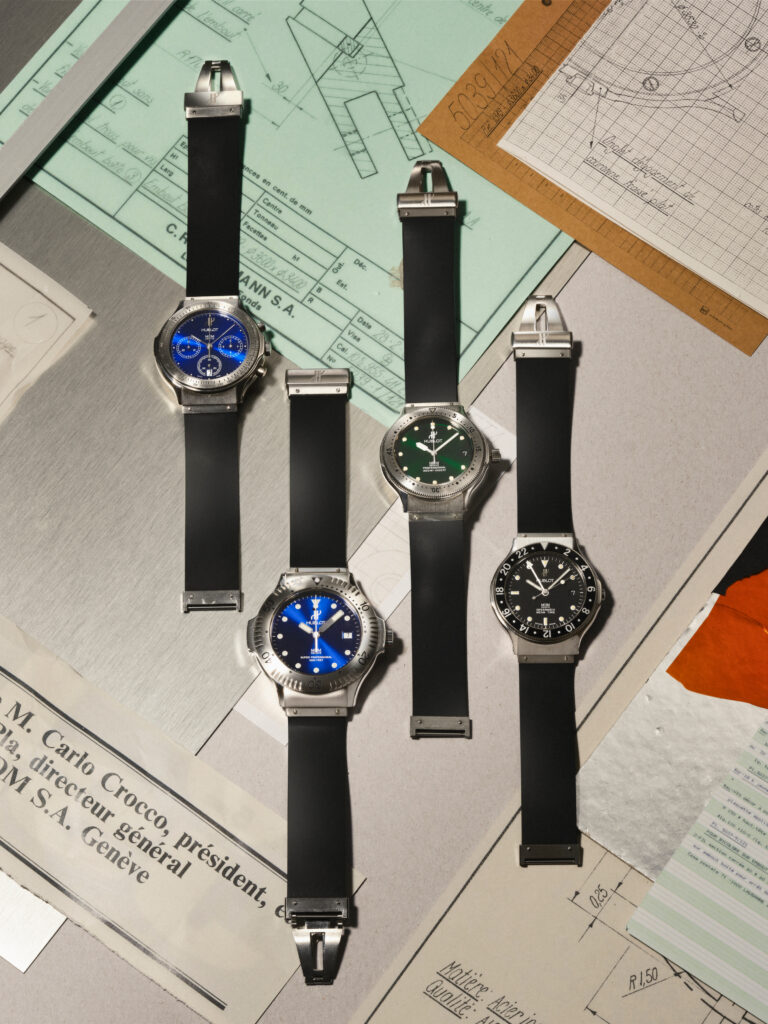
Along the way, Crocco and his team had developed the Hublot in multiple interesting directions. There were versions with hinged covers to protect the dial; a sporty GMT model with a rotating, 24-hour bezel; the 1810 chronograph with an automatic movement; the Plongeur dive watch; an electromechanical chrono called the 1620. There was even a bracelet made called the ‘Colonial’ that could be specified as an alternative to the signature rubber strap.
It will be interesting to see where prices for some of those go following the launch of the Tributo which, as with most ‘homage’ watches of today, isn’t quite the same as the original – although it’s far closer than the Classic Fusion launched in 2023 to mark Hublot’s, er, 43rd birthday.
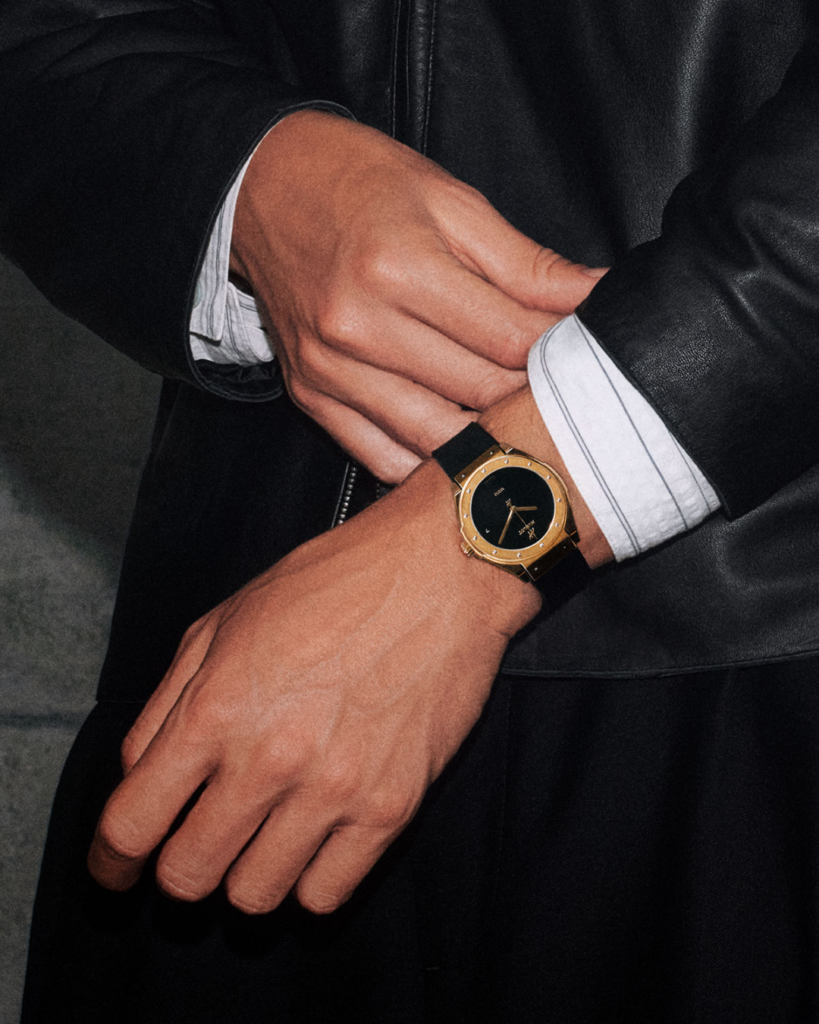
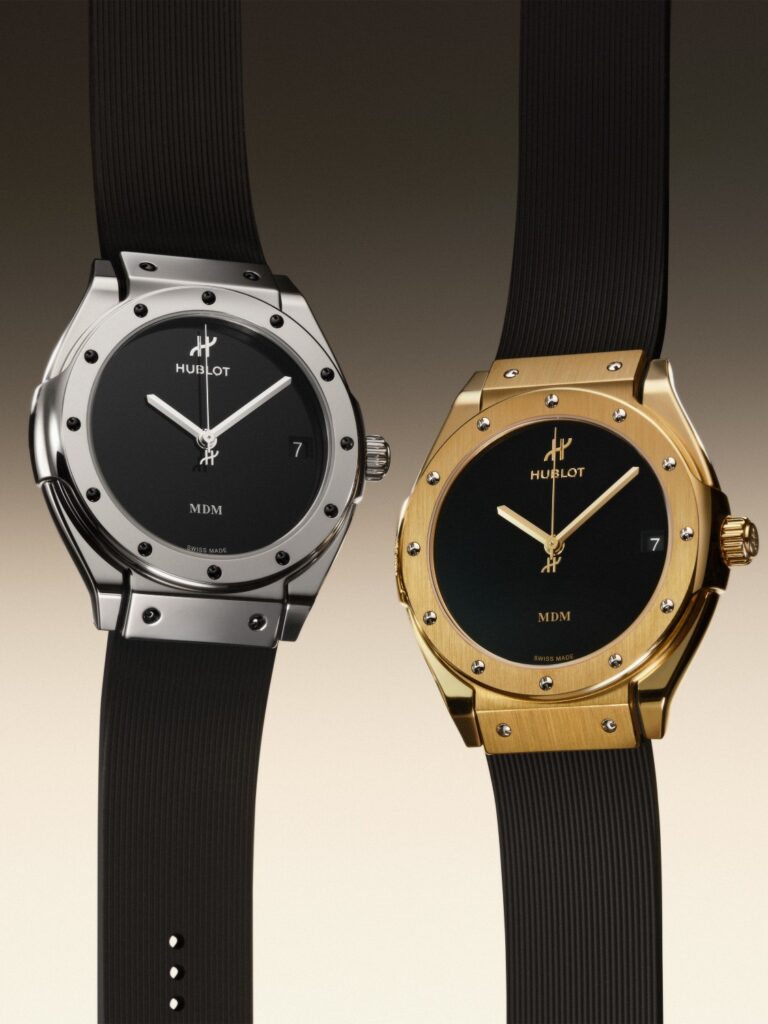
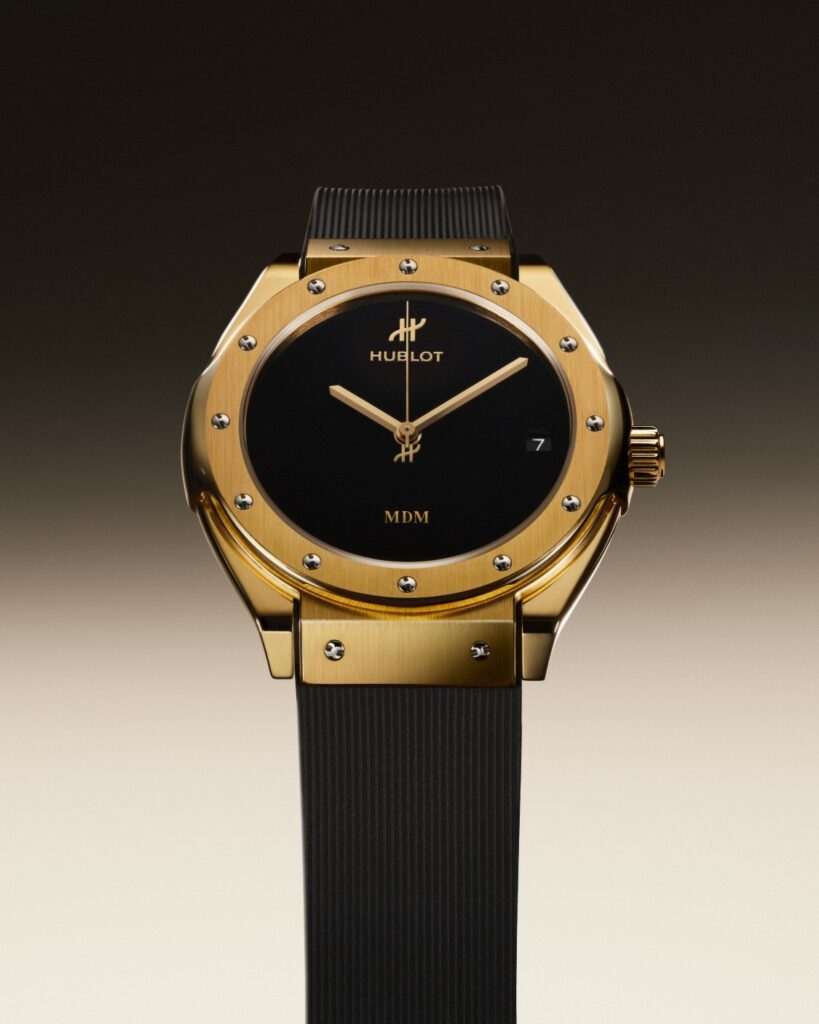
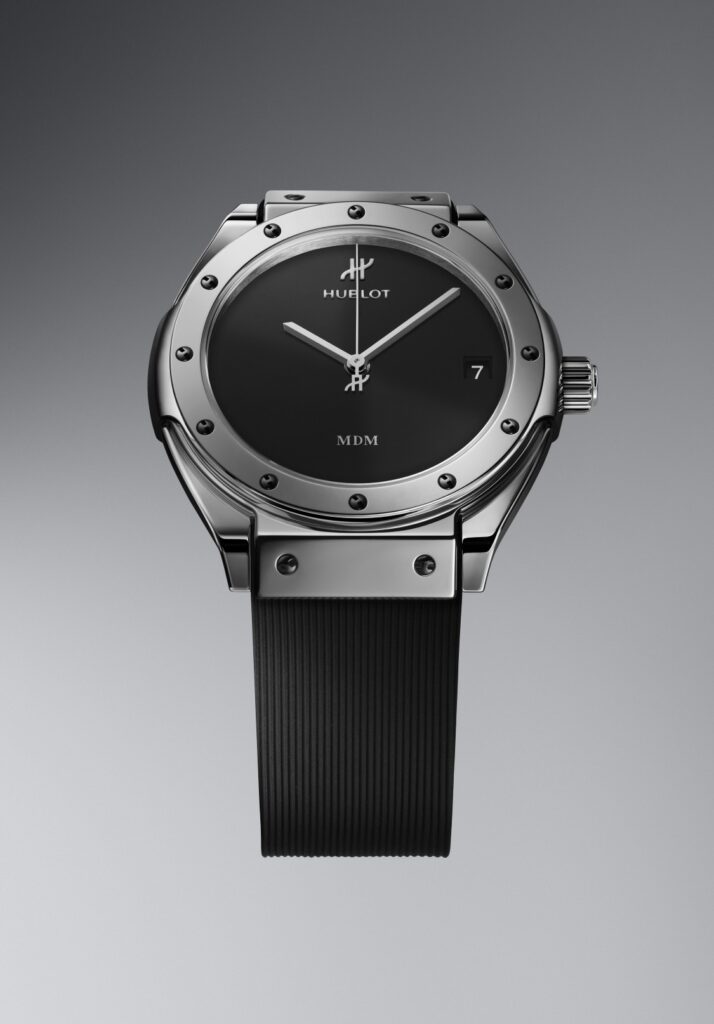
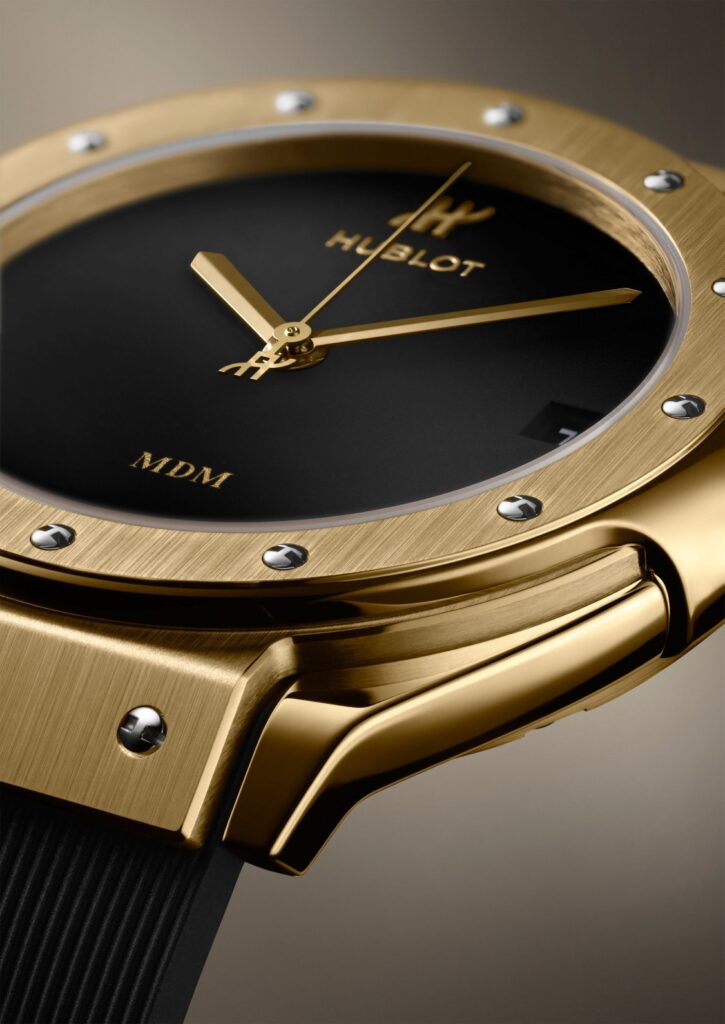
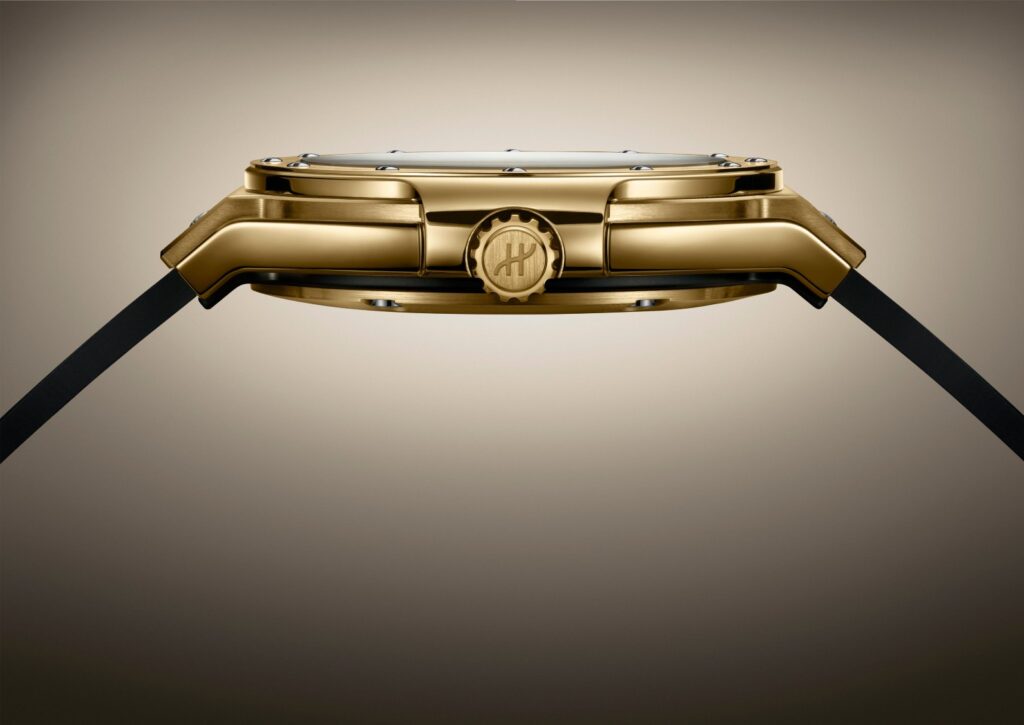
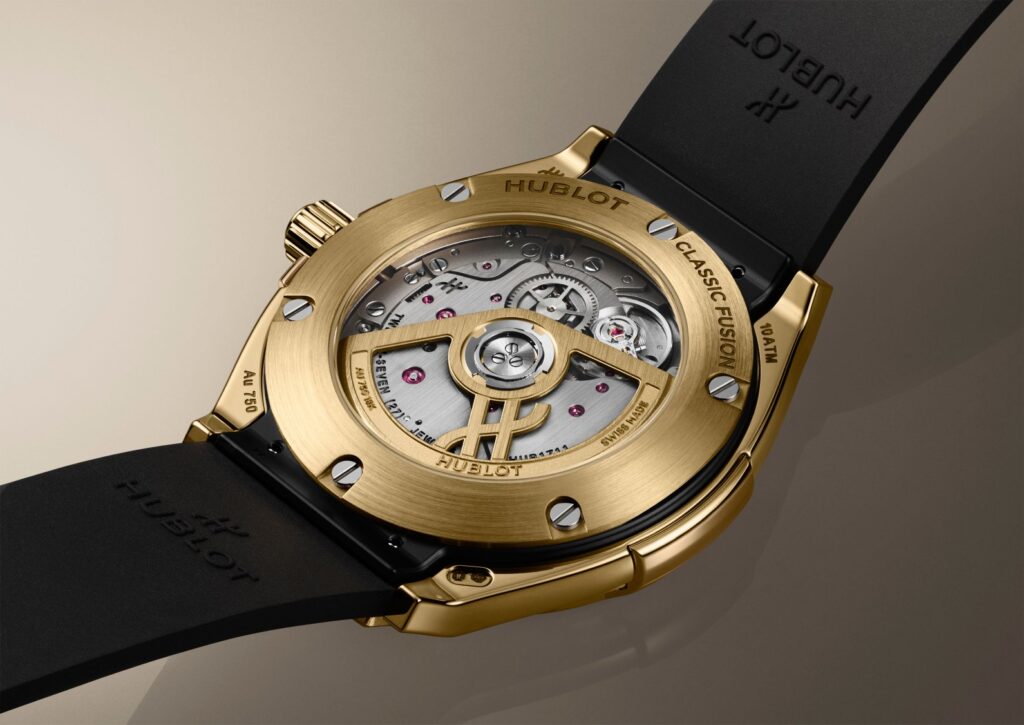
The most obvious differences between the new watch and the 1980 model are the 38mm case (two mm larger) and the use of Hublot’s HUB 1711 in-house automatic movement instead of the original’s ultra-slim quartz effort. That makes the Tributo inevitably thicker, although alterations to some of the case angles and a combination of subtle polishing techniques have been used to lighten the look as much as possible.
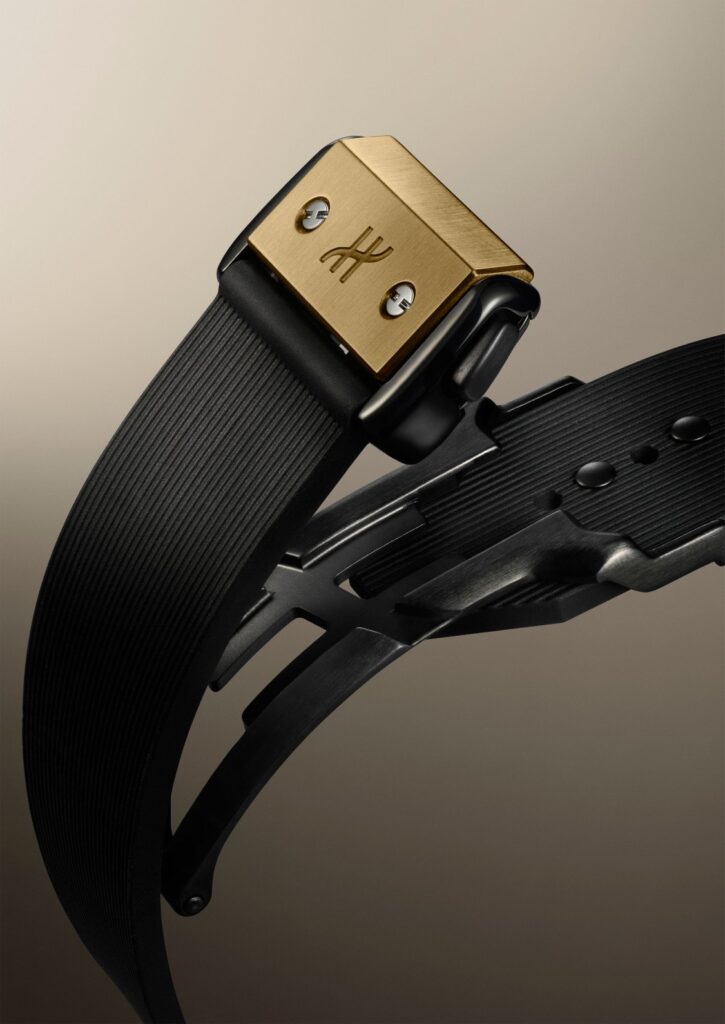
And as for the rubber strap – that’s no longer made from natural rubber but from high spec ‘FKM’ which is stronger, more resilient, and doesn’t smell bad.
And whereas buying an original Hublot required the customer to undergo an in-store ceremony of choosing a correct-size strap from a ‘coffret’ containing five vanilla-scented options, the Tributo comes with a deployant buckle made from titanium.
Creative director Alessandro Camilli expects around 200 white gold and 200 yellow gold Tributos will initially be produced, but it will not be a limited edition and further variations on the theme are likely to follow – including ‘metiers d’art’ models, perhaps based on gem-set versions and those with enamelled and engraved dials (there was a cool one decorated with swimming fish).
Whatever happens, we think the days of being able to buy a 1980s quartz original for £500 may soon be gone for good…… so if you want one, act now.