
Chopard’s collaboration with Zagato is more about the cutting-edge performance than classical coachbuilding
A lightweight, manually-wound watch with a 60-second tourbillon and a 42mm ceramicised titanium case inspired by the tubular chassis of a vintage race car, it’s an engineering marvel in its own right, but also the product of three complementary backstories, interwoven to create something special.
You may already know Zagato as the Italian coachbuilder famous for adding its iconic double-bubble roof atop European sports cars. A pioneer of aerodynamics even before the first wind tunnels sprang into life, Zagato began by designing bodies for Alfa Romeo racer cars back in the 1920s, and by the following decade was already modifying cars with wind-cheating reclined windscreens, convex boot lids and headlights remodelled for cutting through the air more efficiently.
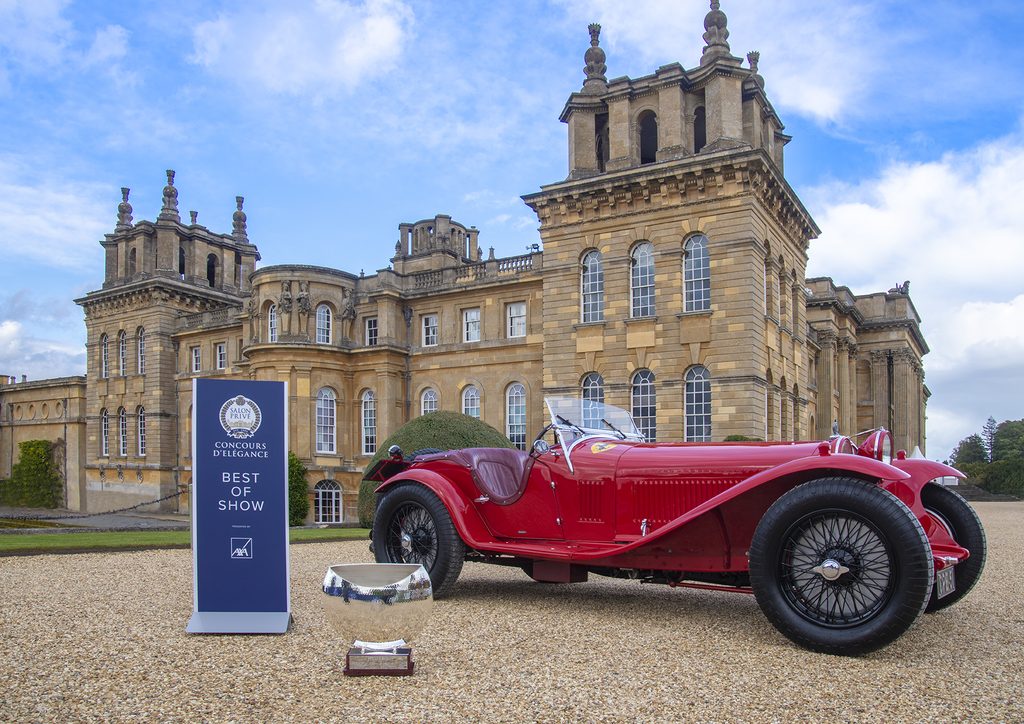
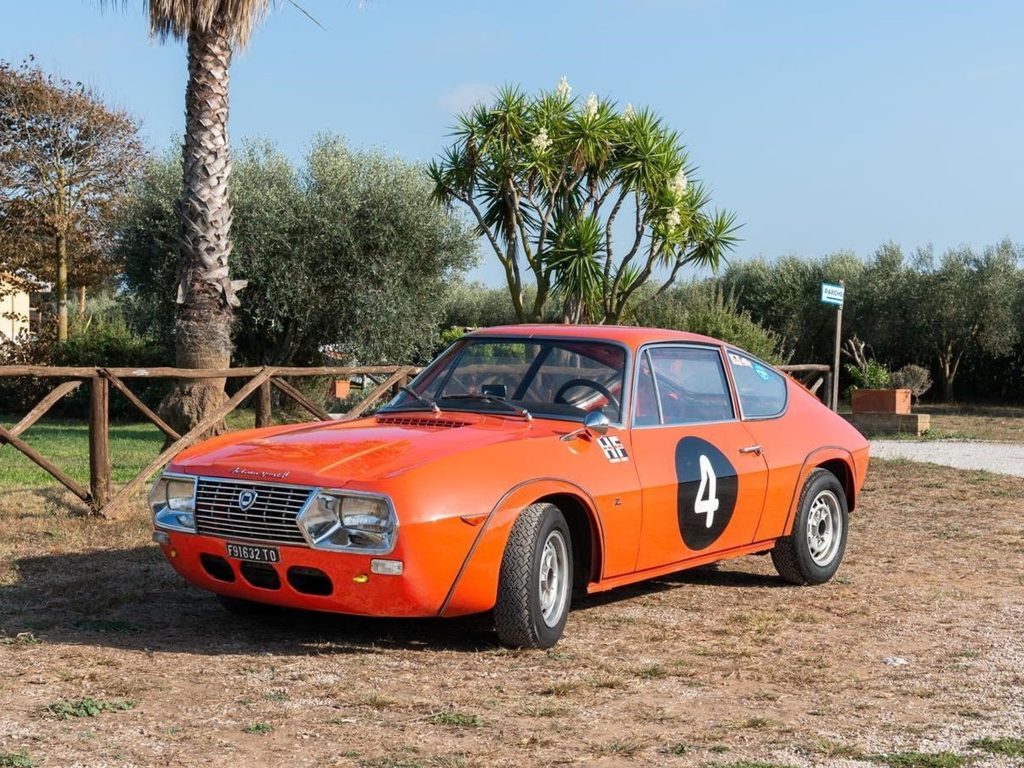


Led by founder Ugo Zagato, the coachbuilder’s sculpted sports cars had racked up eight victories at the Mille Miglia, four at the Targa Florio and four at Le Mans. Post-war, the company worked with automotive greats, including Aston Martin, Ferrari, Fiat, Maserati, Jaguar, Porsche and Renault.
Fast-forward through a decade of small, slab-sided electric cars built in response to the 1970s oil crisis, and Zagato continued to impress either side of the millennium, with special products designed for some of the world’s biggest sports, racing and luxury car makers. Some of its most recent projects include an ultra-limited quartet of Aston Martin Vanquishes – complete with the signature Zagato double-bubble roof, originally formed so that driver and co-driver could wear helmets in lowered rooflines.
Then there’s Chopard. The watchmaker’s co-founder Karl-Friedrich Scheufele is known for his love of classic cars, which has helped fuel his company’s association with the Mille Miglia – a 1,000-mile Italian road race-turned-regularity rally – since 1988. The following year, Scheufele shared a car with six-time Le Mans winner Jacky Ickx, who has been associated with the watchmaker ever since.



Unsurprisingly, it was also on the Mille Miglia – which loops right across Italy, from Brescia in the North, down to Rome then back up to Brescia – that Scheufele met Andrea Zagato, the president of the company founded by his great-grandfather Ugo. This chance meeting over a decade ago led to a pair of Chopard x Mille Miglia x Zagato watches released in 2023 and 2019 respectively, with the latter marking the coachbuilder’s centenary.
For 2026, Chopard and Zagato announced a third timepiece, the Zagato Lab Concept One – and if you’re wondering why it dropped the reference to the classic Mille Miglia race, that’s because it’s anything but traditional. Revealed at the Rétromobile classic car show in Paris, it’s a watch that leans heavily into its motorsport genes, especially from the lightweighting perspective Zagato is known for. Indeed, the Concept One weighs just 36.5 grams, or 42.3g with its black technical fabric strap – making it Chopard’s lightest titanium watch to date. The use of titanium helps here, of course, but so too does the tubular construction that brings strength but also unlocks the sort of negative space a race car engineer would admire.
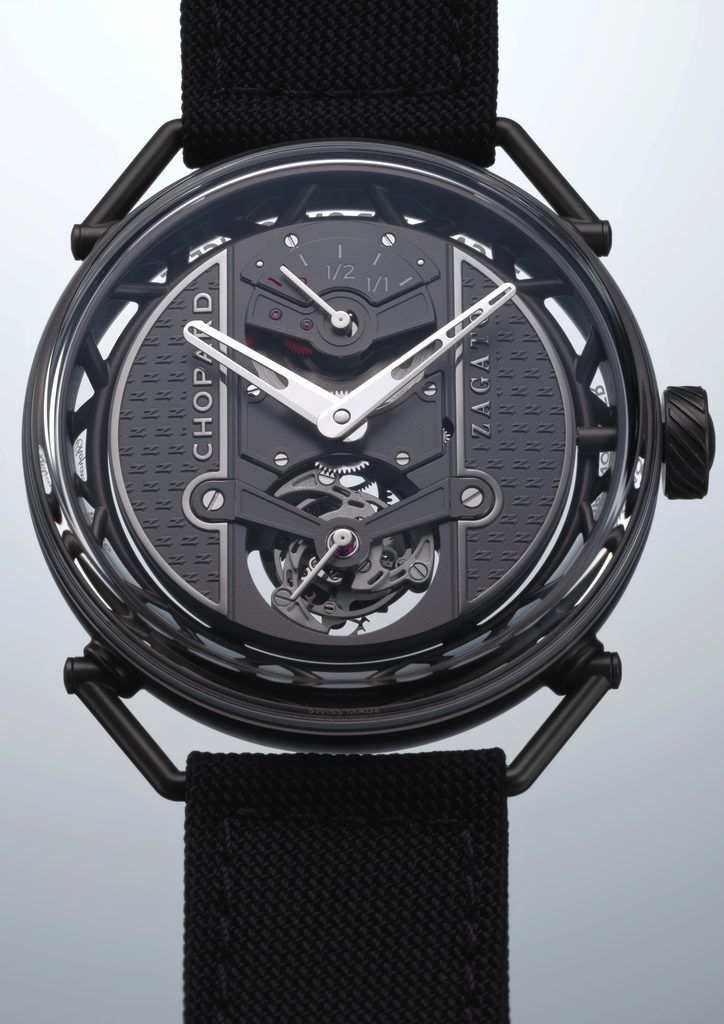
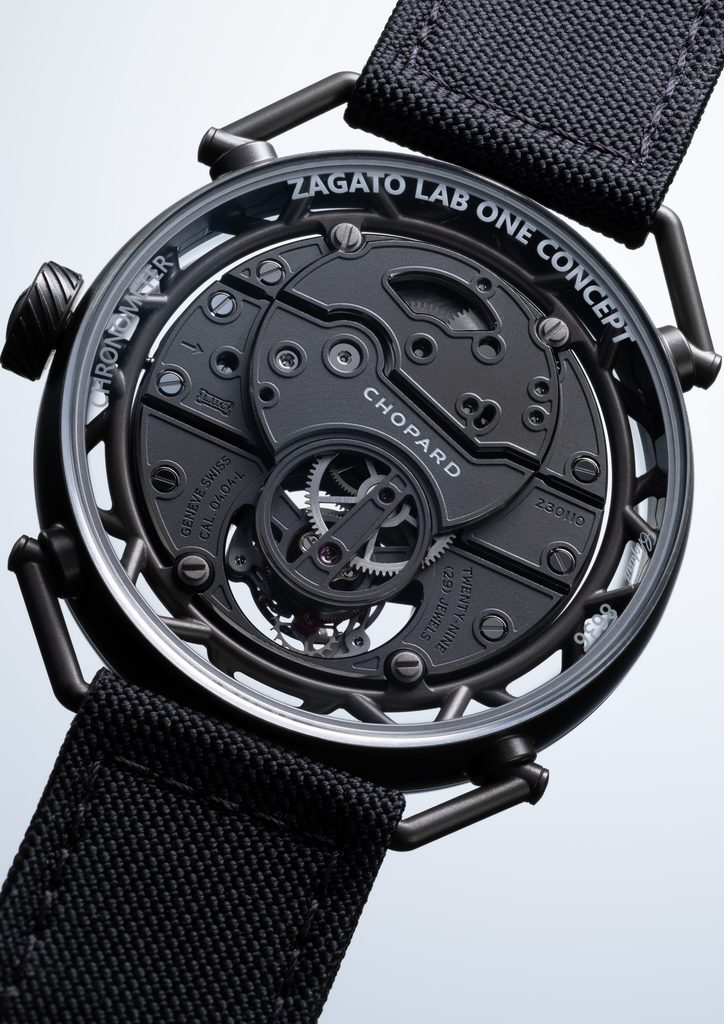
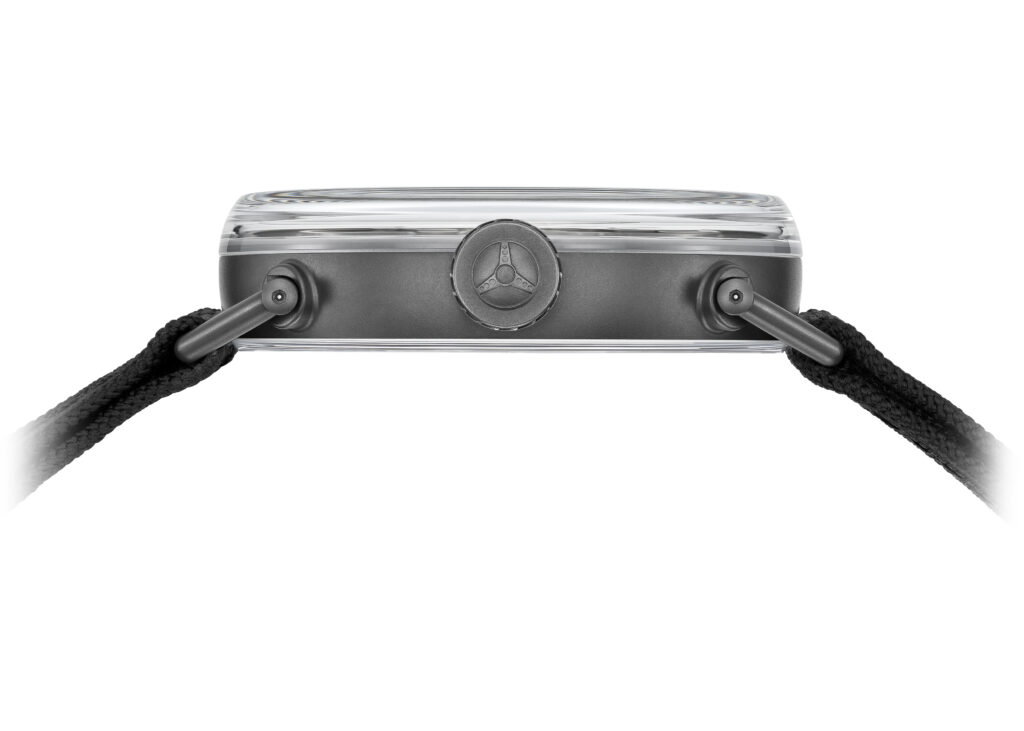
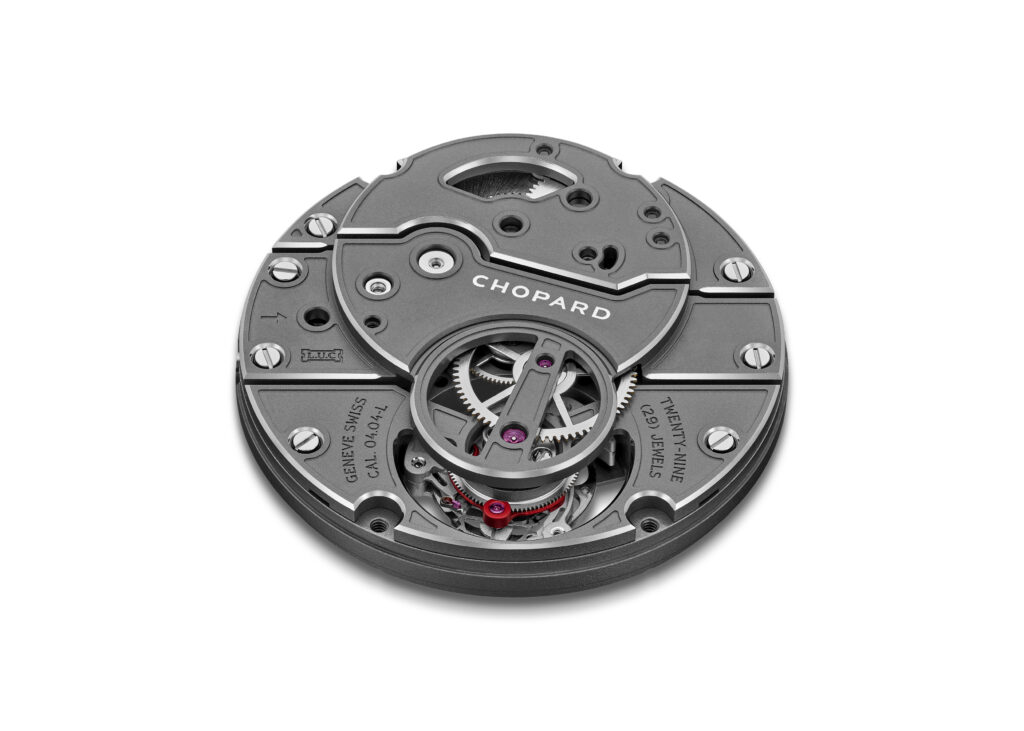
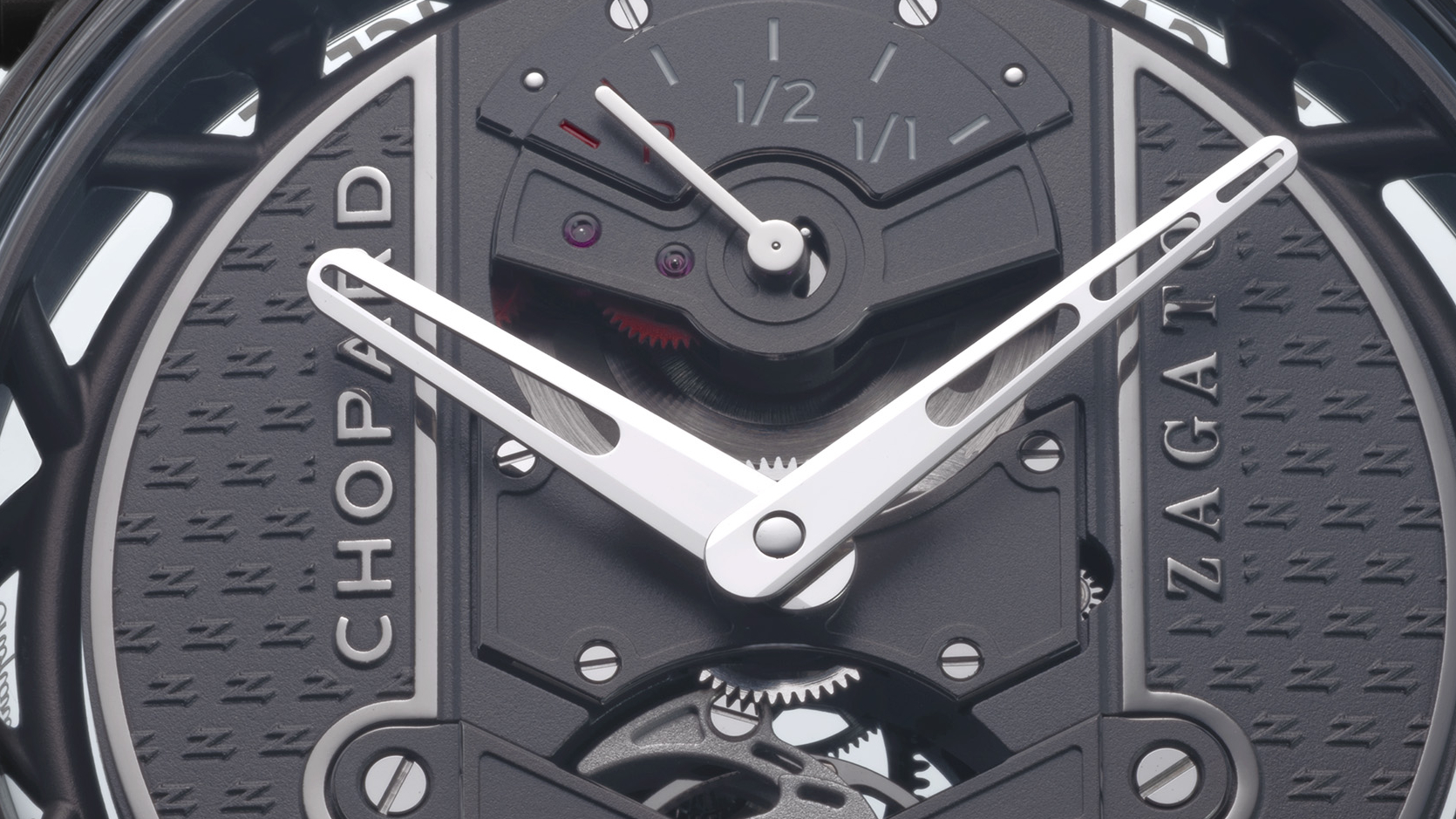
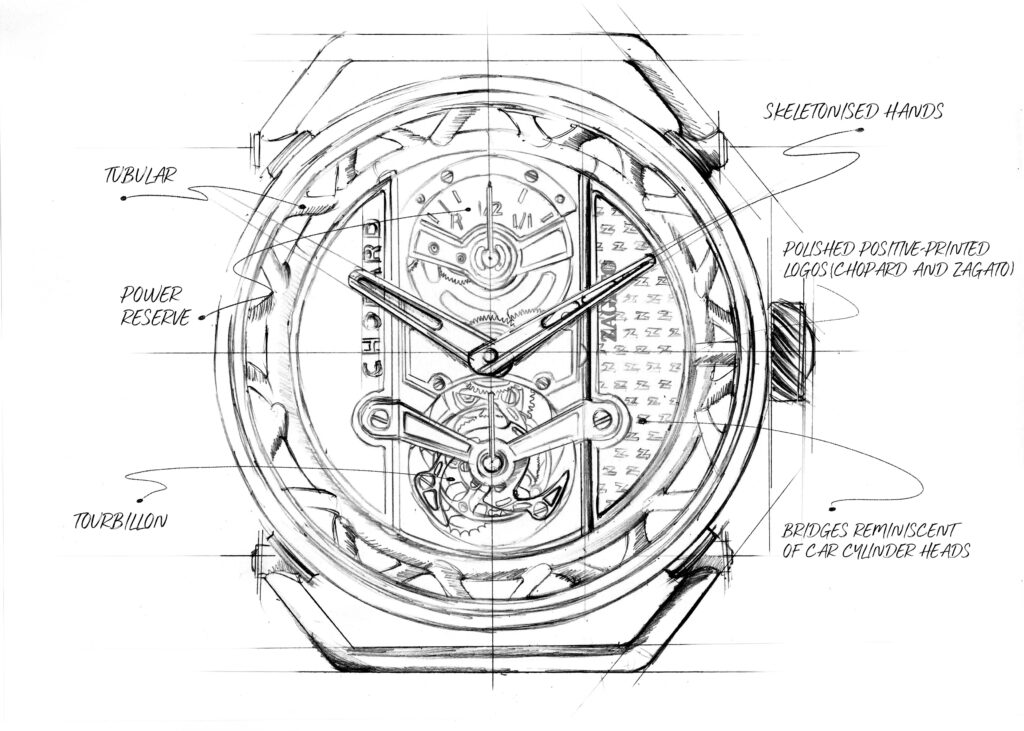
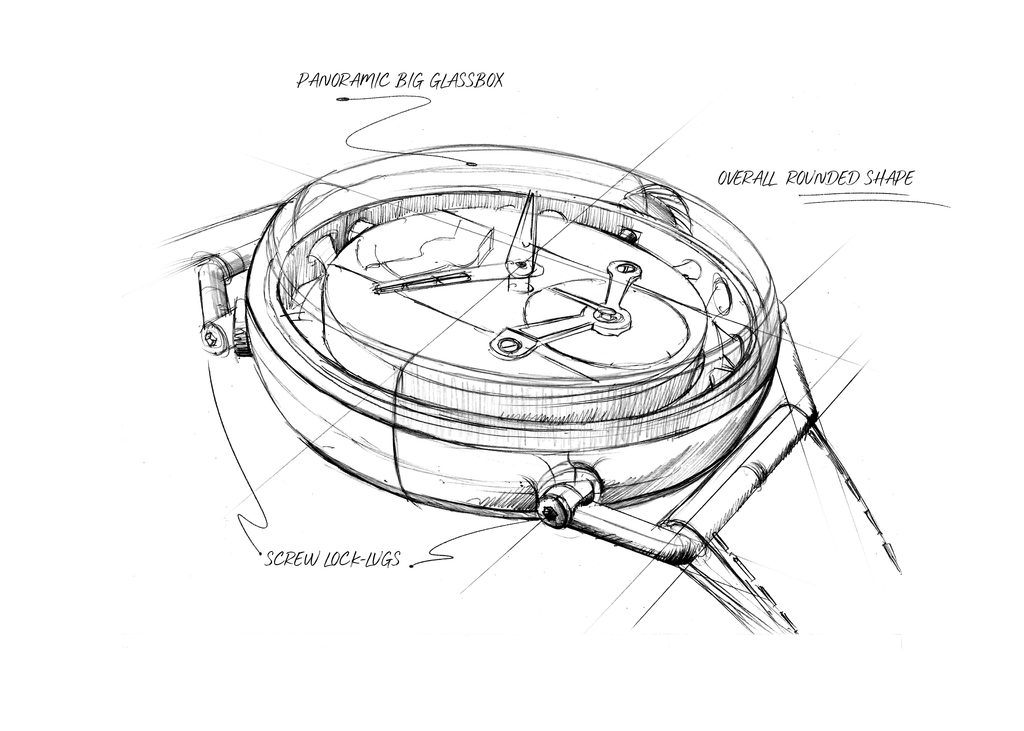
Connecting the L.U.C 04.04-L manually-wound, COSC-certified movement to the case, the tubular structure is on proud display through a glass box-style sapphire crystal that sits flush with the outer edge of the case. The dial it surrounds features Zagato’s “Z” motif and the names of the two brands responsible for the piece, while a fuel gauge-style indicator shows the watch’s remaining 60-hour power reserve. Below this is the 60-second tourbillon housed in an aluminium carriage, and at the centre is a set of hour and minute hands whose design echoes the drilled-out lightweighting technique used to shed weight from vintage race cars.
Also of interest are the hinged lugs, which rotate by 45 degrees from the case and continue the tubular design theme. Measuring 11.15mm thick, the case is created by the process of electro plasma oxidisation of titanium, where the metal is given a wear- and corrosion-resistant nano-ceramic oxide layer, making it even tougher than regular titanium.
Chopard claims a hardness rating of 1000 Vickers, which is around three times that of the Grade 5 titanium often used in watchmaking, and scratch resistance comparable to ceramic. While the motorsport narrative is front-and-centre, it’s also fitting that the lightweight construction and spaceframe chassis design act as a nod to the aviation industry, for which Ugo Zagato built aluminium aircraft body panels.
Turn the watch around, and you’re greeted by another view of that tubular construction. This isn’t a fully skeletonised watch in the traditional sense, since it isn’t possible to see through the dial or movement. But a full-size sapphire exhibition case back puts the rear of the movement on full display, while further demonstrating how the movement appears suspended from the case by those supporting tubes. Details of the L.U.C 04.04-L include 29 jewels, anthracite-coloured, ceramicised titanium bridges and mainplate (matching the case), a hairspring with Philllips terminal curve and a Variner balance.
Lastly, another motorsport flourish comes with the crown, which has a grooved design inspired by the gears of a car differential, and an engraving of a vintage steering wheel on its side.
Where the first two collaborations between Chopard and Zagato retained relatively conventional watch design, differentiated only by subtle Zagato references, the One Concept is a far bolder piece. Not just in its aesthetic, but in its use of materials, its unusual construction, and the fact that it’s notable in its own right for being the lightest Chopard watch yet.
Limited to just 19 pieces – a reference to Zagato’s birth year of 1919 – and available exclusively through Chopard, the Chopard x Zagato Lab One Concept is priced at CHF 130,000 plus local taxes.