
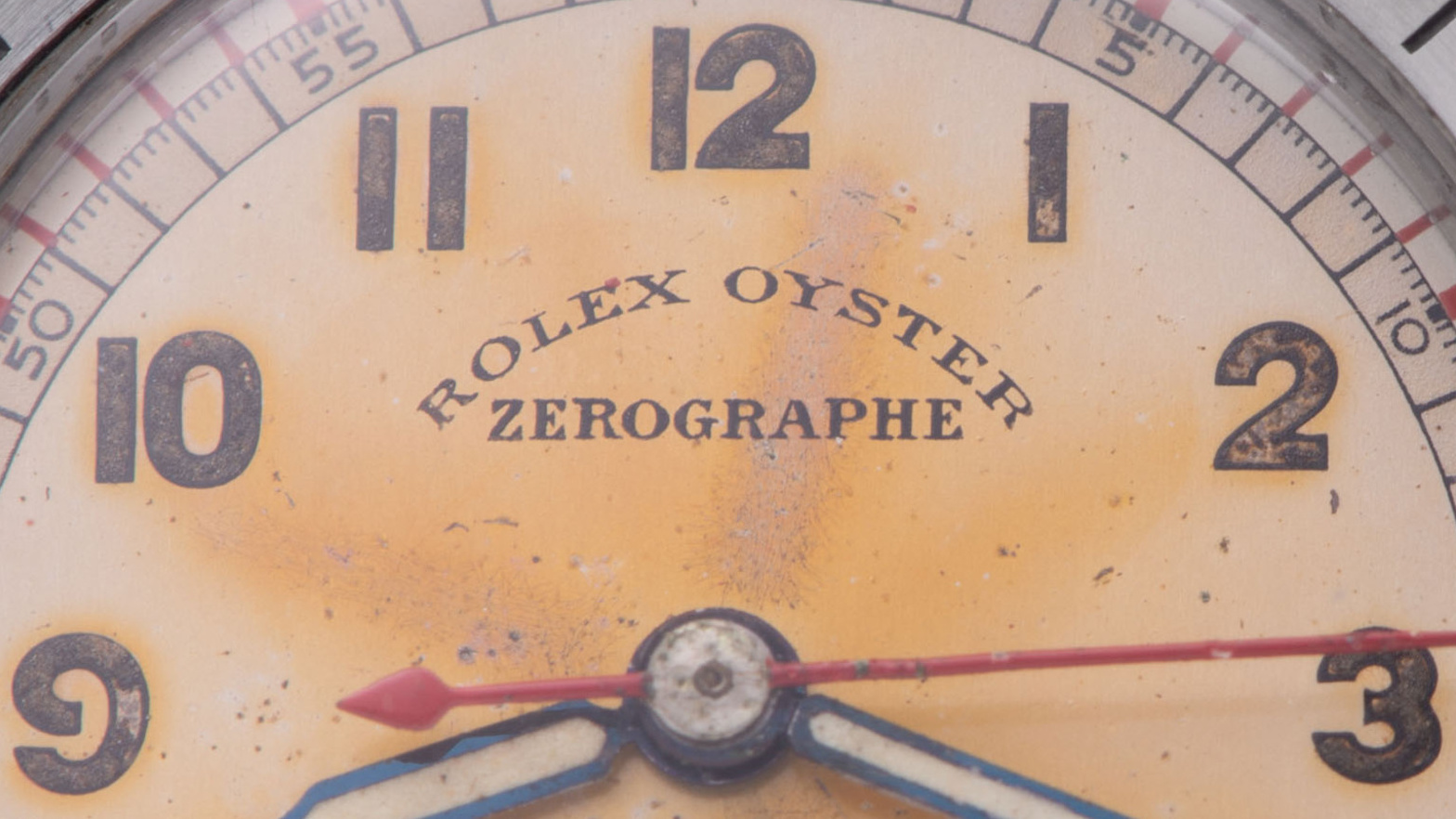
Long before the mighty Daytona was unveiled in the early 1960s, Rolex experimented with its most intriguing timing instruments, a watch that is viewed as a myth amongst collectors…
The Zerograph and its close relation, the Centregraph, offer a fascinating glimpse into a period of experimentation at the Crown. Rolex has something of a reputation for evolution over revolution, with the company’s most celebrated watches having gently evolved through decades of carefully considered improvements, each generation building upon the strengths of its predecessor. Yet, if one delves into the archives of early Rolex wristwatches, a somewhat different picture emerges.
During the 1930s, the company was experimenting with a huge variety of designs and mechanical solutions, some of which would become fundamental to its future identity. Others, on the other hand, would disappear almost as quickly as they arrived. Amongst the most fascinating of these experiments is the Zerograph, a diminutive wristwatch that occupies a curious position in Rolex history. Measuring just 32mm across, it combined the waterproof Oyster case with a rotating bezel and a highly unusual mechanism for measuring elapsed time.
Its close relation, the Centregraph, shared the same essential functionality, although the precise relationship between the two has remained a subject of considerable debate. Produced in exceptionally small numbers, these watches represent an intriguing chapter in Rolex’s development, one that remains surprisingly difficult to reconstruct nearly ninety years later.
A chronograph, but not as we know it
To understand what makes the Zerograph so interesting, it helps to forget almost everything we associate with a conventional chronograph. There are no subsidiary registers recording elapsed minutes or hours, nor are there separate pushers to start, stop and reset the mechanism. Instead, the watch has a continuously running central seconds hand and a single button positioned at two o’clock.
The operation is really very simple. Pressing the button immediately returns the seconds hand to twelve o’clock, where it remains for as long as pressure is maintained. Release the button and the hand begins moving again, allowing a fresh interval to be measured from zero. Unlike a traditional chronograph, however, the seconds hand cannot be stopped independently to preserve a reading. The mechanism is better described and understood as a specialised resettable seconds system, rather than a conventional flyback complication. You are, essentially, zeroing the seconds – hence the name.
The rotating bezel provides the other half of the equation. Graduated to 60 units, it can be aligned with the minute hand to establish a starting point, allowing the wearer to follow elapsed minutes whilst the central seconds hand provides a more precise indication of shorter intervals. It is an ingenious arrangement, particularly when considered within the context of the 1930s, when chronograph design was still evolving and manufacturers were exploring different ways of presenting timing information.
One possible application was a form of telemeter timing. Upon seeing the flash of an explosion or lightning strike, the wearer could reset the seconds hand and observe its progress until the sound of artillery or thunder was heard, thereby estimating the distance to the event. A delay of approximately three seconds would indicate a distance of one kilometre.
This movement has, however, generated considerable discussion. Auction catalogues have frequently described the Zerograph as Rolex’s first chronograph to incorporate an in-house movement, whilst earlier research identified a return-to-zero mechanism added to a conventional 10½-ligne sweep-seconds calibre. The distinction matters in some ways, as developing a specialised timing mechanism is not necessarily the same as manufacturing an entire chronograph movement. What is clear is that the Zerograph represented a different approach from other chronographs Rolex was producing, that featured movements supplied by specialist manufacturers such as Valjoux.
The beginnings of a professional watch
The Zerograph’s mechanical arrangement is only part of its appeal. Its appearance is equally remarkable, particularly when viewed alongside the professional Rolex watches that would emerge during the following decades.
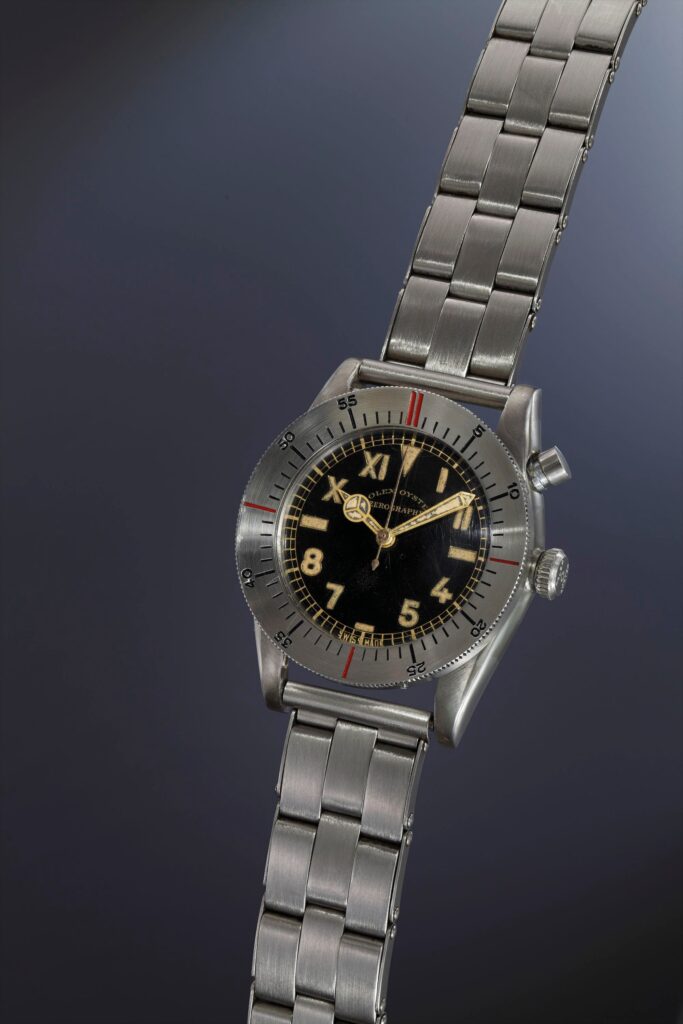
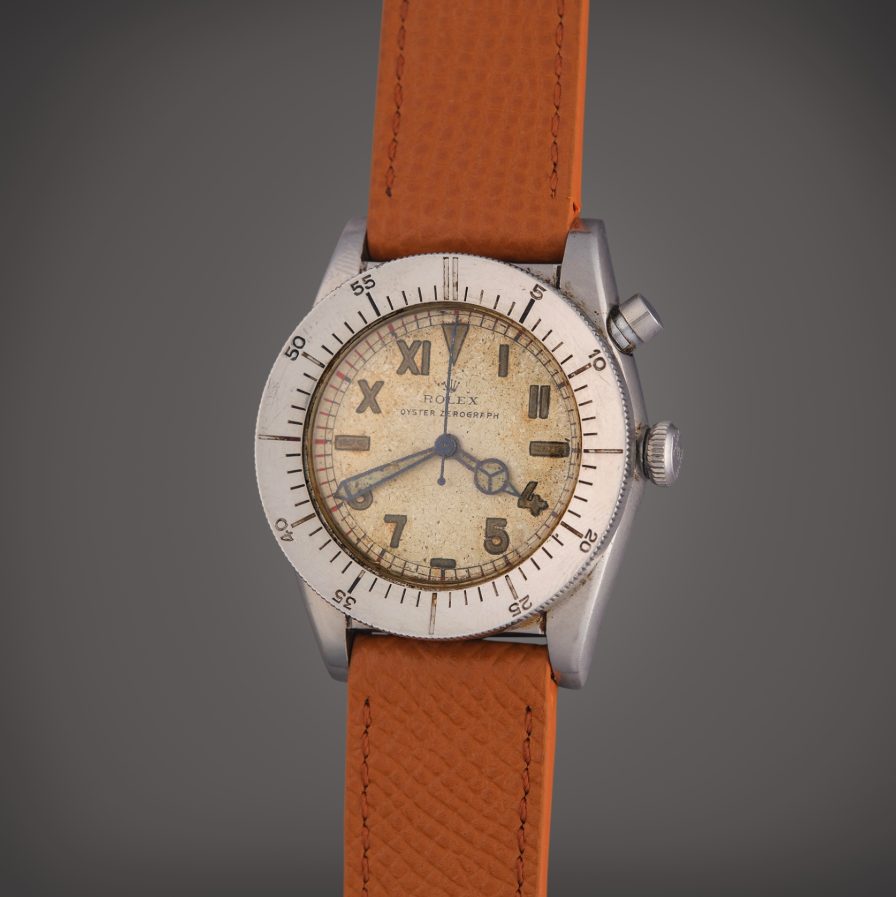
Reference 3346 was housed in a stainless-steel Oyster case with a screw-down crown and caseback, offering the water-resistant construction that had become a hallmark of Rolex following the introduction of the Oyster in 1926. The addition of a rotating timing bezel was significant. Although the feature would become synonymous with models such as the Turn-O-Graph and Submariner during the 1950s, the Zerograph demonstrates that Rolex was investigating its practical possibilities considerably earlier.
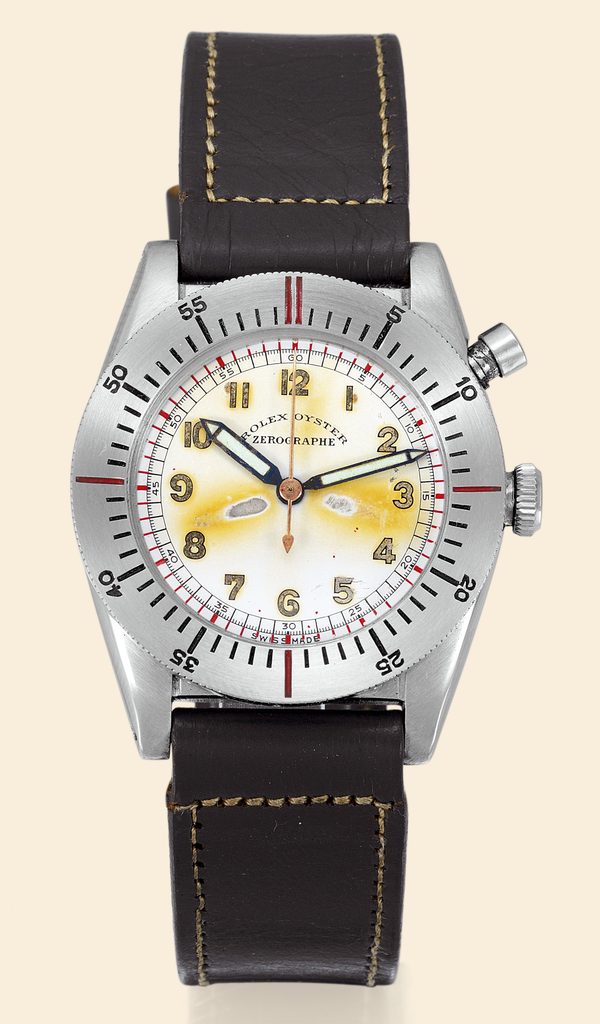
Certain examples possess an appearance that seems almost startlingly modern. The black lacquered so-called error-proof (this was long before the term ‘California’ was coined) dials, with their distinctive combination of Roman and Arabic numerals, luminous markings and Mercedes-style hands, would not look entirely out of place on a later sports watch. The proportionally substantial bezel, with black enamelled numerals and red quarter-hour markers, adds to the impression of a watch that was intended for professional applications.
Yet, for all its apparent technical ambition, the Zerograph never became an established part of the Rolex catalogue. No contemporary advertising for the model has been identified, and the absence of comprehensive factory documentation has made it difficult to determine precisely why it was developed or how it was distributed. Suggestions that the watches were prototypes or experimental pieces supplied to selected distributors are plausible, but remain unconfirmed.
One particularly celebrated example, reference 3346 with serial number 146’275, appeared at Phillips in Geneva in May 2016. Dating to circa 1937, the watch featured a beautifully preserved black California dial and rotating bezel and achieved CHF 389,000 on the day. Despite measuring only 32mm, its combination of case architecture, dial design and unusual functionality gave it a desirability that extended far beyond its physical dimensions. It’s important to remember that the trend for smaller watches was still in its infancy back in 2016, making this result even more impressive.
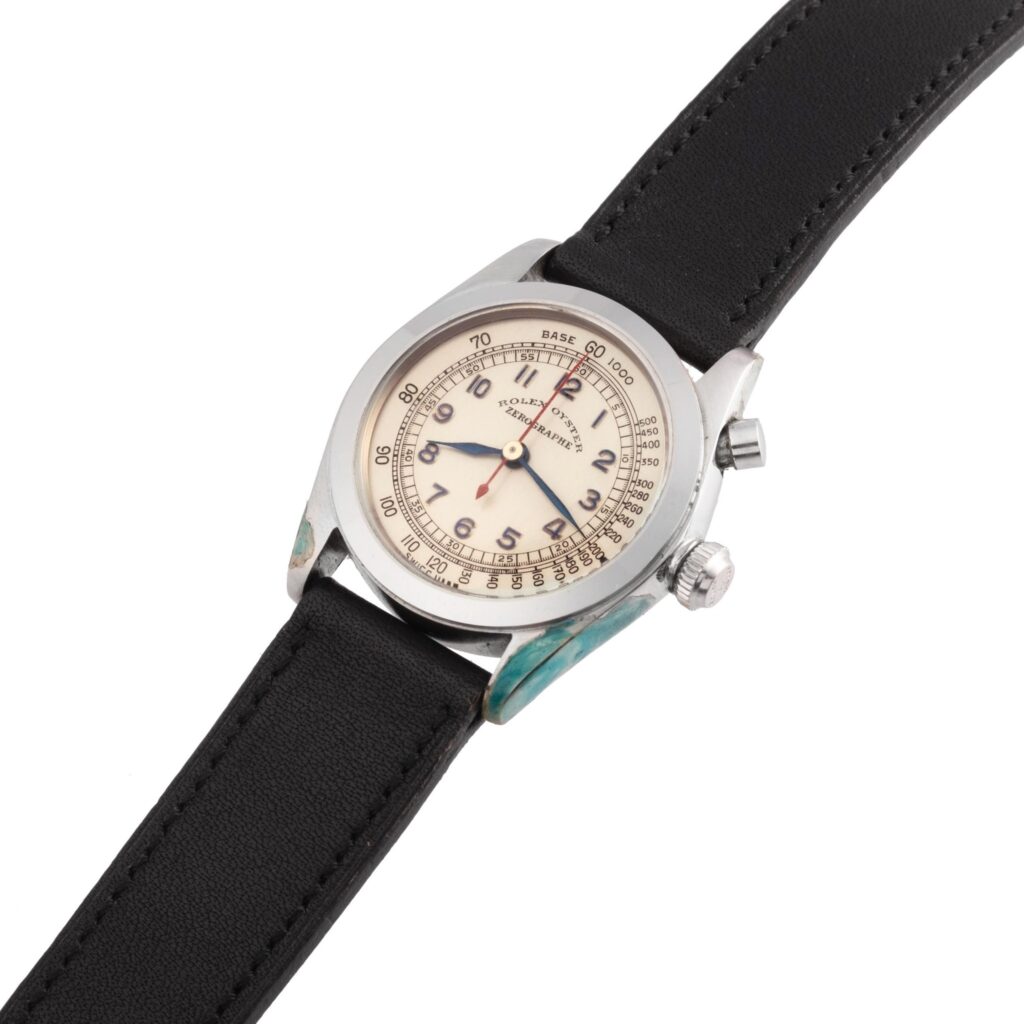
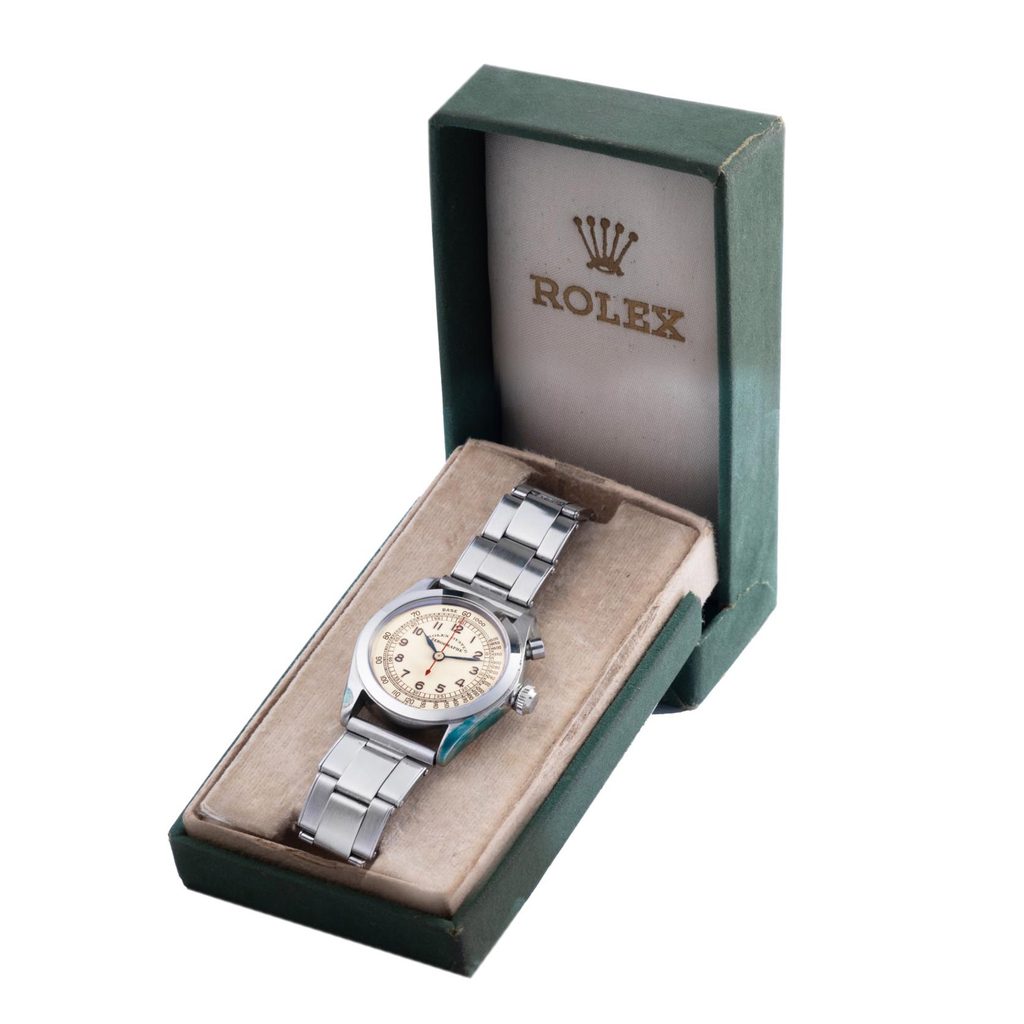
The Zerograph story extends beyond reference 3346. Rolex also produced the Zerographe under reference 3890, a smaller, smooth-bezel interpretation of the same unusual timing concept. Without the graduated rotating bezel, the watch adopted a more restrained appearance, with a tachymeter scale incorporated into the dial. An exceptionally preserved example, serial 181’271, appeared at Antiquorum in November 2024, providing further evidence that Rolex continued to explore the mechanism in different configurations. Its later serial-number range suggests that the reference 3890 may have followed the earlier rotating-bezel watches, although the precise chronology remains uncertain.
The Centregraph connection
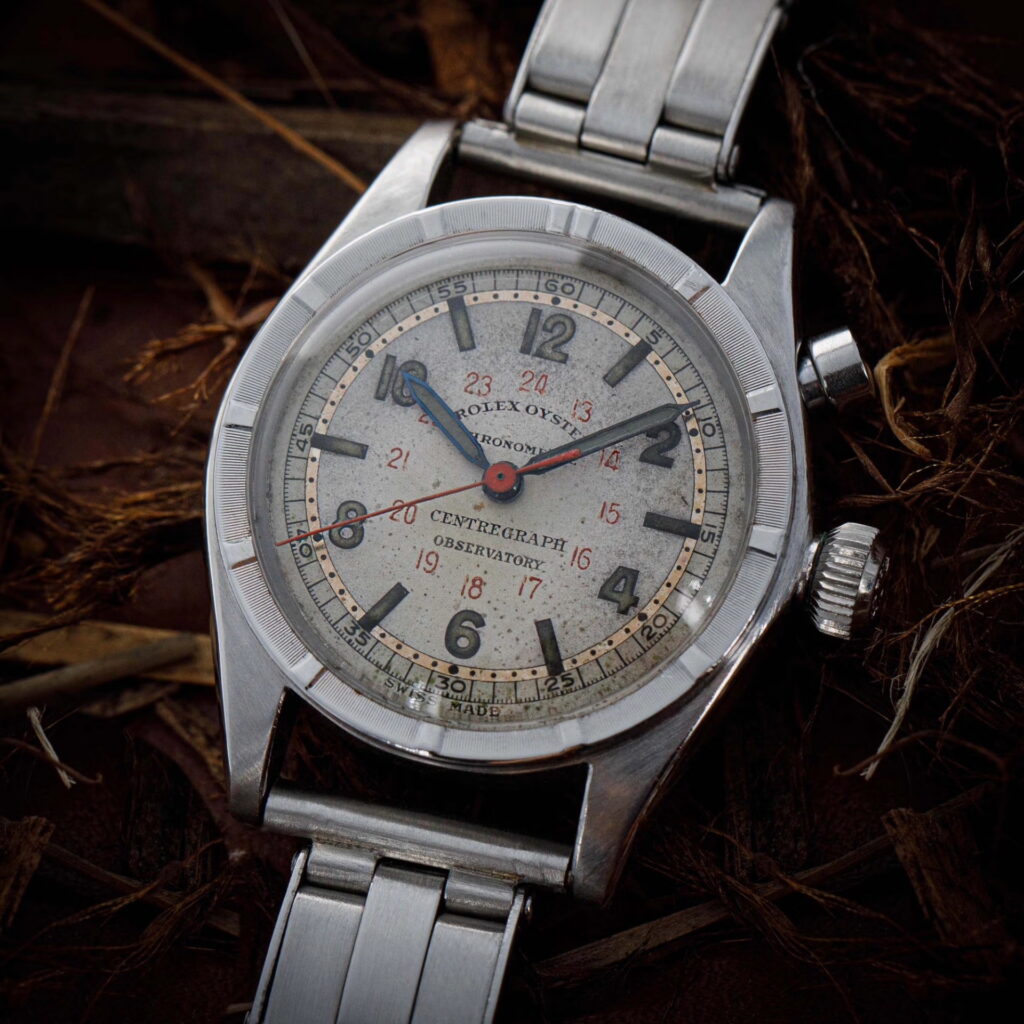
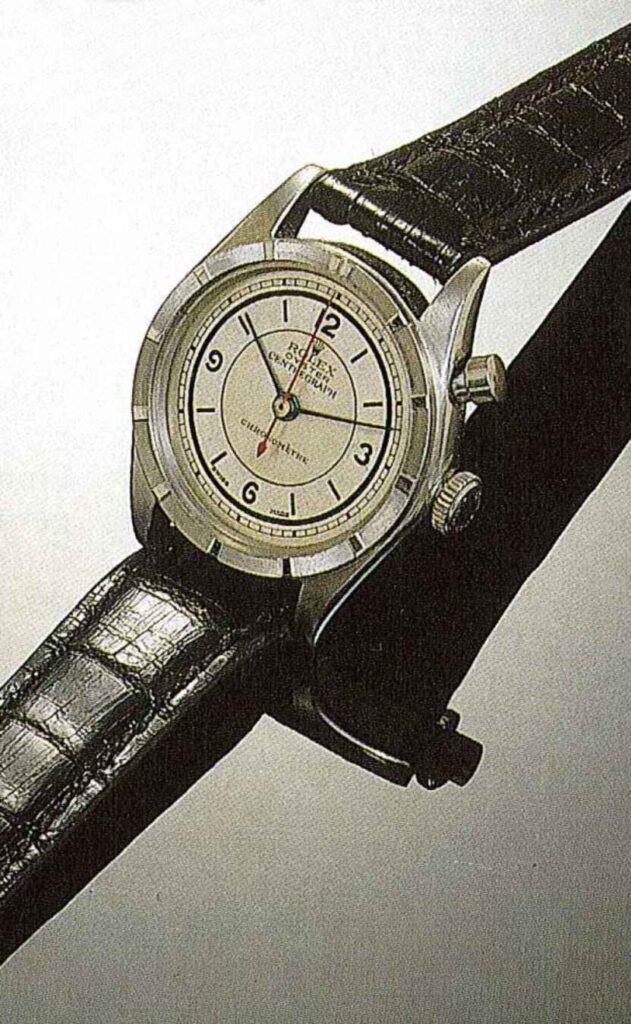
The mystery deepens with the Centregraph, a name found on watches sharing the Zerograph’s distinctive timing mechanism. For many years, collectors attempted to distinguish the two through their reference numbers and bezel configurations. One established interpretation associated the Zerograph with reference 3346 and its calibrated rotating bezel, whilst the Centregraph was linked to reference 3462 with an engine-turned bezel design.
The surviving watches, however, complicate this explanation. In June 2001, Christie’s offered a Centregraph bearing reference 3346, demonstrating that the two names were not confined to separate references. Its two-tone silver dial, luminous numerals and inner 24-hour scale also illustrated the considerable variety of dial configurations found amongst these watches.
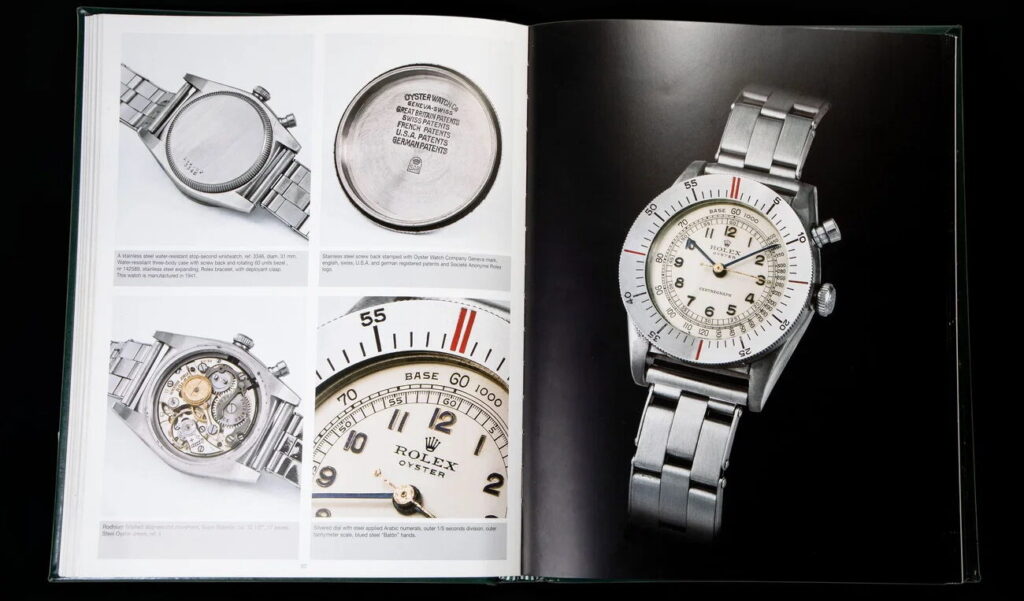
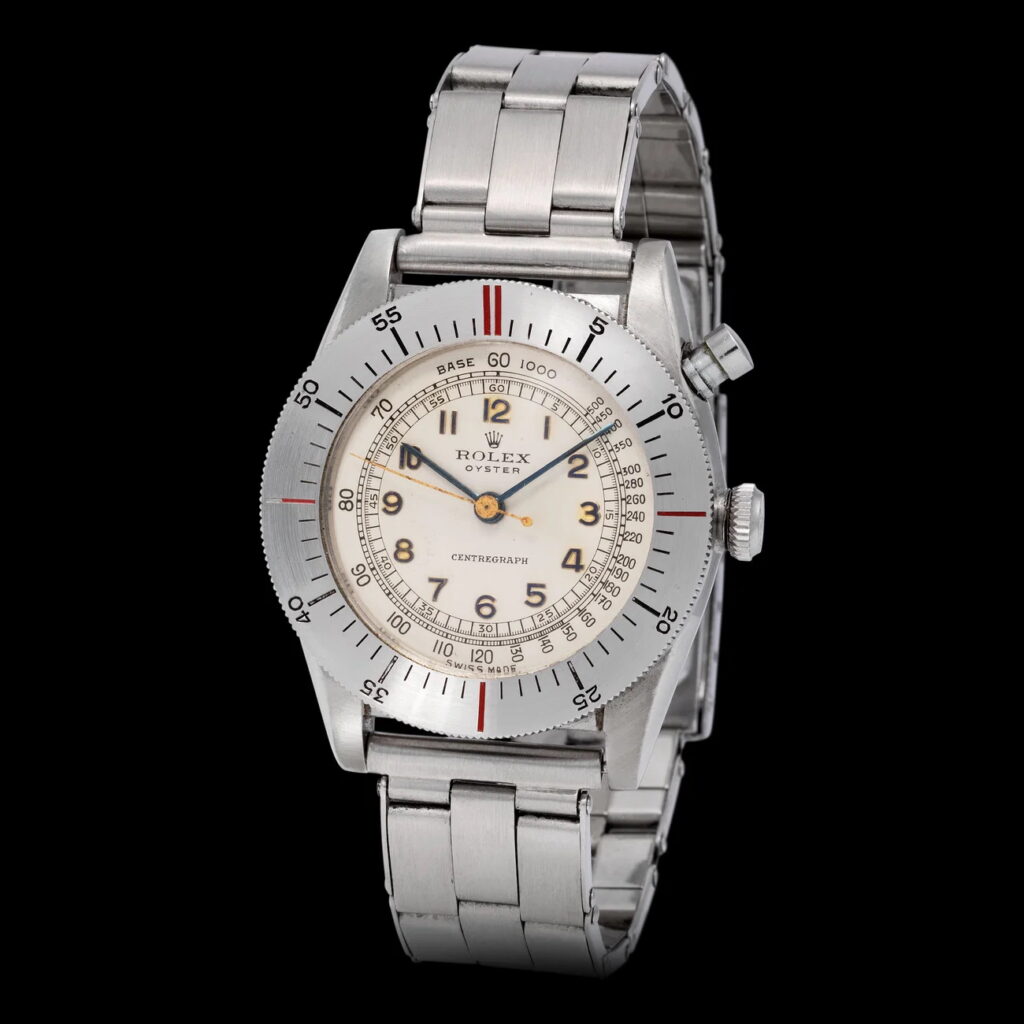
An especially interesting example appeared at Monaco Legend Auctions in April 2024. This Centregraph, reference 3346, featured a silver dial with Arabic numerals, a tachymeter scale and a rotating bezel with black enamelled numerals and red quarter-hour markers. Previously illustrated in John Goldberger’s 100 Superlative Rolex Watches, it sold for €256,250, including premium.
Its serial number, 142’589, is particularly revealing. Just two numbers separate it from a Zerograph, serial 142’587, offered by Christie’s in May 2002. Such proximity suggests that the two designations may have been used contemporaneously, rather than representing successive generations or entirely distinct models. It is a small but important detail in a story where surviving watches often provide more information than the available historical records.
Piecing together the surviving watches
The rarity of the Zerograph and Centregraph has naturally encouraged speculation about production numbers. When Christie’s offered a black-dial Zerograph in 2013, its research identified four examples within a remarkably narrow serial-number range. On that basis, the auction house suggested that perhaps no more than twelve had been manufactured.
Subsequent discoveries have complicated that estimate. In June 2024, Sotheby’s offered a previously undocumented Zerograph, serial 146’269, which had been discovered in California. Its silver California-style dial, red outer track and Mercedes hands presented another fascinating variation, whilst markings on the reverse of the dial identified Stern Frères as its manufacturer.
Sotheby’s research assembled a broader record of auction appearances, revealing two apparent groups of serial numbers: one around 142’5xx and another around 146’2xx. Although this suggests the possibility of separate production batches, the available evidence is insufficient to establish how many watches were originally manufactured. Nor can auction appearances necessarily be treated as individual surviving examples without accounting for watches that have appeared more than once.
The unanswered questions are arguably part of the Zerograph’s enduring appeal. Its unusual mechanism, its scarcity and the variations found amongst surviving examples suggest a period of genuine experimentation, but its original purpose remains elusive. Was Rolex testing a new approach to chronograph construction, assessing the commercial potential of a specialised timing instrument or simply exploring the possibilities offered by the Oyster case?
An intriguing chapter in Rolex history
It is tempting to view the Zerograph and Centregraph as direct ancestors of the Daytona, but their significance is more interesting than any simple family connection. Their particular timing mechanisms did not become the standard for subsequent Rolex chronographs, and there is little evidence to suggest that they were conceived as the beginning of a continuous line of development.
Today, the Zerograph and Centregraph occupy a distinctive place in the history of the Crown. Their rarity makes them desirable, but it is their mechanical ingenuity and unresolved history that make them truly fascinating. Almost ninety years after their introduction, these diminutive watches still have stories to tell, reminding us that some of Rolex’s most ambitious ideas emerged long before its most famous chronograph.