
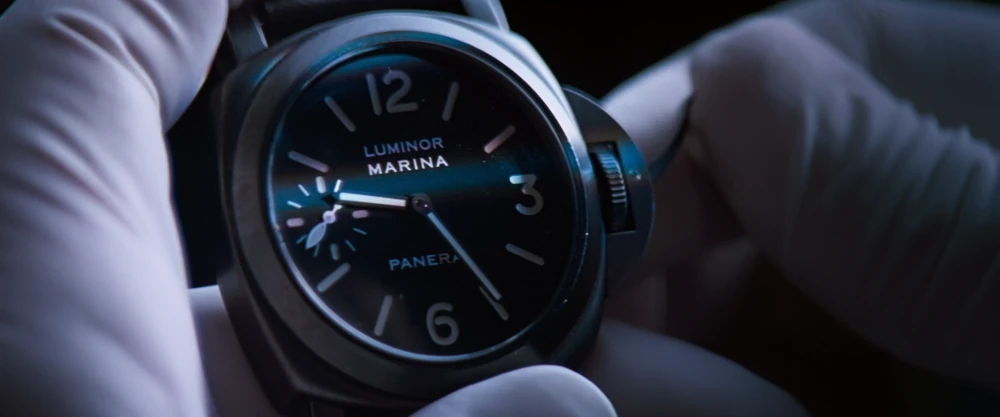
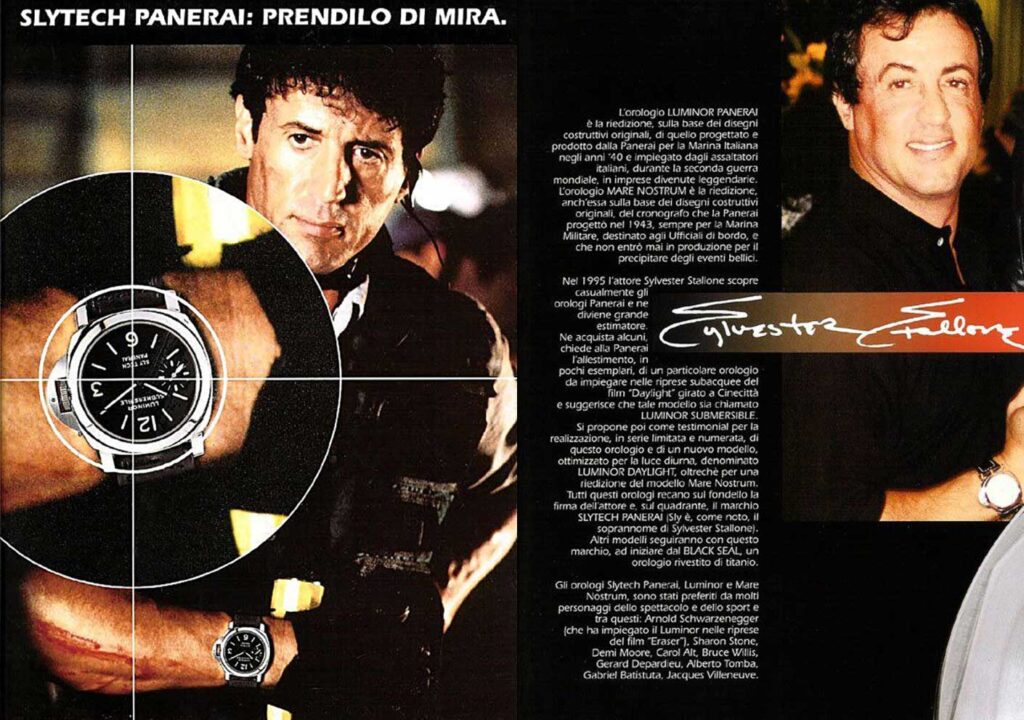
The Panerai Luminor Marina in a still from 1996 Arnold Schwarzenegger action movie Eraser
One collector’s personal journey to take the machismo out of Panerai
My male role models growing up were Morrissey of The Smiths, Michael Stipe of REM, David Bowie and Andy Warhol. All were sexually ambiguous pop stars whose slender frames and blousy styles reshaped masculinity for those of us who found mainstream gendering of the 1980s…let’s say, overbearing. When grunge bands barged into the 1990s with their shirts off playing macho riffs, the testosterone-fueled Grunge backlash against New Wave hit my olfactories like an unwashed jockstrap. At least we still had REM reminding us that “Everybody Hurts,” even “Shiny Happy People,” but the general gender vibe of pop culture had regressed to binary banality.
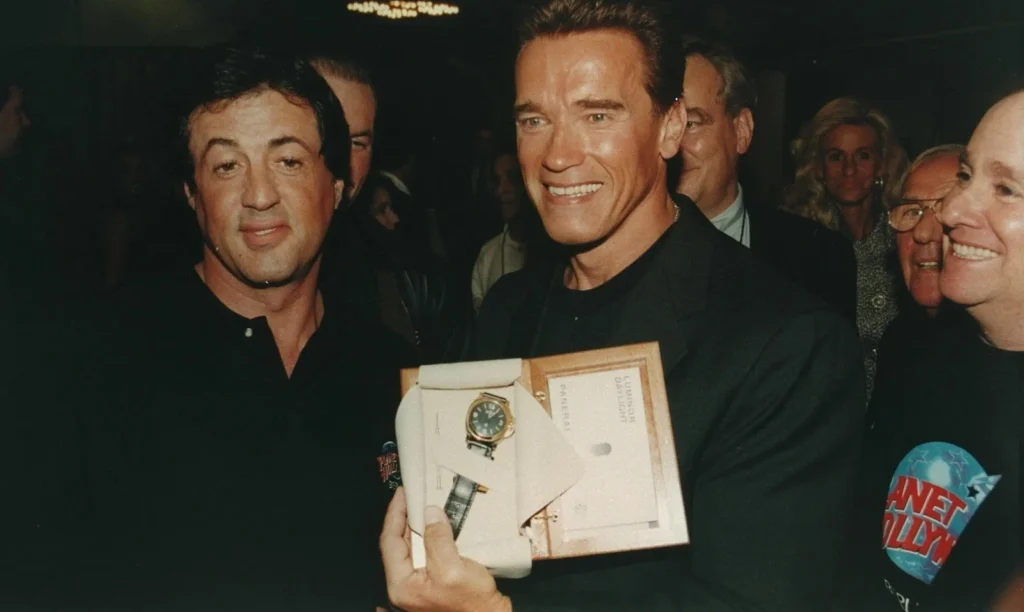
Seemingly in league with this surging pop-machismo, in 1995 Sylvester Stallone wore a 44mm Panerai Luminor in the disaster-hero movie Daylight, and in 1996 Sly gave Arnold Schwarzenegger a similar watch, which the future Republican Governor of California wore in the unabashedly militaristic movie Eraser. Both were filmic renderings of pure testosterone. Thusly placed, Panerai then blew up internationally, and men’s watches suddenly became cartoonishly large.
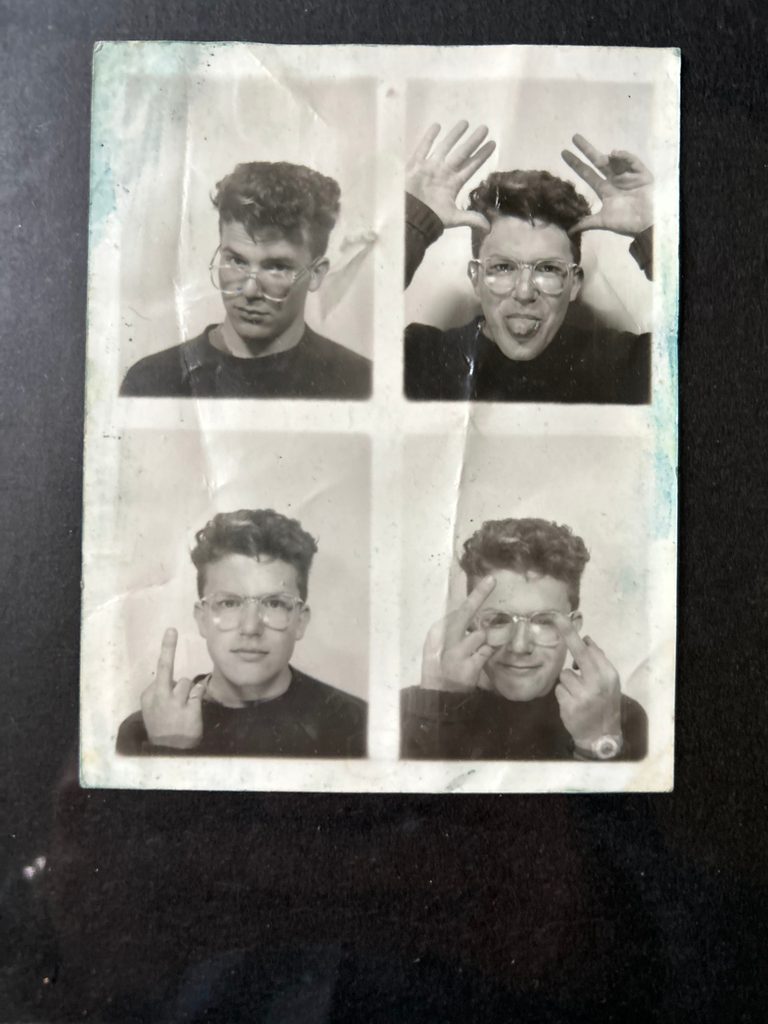
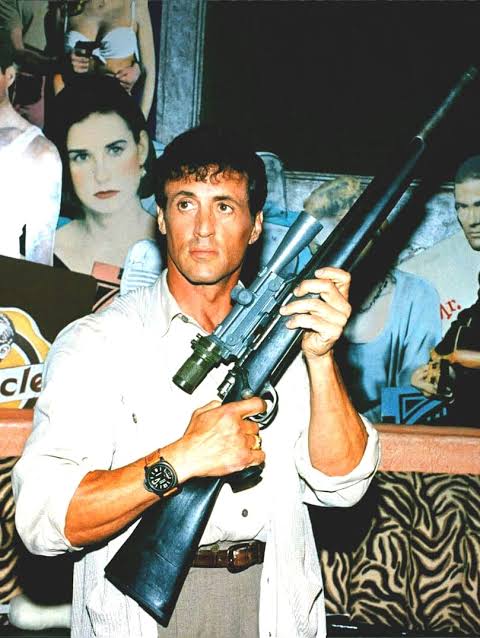
As a stubbornly fey fashionista still pegging his pants and popping his collar when low-waisted denim flares, cheesy VonDutch track jackets and tribal tattoos were the rage, I was passionately opposed to Panerai and the huge-watch trend the brand inspired. I was still rocking my petite pastel Swatches and 32mm Hamilton Art Deco affairs snagged at thrift shops. I regarded large watches as an affront to my soft-focus masculinity, and Panerai’s 47mm chonks as especially suspect.
However important Panerai was—or would become—to both horological history and the future of watch design, I and a whole generation of effete aesthetes weren’t having it, and we carried these femme-leaning attitudes straight into the 21st century. Panerais were butch. We were not. End of conversation.
So how is it that in the past year I flipped a finely curated batch of vintage 32mm Vacheron Constantin dress watches for five Panerai models?
Gender Trouble
As much as I jived with—and through whatever influence I wielded, perhaps contributed to—the small time-only watch trend of the 2020s, there was something oppressive about the hegemony of small watches emerging on the American Left. Maybe it started with Hip-Hop (what doesn’t?), and maybe it was the revival of fine tailoring, or maybe it was the way small watches seemed to signify support for LGBTQ rights and detoxifying masculinity, but by the time “Harris Is For They/Them” put Trump back in office, I’d had it with the algorithmically fueled binary extremes of American culture. I wanted out of my Lefty silo, and as with all my “political” moves, I turned to personal style to mash together a new gender concoction that could express where my head and heart were at.
Whatever watch it would be, it needed to be big.
I wasn’t sharp enough to think “Panerai is the ticket” on my own. This idea was planted when a rather grumpy colleague who I’d helped trade a slab-sided diver for a petite dress watch told me, “I absolutely hate Panerai.” Their coastal-elite disgust was palpable, and the coded socio-political significance I was meant to affirm awkwardly hung in the growing space between us. I just shrugged.
Hell if I was going to get caught playing along with what had become a mainstream coastal horological mandate bouncing around the echo chamber of polarized liberalism. Gender was meant to be fluid, not coded. If I’d owned a Panerai, I’d have worn it to the office the next day—probably over my cuff.
Wearing a Panerai to the Ballet
We were in Milan, and we had tickets to La Scala to see a Phillipe Kratz ballet scored by Thom Yorke of Radiohead, who seems to have shared my male role models, especially Michael Stipe. The day of the ballet, we wandered into Milan’s luxury district, and when we passed the Panerai boutique, I was pulled in as if by a magnetic force. So chic! So Italian! So Milanese! No sign of Arno’ or Sly. This was pure horological fashion in the fashion capital of the Western world. Panerai had moved on from high-octane machismo, but liberal-dude opinion hadn’t caught up.
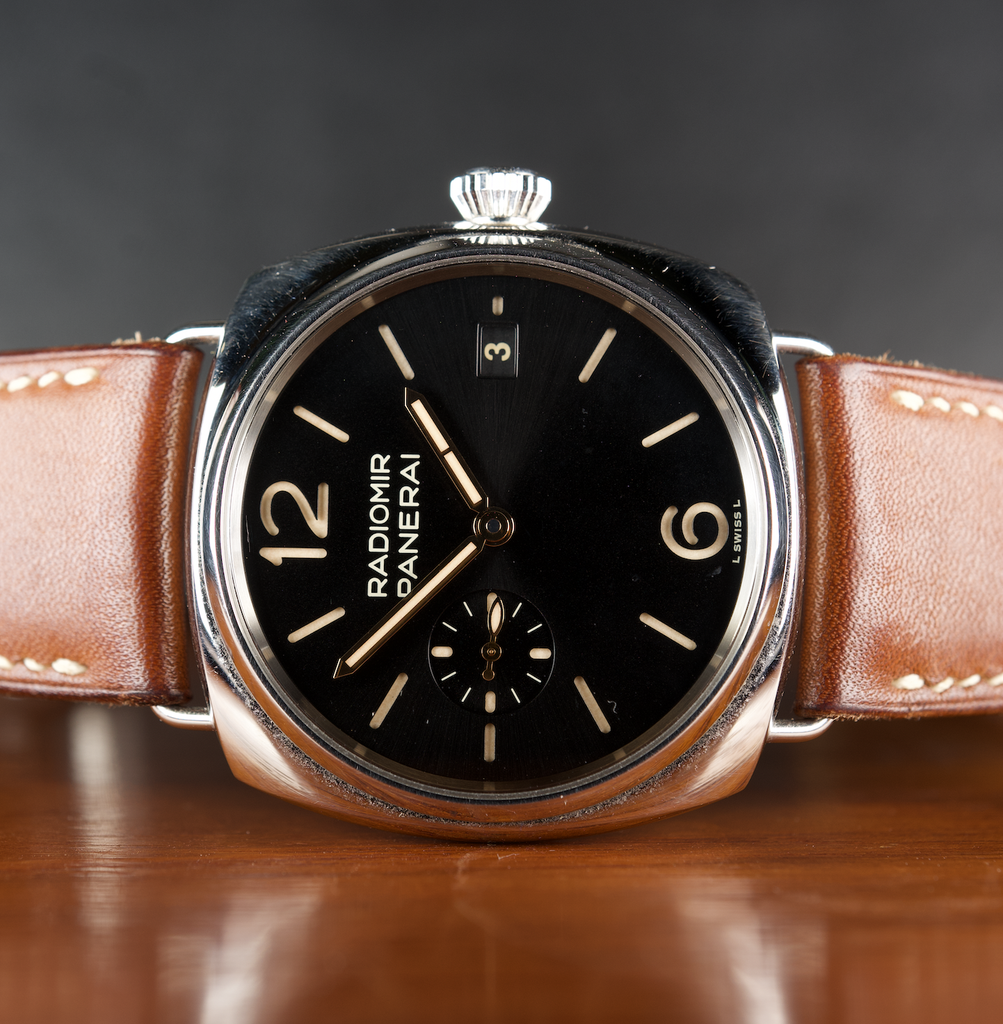
Three espressos later, I walked out with a 40mm Radiomir Quaranta. Sleek at around 10mm thick with effete wire lugs, a radially brushed black sandwich dial, beige lume, rose-gold hands, an elegantly tapered matte black alligator strap—here was my Panerai.
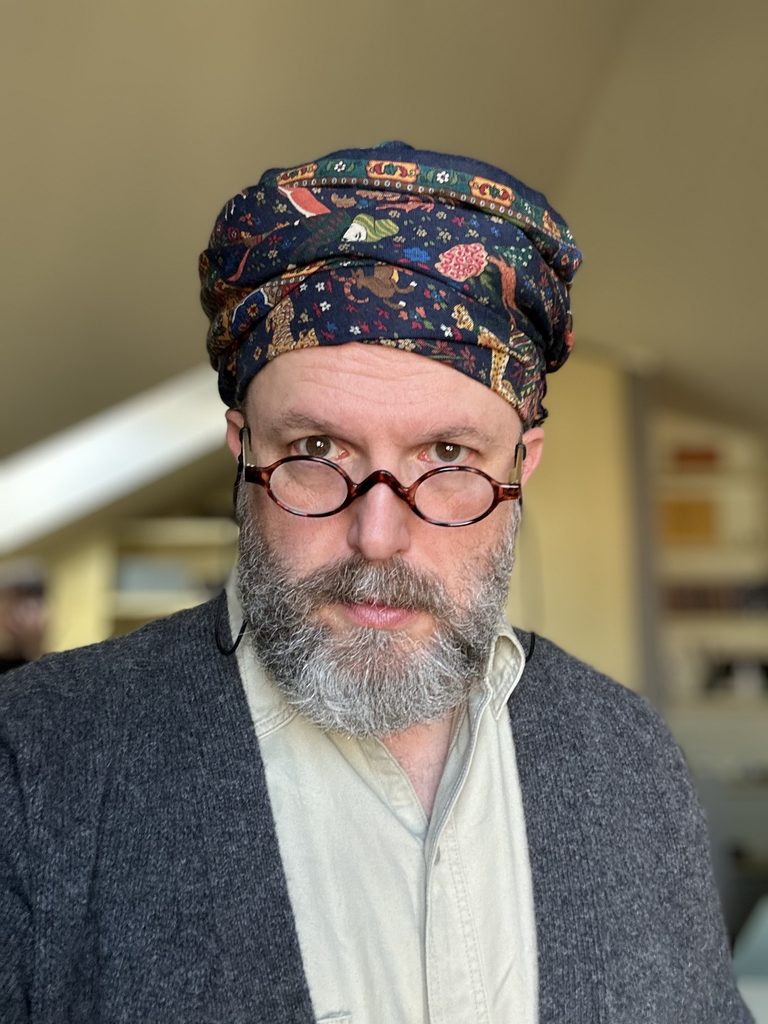
Log into the Manosphere’s various SubReddits, and the Bros will tear this 50-meter-rated watch a new one, deeming it a disgrace to the Fascist-Industrial heritage of the world’s first dive watch, but I couldn’t have cared less. I paired it with a silk Drake’s scarf worn as a turban, a fist of rings and my Gucci cardigan and horse-bit loafers; my partner rocked a vintage Japanese Kimono picked up in Lugano, Switzerland earlier that week. We fit right in at La Scala, and the avant-garde ballet blew our minds.
This was the kind of Paneristi I knew I would be, one willing to mash these steam-punky watches up into postmodern outfits with joyously haphazard results.
Flipping Vacheron Constantins for Panerais
I adored my Quaranta. I’d been bitten by the Panerai bug, and the Panerai catalog that I once said looks like 100 versions of the same watch revealed its diversity of nuance to me. As it happened, a fine person who was lusting after exactly the kind of vintage Vacheron Constantins I’d amassed was willing to trade favorably for Panerai.
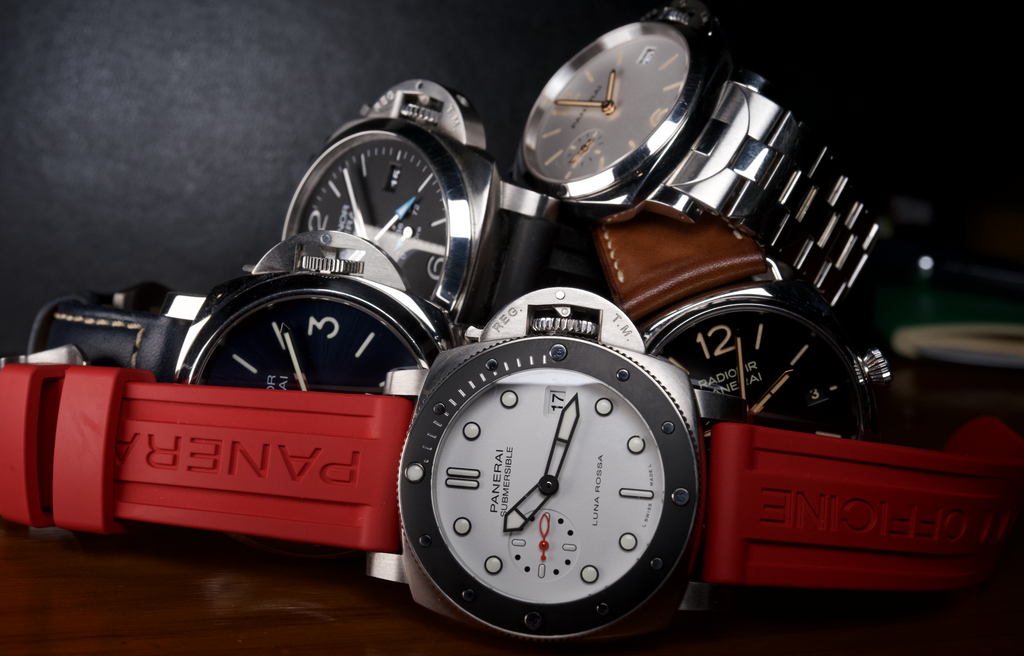
I flipped some VCs for a Submersible Luna Rosa 42 with a white dial, a matte black ceramic bezel insert and a bright red rubber strap to match my Moto Guzzi. That part of me that can rock a preppy sailing look, as well as the leather-meets-Gortex of Italy’s best motorcycling kit, was thrilled. This Submersible wears perfectly, and anyone who thinks a Panerai is too big for them needs to try on any of the 42mm models available, because they wear so well.
So, now I had two. This was just the beginning.
Addiction took hold. I went back to the Panerai well with more of my VCs and walked away with a 44mm blue Base Logo Luminor and a 38mm silvered-dial Due on the bracelet for my Kimono-collecting partner, who graciously returned the gift explaining that their wrist just wasn’t up to it. Ok! I’d probably never have bought the Due for myself, but it has become one of my favorite watches of all time (and I usually avoid bracelets).
Now there were four.
There were still a few watches to flip, and on my final trip on the Good Ship Panerai I went big, getting a 44mm Luminor GMT Power Gauge, a complicated watch with a busy dial that is certainly my most earnest foray into the largess of PAM-land.
I was out of flippers, but I had amassed a fleet of five Panerais – and now I almost never wear anything else.
Post-Machismo & Large Watches Today
Gender fluidity is ultimately about freedom, and I think I’ve successfully liberated Panerai from the confines of common perception—for myself, anyways—and found a way to wear them fluidly. I don’t think large watches have to mean anything more than small ones do, and I find the whole coding of gender through watch size to be a tired exercise in what amounts to righteousness and/or machismo signaling. I understand the power of watches to operate as symbols, but I think it’s time to disrupt the semiotics and have a little fun.
To give you a few examples of how this rather diverse five-Panerai collection can be good fun—and perhaps just a little subversive—consider the following pairings:
38mm Due on Bracelet with a white button-down Oxford shirt, Levi’s and whatever loafers for a casual, somewhat preppy Warholian look. The taper on the bracelet is almost feminine, and I would characterize this watch as the Goldilocks-sized Oyster Perpetual we all wish Rolex would make.
40mm Radiomir Quaranta on a brown leather stitched strap with a tailored work jacket and fancy ball-cap for casual elegance I can sport pretty much anywhere, but especially anywhere in Italy. Perfect for strolling around the cobbles before and after dinner.
42mm Submersible Luna Rosa with a bright red strap with Dianese leathers while eating up the twisties on a Moto Guzzi Mandello V100. Stop off at the chic MOTO Cafe in Hudson, NY and look the part of the dedicated Cafe Racer.
44mm Luminor Base Logo with blue dial paired with a chunky oversized loose-knit sweater (think The Smiths ’84-ish), pegged denim, and perhaps some Oscar Wilde manuscript nearby. This is pretty much how winter goes for me.
44mm Luminor GMT Power Gauge, Barbour waxed jacket over a Japanese denim shirt, khakis—on a plane headed to Milan, of course, perhaps to get the next Panerai. Perfection.
Post-Everything
People often speak of “the watch journey,” and I’ve come to understand it as an exploration of one’s identity through horological aesthetics. It can be a heady trip, bringing one up against their own self-conception and how that plays out in the various social settings in which we find ourselves.
Panerai helped me get past a set of codes I hadn’t fully realized were running in the background of my taste, a kind of semi-conscious conformity to what were, for a while anyways, comfortable gender norms for me. It was only by embracing the polar opposite of the effete small dress watch trend that I found myself finally forming something like a post-gender watch sensibility. I now proudly consider myself a budding Paneristi, something I couldn’t possibly have imagined just over a year ago. I’m happy to report that it’s never too late for stubborn old femme-boys to learn new tricks.